
The Reserve Asset That Sits Still Until Trust Breaks
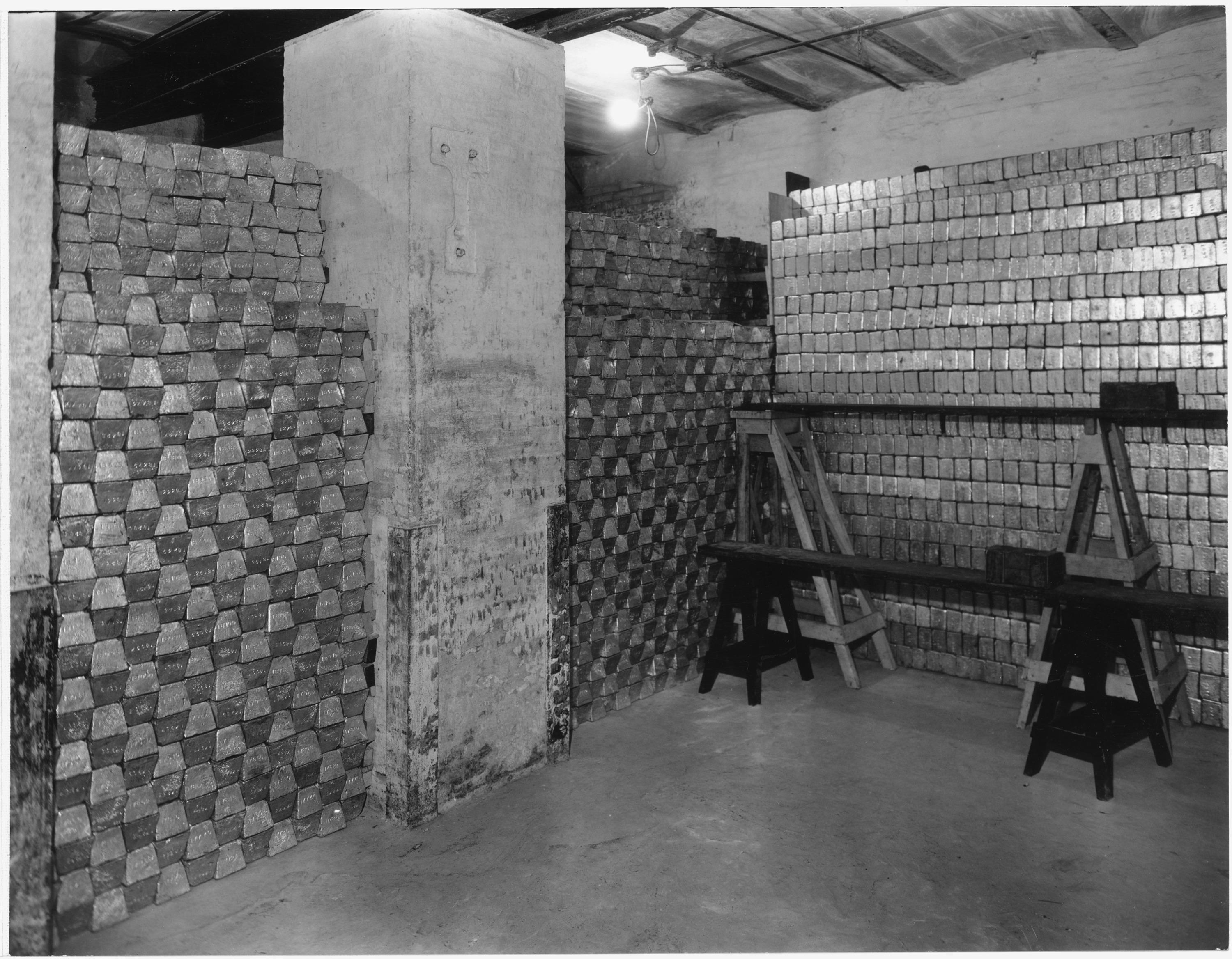
Deep beneath central-bank buildings and financial districts, thousands of gold bars spend decades doing almost nothing. They pay no interest, finance no factory, settle no ordinary import invoice, and may not move even when they are sold. Yet governments protect them with military seriousness and publish their weight as a measure of national strength.
The apparent contradiction disappears once gold is understood not as everyday money, but as insurance against the institutions that make everyday money work. A government bond is someone else’s promise to pay. A bank deposit is a claim on a bank. A foreign-currency reserve depends on the legal and political system behind that currency. A gold bar, once owned outright, is no one else’s liability.
That does not make gold magical. It makes it unusual.
From Money to Insurance
For centuries, gold was not merely a reserve behind money; it was part of the monetary system itself. Banknotes could be convertible into gold, exchange rates were linked through gold values, and central banks needed bullion to defend convertibility.
The architecture changed during the twentieth century. Under the Bretton Woods system, major currencies were tied to the U.S. dollar, while foreign monetary authorities could convert dollars into gold at an official price. That arrangement ended in 1971 when the United States suspended dollar-gold convertibility.
Gold no longer anchors modern currencies. Central banks create base money, governments issue debt in fiat currencies, and exchange rates are managed through interest rates, market intervention, and financial regulation. Gold could have become a museum piece.
Instead, central banks kept much of it. Emerging-market central banks later became active buyers. In 2024, the European Central Bank calculated that gold had become the world’s second-largest reserve asset at market prices after the U.S. dollar. Central banks accounted for more than one-fifth of global gold demand that year.
Gold survived the gold standard because its new job was not to operate the monetary system. Its job was to remain valuable if confidence in parts of that system weakened.
What Makes Gold Different
Most reserve assets have an issuer. U.S. Treasury securities depend on the United States. German government bonds depend on Germany. A deposit at a commercial or central bank depends on that institution and the rules governing it.
Gold has price risk, storage risk, and operational risk, but it has no corporate or sovereign issuer that can default on the bar itself. It cannot miss an interest payment because it promises no interest. It cannot be downgraded because it has no balance sheet.
This is what reserve managers mean when they say gold has no credit risk. The statement does not mean its value is stable. Gold prices can rise or fall sharply. It means ownership is not a promise from a debtor.
That distinction becomes more valuable when confidence is scarce. A reserve portfolio made entirely of another country’s bonds may be liquid and profitable, but it concentrates exposure to that country’s monetary policy, legal system, and political decisions. Gold offers a reserve outside that chain of promises.
Why the Bars Usually Do Not Move
A country’s gold may be stored domestically, but large quantities are also held in major trading centers such as London and New York. Foreign custody may sound less sovereign, yet it gives the owner access to deep bullion markets, recognized bar standards, professional vault infrastructure, and potential counterparties.
The Bank of England says its vaults hold around 400,000 bars, most belonging to central banks and other customers rather than the Bank itself. Much of that gold is held on an allocated basis: the owner has title to identifiable bars, not merely a general claim for a quantity of metal.
When one customer sells gold to another customer using the same vault, the bars may remain exactly where they are. Ownership changes in the custodian’s records. The asset has moved economically without moving physically.
Location therefore changes the character of the reserve. Gold stored at home may maximize physical control. Gold stored in London may be easier to trade, swap, or use as collateral. Central banks often balance sovereignty against market access instead of choosing one absolutely.
How Gold Becomes Spendable
Countries rarely ship pallets of bullion to pay for oil, medicine, or machinery. To use gold, a central bank normally monetizes it.
It can sell bullion for a reserve currency. It can enter a gold swap, temporarily exchanging gold for cash with an agreement to reverse the transaction. It may lend gold into the market or use it as collateral, depending on its legal powers and risk policies.
These routes turn a static asset into liquidity, but not frictionlessly. The gold must meet accepted purity and delivery standards. The owner needs trusted custodians and market counterparties. Legal title must be clear. Settlement, transport, insurance, pricing, and sanctions screening may matter.
This is why the IMF distinguishes between the liquidity tranche and the investment tranche of reserves. The liquidity tranche is the immediate ammunition used to meet external payments, support the currency, or respond to capital flight. The IMF’s 2026 guidance argues that gold is generally ill-suited to that first-line liquidity role. It can be monetized, but not as predictably or immediately as cash and short-term securities in currencies used for the country’s obligations.
Gold is the reserve behind the reserve: valuable, marketable, but often held for a deeper emergency than Tuesday’s intervention in the FX market.
Diversification Without a Perfect Hedge
Central banks do not want every reserve asset to react identically to the same shock. If rising interest rates cause losses on long-duration bonds, another asset that behaves differently can reduce overall portfolio damage.
Gold can provide that diversification. It may perform well when real interest rates fall, the dollar weakens, inflation fears rise, or confidence in financial claims deteriorates.
The word “may” matters. Gold is not a perfect inflation hedge, a guaranteed crisis asset, or a mechanical opposite of the dollar. Its relationship with bonds, currencies, equities, and inflation changes across periods. During a liquidity panic, investors may sell gold to raise cash. During other crises, demand for gold may surge.
The World Gold Council’s 2025 central-bank survey found that crisis performance, portfolio diversification, and long-term store-of-value characteristics remained leading reasons for holding gold. But the IMF warns that these benefits are conditional and regime-dependent.
Gold is useful partly because it behaves differently. It is dangerous when policymakers assume they know exactly how it will behave next.
The Sanctions Question
After Russia’s full-scale invasion of Ukraine in 2022, major jurisdictions immobilized large portions of the Russian central bank’s foreign reserve assets. The episode sharpened a question already present in reserve management: can an asset still be called a reserve if another government can prevent its use?
Gold held physically inside a country is harder for a foreign custodian to freeze. It does not need a correspondent bank and is not a liability recorded on a foreign government’s balance sheet. This helps explain why some emerging-market reserve managers view gold as geopolitical diversification.
But “sanctions-proof” is too strong. Gold held abroad remains exposed to the laws of the storage jurisdiction. Domestically held gold still needs buyers, transport, refining, settlement channels, or collateral counterparties if it is to generate foreign currency. Sanctions can target those intermediaries and make monetization expensive or clandestine.
Gold can reduce dependence on a financial network. It cannot guarantee continued access to that network.
The Valuation Trap
When the gold price rises, the reported value of a central bank’s reserves can increase even if the country has not bought a single additional bar.
That can improve headline measures such as total reserves, import cover, or reserves relative to short-term external debt. But the country has not accumulated more dollars with which to pay external obligations. It has experienced a valuation gain on a volatile asset.
The IMF’s 2026 reserve-management note emphasizes that much of gold’s recent rise in central-bank portfolios reflected higher prices rather than vast physical accumulation. It cautions against treating those gains as permanent improvements in reserve adequacy and recommends applying liquidity and market-risk adjustments.
This matters for analysts. “Reserves increased” may mean the central bank earned foreign currency, borrowed externally, purchased assets, received an IMF allocation, or simply revalued existing gold. The same headline number can describe very different changes in national resilience.
Why Not Hold Everything in Gold?
Gold pays no coupon or dividend. When interest rates are high, holding it carries a substantial opportunity cost compared with safe government securities.
It must be guarded, audited, insured, tested, and stored. Its price is volatile. Selling a large position at the wrong moment may crystallize losses or signal distress. Gold also cannot directly meet every foreign-currency obligation, especially when speed matters.
A reserve manager therefore faces a trade-off. Too little gold leaves the portfolio dependent on issuers and currencies. Too much gold can weaken liquidity, reduce income, and expose the balance sheet to commodity-price swings.
The sensible question is not whether gold is superior to currency reserves. It is what mixture gives the country enough immediate liquidity, enough long-term resilience, and enough independence from any single issuer or political system.
Did You Know?
“Monetary gold” is a technical category. Under IMF definitions, it generally means gold owned or effectively controlled by the monetary authorities and held as a reserve asset. Ordinary jewelry, unrefined domestic production, and commercial gold inventories are not automatically international reserves.
A standard London Good Delivery bar weighs roughly 400 troy ounces, or about 12.4 kilograms. Its exact weight varies, so bars are tracked individually.
At the Bank of England, a gold transaction between two vault customers can be completed by changing the ownership record attached to specific bars. The metal may not move at all.
A country can possess large gold reserves yet have limited usable foreign currency. Wealth, liquidity, and payment capacity are related, but they are not the same thing.
The Practical Takeaway
For anyone analyzing a country, payment corridor, currency, or cross-border product, do not treat the headline reserve figure as a single pool of spendable cash.
Separate liquid foreign-currency assets from gold. Ask where the gold is stored, who legally owns it, whether it is allocated, how quickly it can be sold or pledged, which counterparties could monetize it, and whether sanctions or operational constraints would block those routes. Distinguish physical purchases from price-driven valuation gains.
The same discipline applies to private financial products. A stablecoin, payment institution, or gold-backed token may advertise reserves, but the important questions concern form, custody, legal title, liquidity, valuation, redemption mechanics, and access during stress.
Gold’s great strength is that it is not someone else’s promise.
Its weakness is that modern economies run on promises—deposits, securities, credit lines, payment systems, and currencies. The gold bar becomes economically useful only when it can re-enter that network on acceptable terms.
Countries hoard gold because they hope never to need that final layer of insurance. They keep it because history has repeatedly shown that trust can disappear faster than metal.
Important sources
International Monetary Fund, Gold in Central Bank Reserves: Strategic Considerations, Market Risks, and Practical Guidance: https://www.elibrary.imf.org/view/journals/068/2026/007/article-A001-en.xml
European Central Bank, Gold Demand: The Role of the Official Sector and Geopolitics: https://www.ecb.europa.eu/press/other-publications/ire/focus/html/ecb.irebox202506_01~f93400a4aa.en.html
Bank of England, Gold: https://www.bankofengland.co.uk/gold
Bank of England, Banking Services for Central Bank Customers: https://www.bankofengland.co.uk/bank-insights/2026/banking-services-for-central-bank-customers
World Gold Council, Central Bank Gold Reserves Survey 2025: https://www.gold.org/goldhub/research/central-bank-gold-reserve-survey-2025/strategic-considerations-in-reserves-management
International Monetary Fund, Gold as International Reserves: A Barbarous Relic No More?: https://www.imf.org/en/publications/wp/issues/2023/01/27/gold-as-international-reserves-a-barbarous-relic-no-more-528089
Bank for International Settlements, 2023 Central Bank Gold Custodian Conference: https://www.bis.org/speeches/20230524-introductory-remarks-2023-central-bank-gold-custodian-conference