
The Work That Counts Even When Governments Cannot Count It
Before most offices open, a city is already at work. A woman buys flour in cash, bakes bread in her kitchen, and sells it from a roadside table. A mechanic repairs motorcycles without invoices. A construction worker is paid at the end of the day. A family sends money through a neighborhood intermediary because the nearest bank is hours away. None of this is imaginary. Goods are produced, incomes are earned, and families survive.
Yet much of it may leave no payroll record, tax return, business registration, bank statement, insurance contribution, or reliable statistical trail. The work is economically real but institutionally faint. It belongs to the informal economy: the enormous zone between full participation in formal systems and complete invisibility.
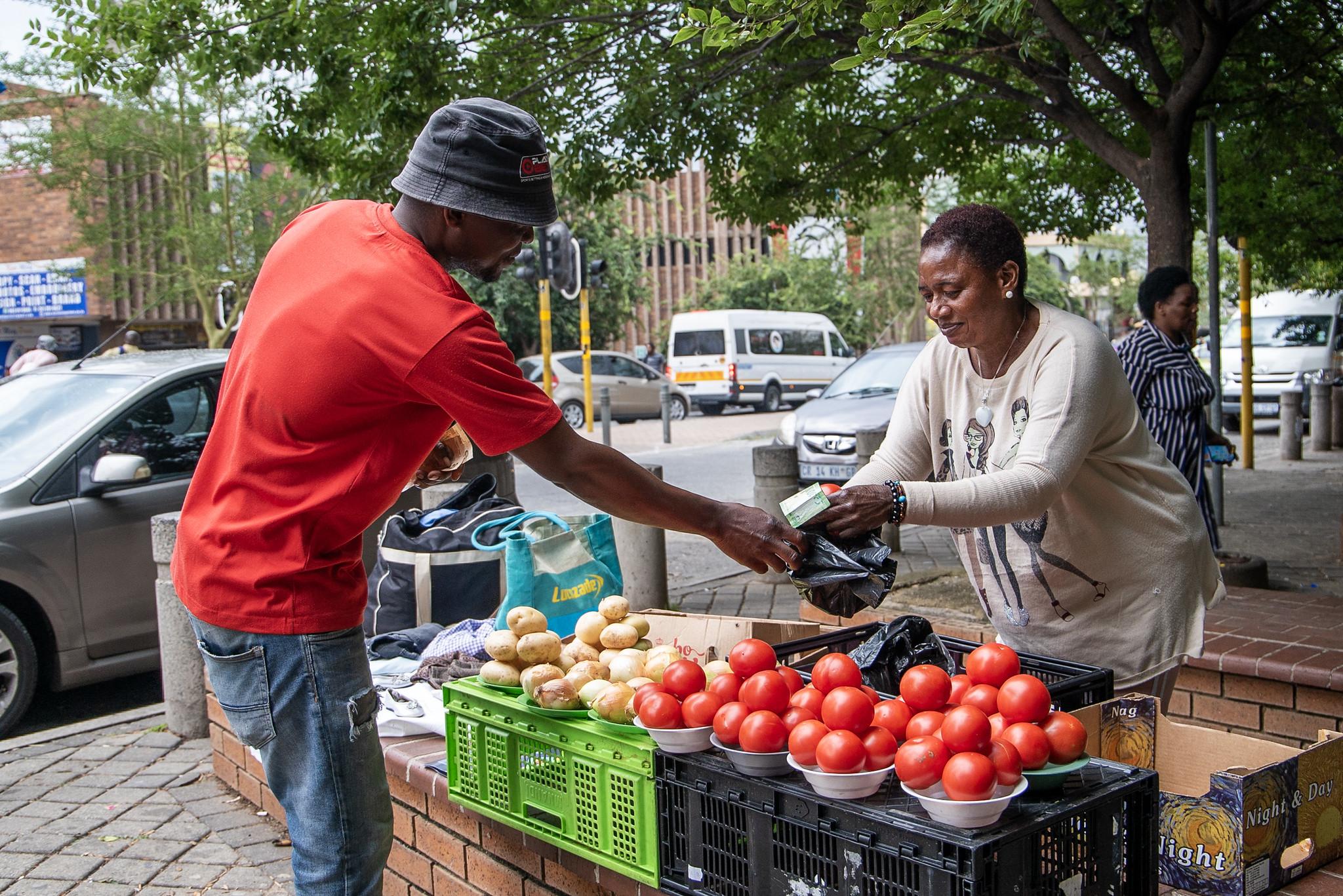
The puzzle is not why governments dislike informality. It is why so many people continue to choose—or are forced to accept—it even when formal status promises legal protection, bank access, and growth.
Informal Does Not Mean Imaginary
The International Labour Organization defines the informal economy broadly as activity by workers and economic units that is not covered, or is insufficiently covered, by formal arrangements in law or practice. That includes more than unregistered street vendors.
An employee can work informally inside a registered company if wages are paid off the books and labor protections are absent. A registered shop can hide part of its sales. A domestic worker can perform lawful work without a contract or social-security contribution.
Informality therefore has two dimensions. One concerns the enterprise: is the business registered, licensed, and keeping formal accounts? The other concerns the job: does the worker have a recognized employment relationship, social protection, and enforceable rights? The categories overlap, but they are not identical.
Informal Is Not the Same as Illegal
A fruit seller operating without a permit and a network trafficking stolen goods may both avoid official records, but they are not the same phenomenon.
Many informal activities are legal in substance but carried out outside administrative rules. Selling food, repairing a roof, sewing clothes, driving passengers, or caring for children are ordinary services. The informality lies in registration, taxation, labor status, licensing, or reporting.
The illegal economy involves products or conduct prohibited in themselves: narcotics trafficking, extortion, fraud, or theft. The shadow or underground economy sometimes refers more narrowly to legal production deliberately concealed to avoid tax or regulation.
Everyday language mixes these labels, which creates bad policy. Treating all informal workers as criminals ignores the difference between a household surviving outside an inaccessible system and an established business deliberately hiding profitable activity.
How Big Is an Economy No One Fully Sees?
The honest answer is that no one knows exactly.
The ILO’s widely cited 2018 study estimated that roughly two billion workers—about 61% of global employment at the time—were in informal employment. The share was much higher in developing economies, agriculture, and own-account work.
But informal production is not automatically absent from gross domestic product. Statistical agencies estimate activity that surveys, tax records, and company accounts do not directly capture. They may use household spending, labor-force data, agricultural output, electricity consumption, imports, construction activity, or gaps between reported income and visible expenditure.
If payroll records show few construction workers but building-material sales and completed housing imply far more activity, statisticians can adjust. A household survey may record street-vending income even when the vendor has never filed a business return.
The IMF cautions against treating “informal,” “unobserved,” “underground,” and “missing from GDP” as interchangeable. Some informal production is estimated inside national accounts; some legal activity is missed. GDP is not a cash-register total. It is an estimate assembled from incomplete windows into economic life.
Why People Stay Outside the Formal System
It is tempting to think informality exists because people want to avoid taxes. Sometimes they do. But tax is only one part of the calculation.
Formalization may require fees, professional advice, inspections, bookkeeping, licenses, labor contributions, repeated visits to government offices, or proof of ownership for premises a business occupies informally. The cost includes time and uncertainty.
The benefits may also appear remote. Why register if a business still cannot obtain a bank account, loan, reliable electricity connection, government contract, insurance, or protection from arbitrary enforcement? If formal status creates obligations immediately but useful services only hypothetically, remaining informal can look rational.
Some firms are too small to carry the fixed cost of compliance. Others stay small deliberately because growth would make them visible. Informality then becomes a trap: avoiding the formal system keeps costs low, but exclusion blocks the finance, contracts, technology, and legal certainty needed to become more productive.
Trust matters too. A worker who expects taxes to be wasted, records to invite harassment, or rules to be applied selectively may see visibility as a danger rather than a benefit.
What Informality Does Well
The informal economy absorbs workers when formal job creation is weak. It allows people with little capital or education to begin earning quickly. It supplies affordable food, transportation, repairs, childcare, housing, and credit. It creates reciprocal support when banks, insurers, and welfare systems are absent.
During a crisis, informal markets can adapt rapidly. Prices change, supply routes shift, workers switch occupations, and neighborhood credit fills gaps. There is little paperwork to delay the response.
That flexibility is valuable. A state that eliminated informal work overnight without creating formal alternatives would not necessarily produce a modern economy. It might simply destroy livelihoods.
The sensible goal is not to erase the activity. It is to preserve useful enterprise while extending rights, productivity, finance, and protection.
The Price of Remaining Invisible
Flexibility has a cost, usually borne by workers and small firms.
A worker without recognized employment may have no paid leave, pension, unemployment insurance, workplace protection, or remedy for unpaid wages. An informal business may have no enforceable lease, no ability to pledge assets, and no audited income history with which to obtain credit.
For banks, the problem is evidence. A shopkeeper may have operated profitably for ten years, but if sales are mainly cash and records are thin, a lender cannot easily distinguish a resilient business from an invented one. The borrower is not necessarily uncreditworthy; the creditworthiness is difficult to prove.
For governments, widespread informality narrows the tax base and weakens the ability to fund infrastructure or respond to recessions. Formal firms can face unfair competition from businesses avoiding compliance costs. Productivity suffers when firms remain small, underinvest in technology, and avoid relationships that create a visible trail.
Informality can also hide exploitation. Without records, it becomes difficult to tell whether someone is an independent entrepreneur, a disguised employee, an unpaid family worker, or a victim of abuse.
Cash Is Not the Cause, but It Is Good Camouflage
Cash works without electricity, a smartphone, fees, identification, or permission from an intermediary. It is immediate, resilient, and widely understood. It also leaves little automatic record.
Digital payments change the bargain. A merchant accepting mobile money or account transfers creates a transaction history. That history can support credit underwriting, insurance, and proof of income. It can also make turnover visible to platforms, banks, tax authorities, or law enforcement.
Digitalization therefore does not merely “include” people. It changes who can observe them.
A vendor may welcome faster payments while fearing that recorded sales will trigger taxes, licensing demands, frozen funds, or source-of-funds questions. If digital finance provides visibility without proportional rights and services, people may remain in cash, split transactions, or use accounts registered to relatives.
For payment companies, the lesson is important: formalization cannot be smuggled into a market through a QR code. Customers should understand what data is created, who receives it, what obligations follow, and what practical benefit they gain.
The Platform Economy Blurs the Boundary
Digital platforms can bring informal work into searchable, payable, and taxable systems. A driver or freelancer may receive customers, ratings, and electronic payments through an app. The platform creates records where none existed before.
But visibility does not automatically create formal employment. A worker can be digitally traceable while remaining outside labor protection, insurance, and bargaining power. The platform may know every transaction while the state still treats the worker as an isolated contractor.
Platforms can help tax administration by reporting seller income or collecting consumption taxes. They can also shift compliance burdens onto very small operators. Technology may formalize the transaction while leaving the person informal.
This is why gig-work debates are ultimately about the meaning of formality. Is a worker formal because payments are recorded, because taxes are paid, because the platform is licensed—or only when rights and social protection follow?
Why Crackdowns Usually Fail
Governments often respond with inspections, penalties, transaction limits, or restrictions on cash. Enforcement matters where established businesses deliberately conceal activity while benefiting from public infrastructure.
But punishment alone attacks the symptom. If registration is expensive, rules conflict, finance remains inaccessible, and public services are weak, enforcement raises the cost of survival without creating a viable formal path.
Successful formalization requires a bargain. Governments simplify registration and taxation, recognize graduated obligations for microenterprises, improve digital identity, expand social protection, and provide access to markets or finance. In return, firms and workers become more visible and comply progressively.
The World Bank argues that informality reflects broader underdevelopment and cannot be solved as an isolated administrative problem. Education, infrastructure, governance, productivity, finance, and regulatory quality all shape whether formality is worth choosing.
Formalization works when it becomes a useful economic product—not merely a legal command.
Did You Know?
A registered company can employ informal workers. Enterprise status and employment status are separate questions.
A cash transaction is not automatically informal. A registered business can accept cash, record the sale, pay tax, and remain formal.
Electronic payments do not automatically formalize a business. A merchant may use a personal wallet or someone else’s account while remaining unregistered.
Official GDP may include estimates of informal production. “Not declared for tax” and “not counted by statisticians” are not always the same thing.
Informality also exists in wealthy economies through undeclared domestic work, cash construction, off-the-books wages, gig work, and unreported professional income.
The Practical Takeaway
When assessing a market, payment corridor, lending product, or financial-inclusion strategy, do not ask only how many people have bank accounts. Ask how income is earned, documented, and trusted.
Can a worker prove earnings without a payslip? Can a merchant separate business money from household money? Does the payment history belong to the user, the platform, or the provider? Will transaction data unlock credit, or merely expose the customer to compliance action? Are registration and tax duties proportionate to the business? Does formal status unlock anything valuable?
For a payments or banking consultant, an informal market is not empty space waiting to be digitized. It already has payment methods, credit relationships, trust networks, risk controls, and dispute-resolution customs. A successful product must understand that architecture before trying to replace it.
The informal economy is often described as hidden. Much of it is not hidden at all. The vendor is on the pavement, the mechanic is under the motorcycle, and the worker is standing at the construction site.
What is missing is the bridge between that activity and the institutions that can protect it, finance it, tax it fairly, and count it without crushing it.
Important sources
International Labour Organization, Women and Men in the Informal Economy: A Statistical Picture: https://www.ilo.org/publications/women-and-men-informal-economy-statistical-picture-third-edition
International Labour Organization, Informal Economy: https://www.ilo.org/topics-and-sectors/informal-economy
World Bank, The Long Shadow of Informality: Challenges and Policies: https://www.worldbank.org/en/research/publication/informal-economy
International Monetary Fund, Measuring the Informal Economy: https://www.elibrary.imf.org/view/journals/007/2021/002/article-A001-en.xml
OECD, The Impact of the Growth of the Sharing and Gig Economy on VAT/GST Policy and Administration: https://www.oecd.org/en/publications/the-impact-of-the-growth-of-the-sharing-and-gig-economy-on-vat-gst-policy-and-administration_51825505-en.html
International Labour Organization, Transition from the Informal to the Formal Economy Recommendation, 2015: https://www.ilo.org/resource/r204-transition-informal-formal-economy-recommendation-2015-no-204