
The Square Mile: How a Medieval Corporation Became a Global Financial Capital
Walk east from Westminster and, without showing a passport, you enter a city inside a city. It has its own Lord Mayor, its own police force, elections in which businesses help choose local representatives, and an officer whose job includes watching legislation pass through Parliament. It sounds like the opening scene of a financial thriller—or proof of a conspiracy.
The stranger truth is more useful. The City of London is neither an independent country nor a secret sovereign enclave. It is a tiny municipal district inside the United Kingdom whose unusual institutions survived because the district became extraordinarily valuable. The medieval privileges are real. So are the modern regulations. Understanding how the two fit together explains far more about financial power than the mythology does.
A city older than the country’s modern financial system
The City of London—usually called “the City” or “the Square Mile”—is the historic core around which the rest of London grew. Its boundaries roughly follow the old Roman and medieval city, although the district is slightly larger than one square mile. Long before London became a vast metropolis, this compact settlement was already a center of trade, guilds, markets, and local government.
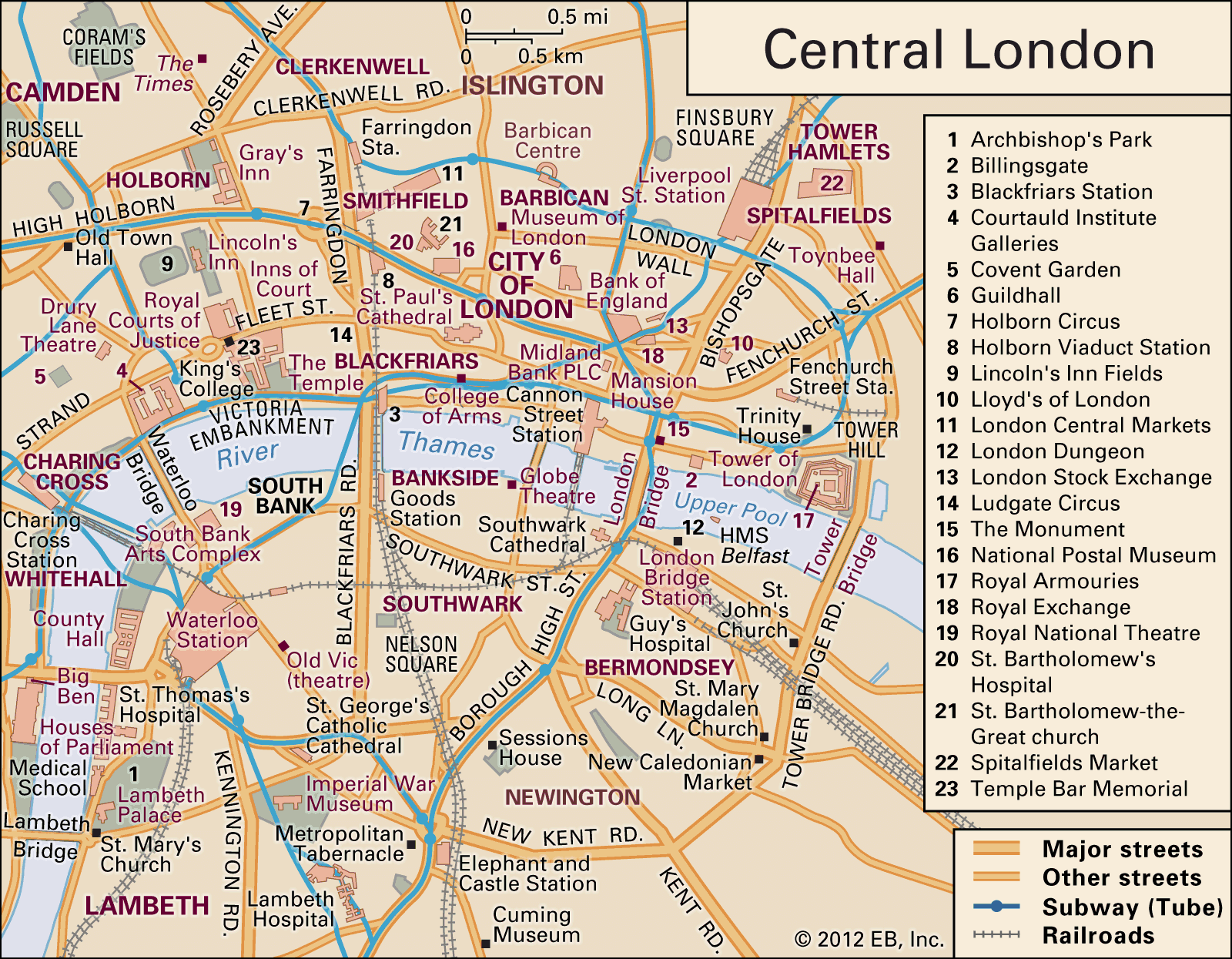
Its constitutional history reaches back before the Norman Conquest. English kings repeatedly confirmed the City’s liberties because they needed something from it: commerce, tax revenue, administrative cooperation, and, very often, loans. The relationship was never simply one of royal generosity. The Crown needed the merchants, and the merchants wanted predictable rights. Privilege and finance grew together.
That bargain left institutional fossils. The City retained its own corporation, wards, sheriffs, ceremonial offices, and traditions while surrounding London expanded into dozens of boroughs. Today it is one of London’s 33 local-authority areas and is fully inside the United Kingdom’s legal and political order. But it does not look or behave like an ordinary London borough.
How finance found a home in one square mile
Financial centers are not created by one tax break or one impressive tower. They form through accumulation. A merchant goes where ships, information, and customers are. A lender goes where merchants need credit. An insurer goes where cargo risks are concentrated. Lawyers and courts follow the contracts. Once all of them are nearby, leaving becomes expensive even if another city offers cheaper rent.
The City accumulated those advantages over centuries. Its river connected English commerce to the world. Its merchants financed trade and lent to monarchs. Its guilds and courts helped enforce commercial expectations. In the seventeenth century, London coffeehouses became information exchanges: merchants, brokers, shipowners, and speculators met to trade news and risk. Lloyd’s insurance market grew from Edward Lloyd’s coffeehouse. Securities dealing developed around other meeting places before moving into formal exchanges.
The Bank of England was founded in 1694 to raise money for the government and began business in the City. Government borrowing, trade finance, insurance, foreign exchange, and securities dealing became mutually reinforcing activities. The result was not merely a neighborhood full of banks. It was a machine for turning information, reputation, law, and liquidity into transactions.
This is the deeper meaning of a financial center. Its most important infrastructure is often invisible: trusted contracts, experienced judges, specialized accountants, deep labor markets, market makers, clearing arrangements, and people who know whom to call when something fails at 3 a.m.
The government that still looks medieval
The City of London Corporation is the district’s local authority, but its language belongs to another age. It is led ceremonially by the Lord Mayor of the City of London, a role distinct from the Mayor of London, who leads the wider capital. The Lord Mayor is elected for one year and acts prominently as an international ambassador for UK financial and professional services.
The City also maintains the City of London Police, a separate force from the Metropolitan Police. It has sheriffs, 25 wards, aldermen, and a Court of Common Council. None of these institutions places the district outside national law. They are unusual local arrangements, not attributes of sovereignty.
Then there is the Remembrancer, perhaps the office most likely to excite conspiracy theorists. The Remembrancer is one of the Corporation’s law officers and serves as a channel between the City and Parliament. The office monitors legislation and represents the Corporation’s interests. That is political access, and it deserves scrutiny. But the Remembrancer does not possess a secret veto, does not sit above Parliament, and cannot exempt the City from Acts of Parliament.
Why businesses get a vote
The most genuinely unusual feature is the business vote. The City has a very small residential population and a daily working population measured in the hundreds of thousands. If only residents elected the local authority, the people and organizations using most of its services would have almost no representation.
So qualifying organizations can appoint voters for City ward elections according to a statutory formula linked to workforce size. These voters help elect common councillors and aldermen. The entitlement applies to local City elections; it does not give corporations votes in UK parliamentary elections or elections for the Mayor of London.
Supporters see the arrangement as a practical response to a district where offices vastly outnumber homes. Critics see an institutionalized channel for corporate influence. Both descriptions contain some truth. The business vote aligns local government with the economic life of the district, but it also makes the Corporation unusually responsive to commercial interests. The arrangement is not hidden. Its importance lies precisely in the fact that it is legal, public, and durable.
The tax-haven myth—and the harder truth
A popular claim says the City is a sovereign tax haven that writes its own financial laws. It does not. Banks, insurers, brokers, payment companies, and investment firms in the Square Mile remain subject to UK legislation, UK courts, national taxation, and regulators such as the Financial Conduct Authority and Prudential Regulation Authority. The Corporation cannot create a private corporation-tax rate or grant a bank immunity from anti-money-laundering rules.
The City does have unusual local fiscal powers, including a distinctive role in setting and retaining part of its business rates. It also manages historic funds separate from ordinary local-government accounts. Those arrangements are worth examining, but they are not the same thing as national tax sovereignty.
The harder truth is that a place can be central to offshore finance without itself being offshore. London-based banks, law firms, accountants, asset managers, trustees, and corporate-service providers can connect clients to companies, trusts, funds, and accounts established in other jurisdictions. Critics therefore describe the City as a command center or service hub for offshore structures.
That claim should be stated carefully. Offshore structures can serve lawful purposes: cross-border investment, estate planning, risk pooling, aircraft finance, or holding assets from several countries under one legal framework. The same tools can also conceal ownership, shift profits, evade tax, or launder money. The City’s role is not that everyone inside it is exempt from British law. It is that its professionals can design and operate structures spanning many different legal systems.
A financial district is not the same as a financial free zone
This distinction becomes clearer when the City is compared with Dubai International Financial Centre. DIFC is a purpose-built financial free zone. Under UAE and Dubai law, it has a specially created civil and commercial legal framework, an English-language common-law court system, and a dedicated financial regulator, the Dubai Financial Services Authority.
The City of London has none of that kind of regulatory separation. English law applies because it is in England; the FCA regulates firms because it is the UK regulator. The Corporation provides local government and promotes the district, but it is not the financial regulator.
Switzerland and Luxembourg are different again. They are sovereign states whose financial sectors reflect national laws, tax systems, treaties, and regulatory choices. Calling all four places “special financial zones” may sound convenient, but it hides the question that matters most: special in what legal sense?
Why the cluster survived Big Bang
By the late twentieth century, the City’s traditions were not enough. Its markets were clubby, membership was restricted, commissions were fixed, and trading still relied heavily on face-to-face dealing. The reforms known as Big Bang took effect on October 27, 1986. Fixed commissions disappeared, ownership rules changed, foreign firms entered more freely, and electronic trading replaced much of the old exchange-floor culture.
The reforms increased competition and helped turn London into a more international, technology-driven market. They also encouraged consolidation, larger balance sheets, and new conflicts between trading, advice, and client business. Deregulation did not eliminate the need for rules; it changed the risks and eventually demanded a stronger regulatory architecture.
The City survived because its advantage was never just its old rulebook. It had a favorable time zone between Asia and the Americas, the English language, a respected legal system, global transport links, deep pools of talent, and a network that became more valuable as more firms joined it. Big Bang modernized that network without erasing its historical core.
What the Square Mile gets right—and what it risks
The benefits of a dense financial center are substantial. Deals can be assembled quickly because legal, accounting, insurance, financing, and market expertise sit close together. Capital can be matched with projects across borders. Specialized workers can move among employers without leaving the ecosystem. The cluster generates tax revenue, exports, and high-value employment far beyond the physical Square Mile.
The same density creates hazards. Regulators can become too familiar with the firms they supervise. Political access can tilt policy toward finance. A shock spreads quickly through interconnected institutions. High salaries and property demand widen local inequality. Expertise that helps legitimate clients navigate complex rules can also be sold to clients trying to defeat their purpose.
Financial centers therefore live with a permanent tension. Their value comes from making capital mobile, contracts flexible, and transactions efficient. Their risk comes from making capital so mobile, flexible, and efficient that accountability struggles to keep up.
The useful way to read a financial center
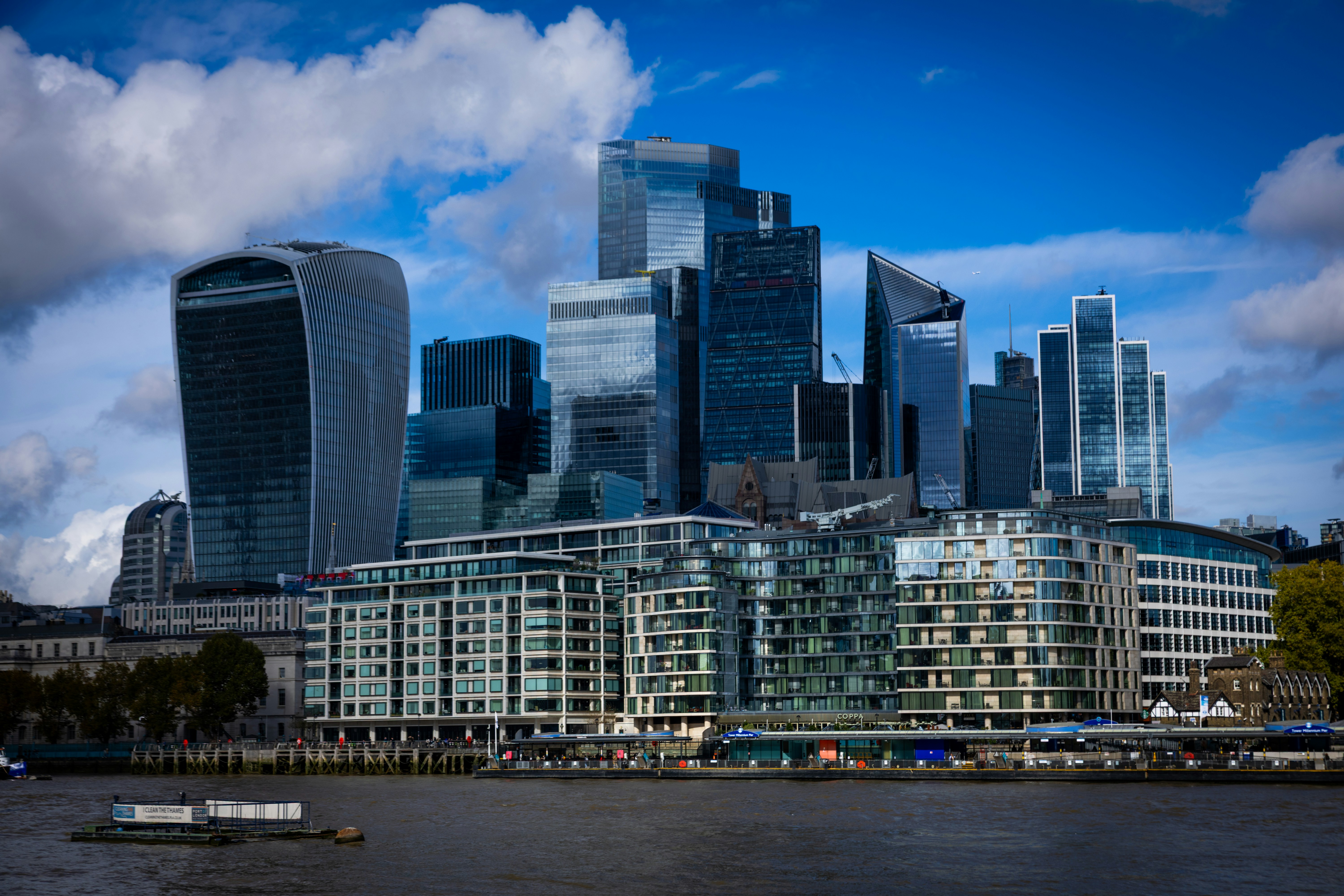
When a jurisdiction advertises itself as a financial hub, the skyline is the least important part. Ask who writes the applicable law, who issues the license, which court hears disputes, which insolvency regime applies, who sets the tax rate, whether capital can move freely, and where beneficial ownership must be disclosed.
Those questions separate ceremony from authority. In the City of London, medieval offices coexist with ordinary UK sovereignty and modern national regulation. In DIFC, a purpose-built jurisdiction creates a defined legal and regulatory perimeter inside a broader federation. In sovereign financial centers such as Luxembourg or Switzerland, the perimeter is national.
The Square Mile’s real lesson is not that bankers secretly own a country. It is that institutions can survive for centuries when they keep solving valuable problems—and that ceremonial oddities can distract from the quieter mechanisms through which power actually works: law, expertise, networks, access, and trust.
Important sources
City of London Corporation, The City’s government: https://www.cityoflondon.gov.uk/about-us/law-historic-governance/the-citys-government
City of London Corporation, Voting and elections: https://www.cityoflondon.gov.uk/about-us/voting-elections
City of London Corporation, statement on the “state within a state” claim: https://news.cityoflondon.gov.uk/statement-re-state-within-a-state-times-8-aug-2015/
Financial Conduct Authority: https://www.fca.org.uk/
Bank of England, history and establishment: https://www.bankofengland.co.uk/about/history
HM Revenue & Customs, Big Bang and the London Stock Exchange: https://www.gov.uk/hmrc-internal-manuals/stamp-taxes-shares-manual/stsm121020
Dubai International Financial Centre, laws and regulations: https://www.difc.com/business/laws-and-regulations
Dubai Financial Services Authority: https://www.dfsa.ae/