
Knights Templar Banking: The Medieval Payment Network
A traveler leaves London carrying no chest of coins, crosses roads haunted by bandits, boards an unreliable ship, and months later reaches the eastern Mediterranean with access to money. Nothing has been wired. No banknote has crossed the sea. The traveler carries only a claim that another institution is prepared to honor.
That sounds remarkably modern. It was possible, in limited forms, more than seven centuries before SWIFT, correspondent banking, or electronic ledgers. One of the organizations capable of arranging it was not a bank but a religious military order: the Knights Templar.
The Templars did not invent banking, and the popular story that they created the first international bank is too neat. What they did build was more interesting: a trusted network that could guard assets, maintain accounts, transfer value, finance rulers, and settle obligations across borders in an age when roads were dangerous, coins were inconsistent, and political authority was fragmented.
The financial problem hidden inside a pilgrimage
The Knights Templar emerged in the early twelfth century, traditionally dated to around 1119, with a narrow military purpose: protecting Christian pilgrims traveling to and around Jerusalem. Pilgrimage, however, was also a financial operation.
A traveler needed food, lodging, transport, animals, port fees, supplies, and emergency cash. Carrying enough coin for a long journey made the traveler an attractive target. The problem was not simply how to own money. It was how to make spending power available somewhere else without physically carrying the full value along the route.
The Templars were unusually well positioned to solve that problem. They had fortified houses, disciplined personnel, papal privileges, donations of land, and establishments stretching across parts of Europe and the eastern Mediterranean. Their commanderies were not bank branches in the modern legal sense, but together they formed a recognizable institutional network.
The critical product was trust. A document issued in one place had value because another Templar house recognized the organization behind it. The paper—or the entry in an account—was useful only because the network was expected to honor the obligation.
From armed escort to financial infrastructure
The order accumulated wealth for practical reasons. Crusading required ships, horses, weapons, castles, food, and wages. Donations of land and income supported that mission. The Templars therefore became experienced at collecting revenues in the West and making resources available in the East.
Once an organization can move its own funds reliably, outsiders begin asking it to move theirs. The Templars stored valuables, received deposits, transported cash, acted as intermediaries, administered estates, collected taxes and church revenues, and handled payments for nobles, monarchs, and the papacy.
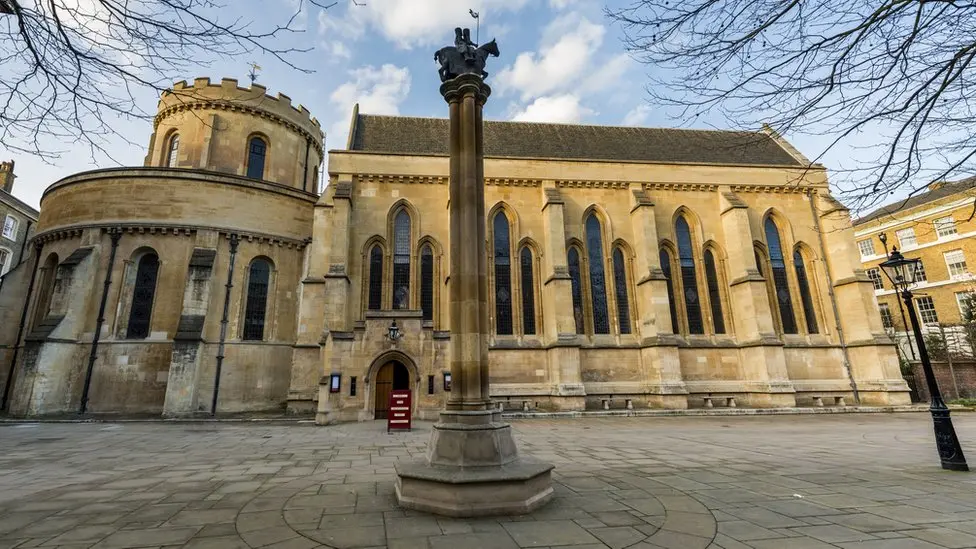
England’s royal treasury was at times kept at the Temple in London. In France, the Paris Temple became deeply involved in royal financial administration. A ruler could use balances held with different Templar houses to pay a foreign creditor or support military operations without arranging a fresh convoy of silver for every transaction.
This was not banking by accident. It was financial intermediation growing out of logistics. The order’s military mission created the network; the network created financial capacity; and that capacity attracted clients whose transactions made the network still more important.
How a medieval money transfer might work
Imagine a crusader or merchant depositing a quantity of silver with a Templar house in England. The house records the deposit and provides documentation entitling the customer—or an authorized beneficiary—to receive value from another Templar establishment closer to the destination.
The receiving house does not need to wait for those exact coins to arrive. It can pay from money already collected locally through rents, donations, taxes, repayments, and other deposits. The institutions later reconcile the imbalance through accounting, shipments, offsetting obligations, or transfers between houses.
The essential achievement is netting. Instead of moving a bag of coins for every customer, the network moves claims and periodically settles the difference. Modern correspondent banks do something conceptually similar: institutions maintain accounts with one another, execute customer payments against those balances, and settle only what the accounting requires.
The analogy should not be pushed too far. Surviving records are incomplete, practices differed by time and place, and a medieval instruction was not a standardized, instantly transferable bank draft. Exchange rates, coin quality, fees, distance, and political risk all mattered. But the basic economic transformation is clear: a physical transport problem became an accounting problem.
Did they invent the letter of credit?
No. Long-distance trade, deposits, loans, and credit instruments existed before the Templars and developed through many communities. Italian merchant-bankers, monasteries, Jewish financiers, Islamic commercial networks, and other military orders all contributed to medieval finance.
The Templars’ importance came from the combination of several qualities: geographic reach, perceived neutrality, armed security, religious legitimacy, durable internal rules, and relationships with both church and state. Few organizations could offer all of these at once.
It is therefore safer to describe them as major financial intermediaries than as the inventors of modern banking. They did not operate a regulated deposit-taking bank, create money through fractional-reserve lending, provide deposit insurance, or belong to a central-bank settlement system. Deposited valuables could remain separately identified rather than being pooled and lent in the modern manner.
The real innovation was institutional portability. A customer could deal with the same trusted order under different rulers, legal customs, currencies, and languages. The Templar name made a claim recognizable outside the place where it originated.
Lending in a world suspicious of interest
Christian teaching treated usury—the charging of interest on a loan—as morally dangerous and often prohibited. Yet lending money across time involved genuine costs: administration, default risk, currency depreciation, and the loss of alternative uses for the funds.
Medieval finance did not eliminate these costs. It expressed them through other structures. A transaction might include administrative charges, exchange-rate adjustments, a share of revenue, pledged land, or rights to the produce of an estate. Some arrangements looked economically similar to interest even when they were not described that way.
This is an enduring feature of finance. When a society restricts one contractual form, the underlying economic need often reappears in another. The resulting structures can be legitimate risk-sharing devices, evasions of the rule, or something between the two.
The Templars’ religious status did not place them outside economics. Their operations still had to compensate for distance, uncertainty, liquidity, and the possibility that a borrower—particularly a king—might not repay.
When the customer is a king
Royal finance could make an institution powerful, but it also created concentrated risk. Kings borrowed for wars, diplomacy, ransoms, and administration. They deposited treasure, pledged revenues, and relied on intermediaries to collect and disburse funds.
A sovereign borrower is unlike an ordinary customer. The state can tax, seize property, rewrite rules, or prosecute the creditor. It may have the greatest capacity to repay and the greatest capacity to refuse.
This was the weakness inside the Templars’ strength. Their relationship with monarchs gave them prestige and access, but it also exposed them to political power. A financial institution can diversify many borrowers; it cannot easily diversify away the ruler who controls the courts, soldiers, and law in the country where its assets sit.
Friday, October 13, 1307
By the early fourteenth century, the Templars had lost much of the military justification for their existence after the fall of the remaining Crusader strongholds in the Holy Land. Their wealth, privileges, and independence were now easier to envy than to defend.
King Philip IV of France was under severe fiscal pressure after years of war. On Friday, October 13, 1307, his agents carried out coordinated arrests of Templars across France. Members of the order were accused of heresy and subjected to imprisonment, interrogation, and torture. Historians generally regard the charges with deep skepticism and see Philip’s political and financial interests as central to the attack.
It is often claimed that the arrests created the superstition surrounding Friday the thirteenth. That makes a wonderful story, but evidence connecting the modern superstition to the Templars appears much later. The date is historical; the supposed origin of the superstition is probably retrospective mythology.
Pope Clement V formally dissolved the order in 1312. Much of its property was intended for transfer to the Knights Hospitaller, although rulers, officials, and local interests complicated what happened in practice. The network did not fail because customers simultaneously demanded their deposits. It was dismantled through law, coercion, and political power.
The first rule of a payment network is survival
The Templar story contains a lesson more durable than the legends of hidden treasure. A payment network is not merely software, buildings, or accounting entries. It is a web of enforceable promises.
For the network to function, users must believe that an instruction issued in one place will be recognized elsewhere; that the intermediary will still exist when payment is due; that records cannot be casually altered; and that political authorities will not simply confiscate the system.
Modern payment firms solve these problems with licenses, safeguarding rules, correspondent accounts, settlement banks, capital requirements, cybersecurity, audits, and contractual law. Stablecoin systems add reserve custody, redemption rights, blockchain governance, and issuer jurisdiction. The components have changed, but the central question has not: why should a claim created here be trusted over there?
The Templars possessed extraordinary institutional trust but lacked protection from sovereign intervention. Their network was geographically distributed, yet its legal existence ultimately depended on rulers and the papacy. Operational resilience could not compensate for political extinction.
What the Templars actually teach us about money
The great achievement of the Templars was not a secret financial formula. It was the conversion of reputation into infrastructure.
They made value more portable by separating money from the need to carry particular coins. They reduced the danger of transport by using records and claims. They connected distant pools of liquidity. They demonstrated that a trusted institution could operate across political borders and make fragmented monetary systems more usable.
They also demonstrated the limits of that model. Concentrated sovereign exposure is dangerous. Institutional neutrality lasts only while powerful actors accept it. Financial claims depend on enforceability, not merely elegant bookkeeping. And an organization that becomes important to the state may discover that importance is not the same as protection.
The modern world has faster rails and better mathematics, but cross-border finance still runs on a medieval question: who will honor the promise when the traveler reaches the other side?
Important sources
Bank of England, Global Pipes—Challenges for Systemic Financial Infrastructure: https://www.bankofengland.co.uk/-/media/boe/files/speech/2017/global-pipes-challenges-for-systemic-financial-infrastructure.pdf
The National Archives, Religious Houses and Their Lands: The Knights Templar: https://www.nationalarchives.gov.uk/help-with-your-research/research-guides/religious-houses-lands-1000-1530/
Historic Royal Palaces, Templars at the Tower: https://www.hrp.org.uk/blog/templars-at-the-tower/
Law Library of Congress, Templar Secrets at the Law Library of Congress?: https://blogs.loc.gov/law/2011/09/templar-secrets-at-the-law-library-of-congress/
American Historical Review, The Financial Relations of the Knights Templars to the English Crown: https://academic.oup.com/ahr/article-abstract/8/1/1/61718
Also see
William N. Goetzmann, Money Changes Everything: How Finance Made Civilization Possible:
https://www.jstor.org/stable/j.ctvc77dzg
Malcolm Barber, The New Knighthood: A History of the Order of the Temple:
https://www.cambridgebookshop.co.uk/products/the-new-knighthood