
Gift Cards: The Interest-Free Loans Hiding in Your Wallet
The most profitable product in a shop may be the one that never leaves the shelf. A customer hands over $50, the business hands back a small rectangle of plastic—or merely a string of digits—and no coffee, sweater, book, or meal changes hands. The company has the cash. The customer has a promise.
That promise is a gift card, and it occupies a strange borderland between payment, credit, accounting, marketing, and money. To the person buying it, the card feels like prepaid spending. To the recipient, it feels almost like cash. To the issuer, however, it is something more interesting: customer-funded working capital, a future sale waiting to happen, and sometimes revenue from a purchase that will never be completed.
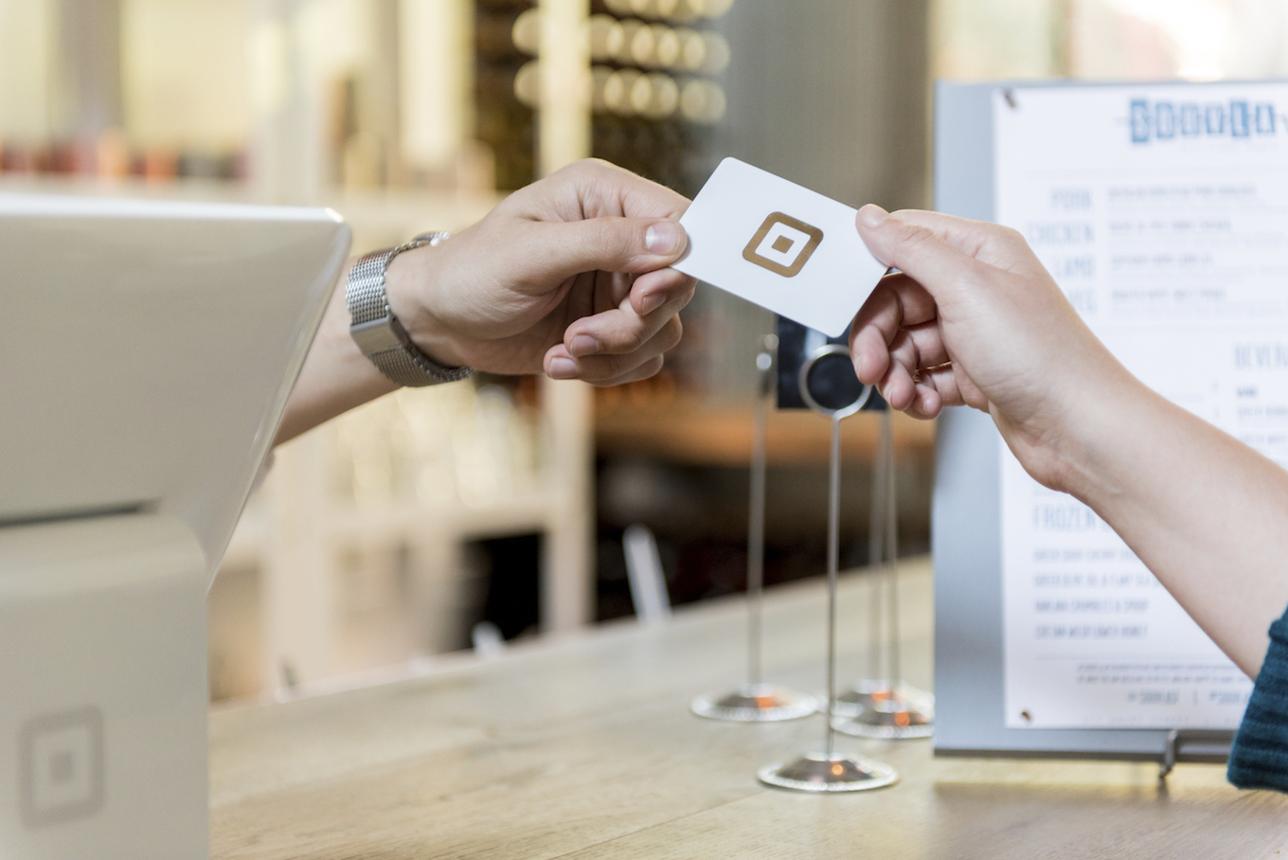
The sale that has not happened yet
Suppose you buy a $50 card from a restaurant. Economically, the restaurant has borrowed $50 from you without paying interest or negotiating a loan agreement. It can use that cash immediately—to pay wages, replenish inventory, or simply strengthen its bank balance. In return, it owes the holder $50 worth of future food.
Accounting makes the distinction explicit. The restaurant normally cannot treat the entire $50 as revenue on day one, because it has not yet served anything. Cash rises on one side of the balance sheet; a liability—often called deferred revenue or a contract liability—rises on the other. When the card is redeemed, the liability falls and sales revenue is recognized.
The arrangement is valuable because time separates payment from performance. A conventional retailer usually buys stock, pays employees, opens its doors, makes a sale, and then receives money. A gift card reverses part of that order. The business is paid before it provides the product. Even if the delay lasts only a few weeks, millions of small advance payments can form a meaningful pool of financing.
Starbucks offers a vivid public example. Its 2025 annual report says card activations, reloads, and loyalty points added about US$15.25 billion to deferred revenue during the fiscal year. At year-end, the company reported about US$1.75 billion in stored-value-card and loyalty-program deferred revenue. That balance was not a pile of forgotten profit; it was money received against drinks, food, or rewards that Starbucks still expected to provide.
Two cards that look alike but behave differently
Not every gift card belongs to the same financial species. A closed-loop card works only with a particular merchant or group of merchants: a bookstore card, a coffee-shop balance, or credit for an online game. An open-loop card carries a payment-network brand such as Visa or Mastercard and can be accepted by many unrelated merchants.
The difference matters. A closed-loop issuer is promising its own goods or services. The merchant controls where the value can be spent, may gain a direct relationship with the user, and keeps the spending inside its commercial ecosystem. An open-loop program looks more like a general payment instrument. It needs a bank, a network, processors, compliance arrangements, and rules for transactions across many merchants.
The plastic is almost incidental. Under U.S. Regulation E, gift-card rules can apply to a card, code, or other device, including an electronic promise. A barcode in an email and a number stored in an app can perform the same economic job as a card hanging near a supermarket checkout.
Why retailers love being paid first
The financing benefit is only the beginning. A gift card turns a recipient into a customer who has already committed money to one brand. That changes the psychology of the next purchase. Someone holding a $50 store balance is less likely to compare every competitor before entering the store, because part of the decision has already been made.
The card can also bring in a person the retailer did not originally acquire. The buyer chooses the brand; the recipient becomes the shopper. If the final basket costs $63, the merchant receives an additional $13. If it costs $47, the remaining $3 may pull the shopper back another day—or sit unused. In either case, a gift card can create another visit, another data point, and another opportunity to sell.
This is why gift cards are not merely a convenient substitute for choosing a present. They are a compact loyalty program sold at face value. Unlike a discount coupon, they deliver cash upfront. Unlike ordinary advertising, they arrive with a funded intention to spend.
The quiet economics of breakage
Now consider the card that falls behind a drawer, loses its last few dollars, or belongs to a store the recipient never visits. The unspent value is called breakage. It is one of the most misunderstood parts of the business.
Breakage does not mean that an issuer can immediately declare every dormant balance to be profit. The company must estimate, from historical behavior, how much value is unlikely to be redeemed. Under applicable accounting rules, expected breakage can generally be recognized in proportion to actual redemptions when the issuer expects to be entitled to it. Unclaimed-property laws may instead require some balances to be reported or remitted to a government authority. The details vary by jurisdiction and by the kind of card.
The sums can be substantial. Starbucks reported US$200.4 million of breakage revenue in company-operated stores and another US$22 million in licensed stores for fiscal 2025—more than US$222 million in total. The striking point is not that customers collectively forgot a few coffees. It is that tiny abandoned balances, repeated across a very large network, became a material revenue line.
Breakage also creates a delicate incentive problem. A business benefits when some value is never redeemed, but a gift card becomes unattractive if customers believe it is designed to trap their money. The strongest programs therefore try to make redemption easy while accepting that ordinary human forgetfulness will leave a statistical residue.
The accounting trick that is not a trick
From a distance, breakage can look like invented revenue: the business records income without handing over a product. Yet the logic is less mysterious. The original payment created an obligation. If evidence eventually shows that part of that obligation probably will not be claimed—and the law allows the issuer to retain it—the liability can be reduced and revenue recognized.
What matters is the quality of the estimate. Redemption behavior can change when a company alters expiration policies, closes stores, changes its app, enters new markets, or faces reputational damage. A model built on yesterday’s customers may misread tomorrow’s. If the estimate is too aggressive, earnings appear early; if too conservative, liabilities linger after the economic obligation has largely faded.
This is also why stored-value balances deserve attention in a corporate cash-flow analysis. The cash may already be in the bank, but it is not free of claims. A company with a large gift-card float has funding, but it also has a future operating obligation: products must be available, stores must remain accessible, systems must recognize balances, and customer support must resolve failures.
The consumer-protection bargain
Gift-card rules try to preserve the usefulness of advance payment without allowing value to evaporate through fine print. In the United States, federal rules generally require gift-card funds to remain available for at least five years. Dormancy, inactivity, or service fees are tightly limited: they generally cannot begin until there has been no activity for at least one year, must be disclosed, and normally may be charged no more than once per month. State laws can offer stronger protection.
These rules protect time, but they do not make every gift card equivalent to a bank deposit. Gift cards typically do not receive all the protections attached to regulated prepaid accounts. Protection after loss, theft, or unauthorized use can depend on the program, whether the card was registered, and how quickly the holder reports the problem. A card issued by a retailer is ultimately a claim on that program, not physical cash stored inside the plastic.
There is also issuer risk. If a retailer fails, closes locations, or enters bankruptcy, the practical value of its cards can deteriorate even when the numbers remain visible in an account. The holder may discover that “money at a store” is not the same thing as money in an insured bank account. The gift card was always a promise; financial distress merely reveals who made it.
Why criminals love gift cards
The same features that make gift cards convenient also make them useful to criminals. They are widely available, easy to transfer, quick to redeem, and separable from the person who originally paid. A scammer does not need the physical card. Once the victim shares the number and PIN, the value can be spent, resold, or laundered through goods before anyone realizes what happened.
That is why an urgent demand to pay a tax bill, utility charge, fine, employer request, or emergency with gift cards is such a clear warning sign. The U.S. Federal Trade Commission says only scammers ask for gift-card numbers and PINs as payment. In January 2026, it specifically warned about impostors posing as bosses and requesting cards for supposed company events.
Fraud can also begin before purchase. Criminals may tamper with cards on store racks, capture their numbers and PINs, then wait for a legitimate customer to load value. The moment the card becomes active, automated monitoring can help the thief drain it. The transaction looks like a retail sale, but underneath it is a race between activation and theft.
When a gift card becomes regulated money
For a small merchant, a single-brand card may look like nothing more than an accounting and customer-service product. Add the ability to reload it, transfer value between users, withdraw cash, spend internationally, or use it across unrelated merchants, and the regulatory picture changes.
U.S. anti-money-laundering rules illustrate the boundary. FinCEN excludes certain lower-risk arrangements, including closed-loop prepaid access that does not exceed US$2,000 in maximum value on any day. Open-loop and other prepaid programs can face different limits and conditions, while providers and certain sellers may have registration, recordkeeping, suspicious-activity reporting, and AML-program duties. The decisive issue is not whether the product is marketed as a “gift card.” It is what the value can actually do.
This principle travels well beyond the United States. Regulators tend to look through the label and examine functionality: who holds the funds, where they can move, whether they are redeemable for cash, whether users can transfer them, and which entity bears the obligation. A merchant credit, a prepaid card, an e-money balance, and a wallet may look similar on a phone screen while belonging to very different legal categories.
What gift cards reveal about money
Gift cards are miniature monetary systems. They have an issuer, an accepted territory, a unit of account, rules of transfer, redemption conditions, and confidence risk. Their value comes not from the plastic or code but from the expectation that someone will honor the claim.
They also show why “money” is often a ladder of promises rather than a single object. A bank deposit is a promise from a bank. A stablecoin is a promise structured around reserves and redemption. A gift card is a narrower promise from a merchant or program. Each can be quoted in dollars, but each depends on a different balance sheet, legal framework, and network of acceptance.
The practical lesson is simple: follow the liability, not the branding. Ask who received the cash, who must honor the value, when revenue can be recognized, what happens to unused balances, and which features turn a retail promise into a regulated payment product. A gift card may be sold beside the chewing gum, but financially it is a small lesson in corporate funding, consumer trust, and the architecture of money.
Important sources
Consumer Financial Protection Bureau, Regulation E §1005.20—Requirements for gift cards and gift certificates:
https://www.consumerfinance.gov/rules-policy/regulations/1005/20/
Consumer Financial Protection Bureau, Choose the right card for your situation:
https://www.consumerfinance.gov/consumer-tools/prepaid-cards/choose-the-right-card/
Financial Crimes Enforcement Network, Final Rule—Definitions and Other Regulations Relating to Prepaid Access:
Federal Trade Commission, Gift Card Scams:
https://consumer.ftc.gov/gift-card-scams
Starbucks Corporation, 2025 Form 10-K:
https://www.sec.gov/Archives/edgar/data/829224/000082922425000114/sbux-20250928.htm