
General Average: Why Undamaged Cargo Can Owe a Rescue Bill
Imagine getting word that your shipment survived a maritime accident. The container is intact. The goods inside are fine. Then comes the less welcome news: you may have to provide a guarantee or put up cash before you can collect it. The bill is not for damage to your goods. It is for part of the cost of saving them.
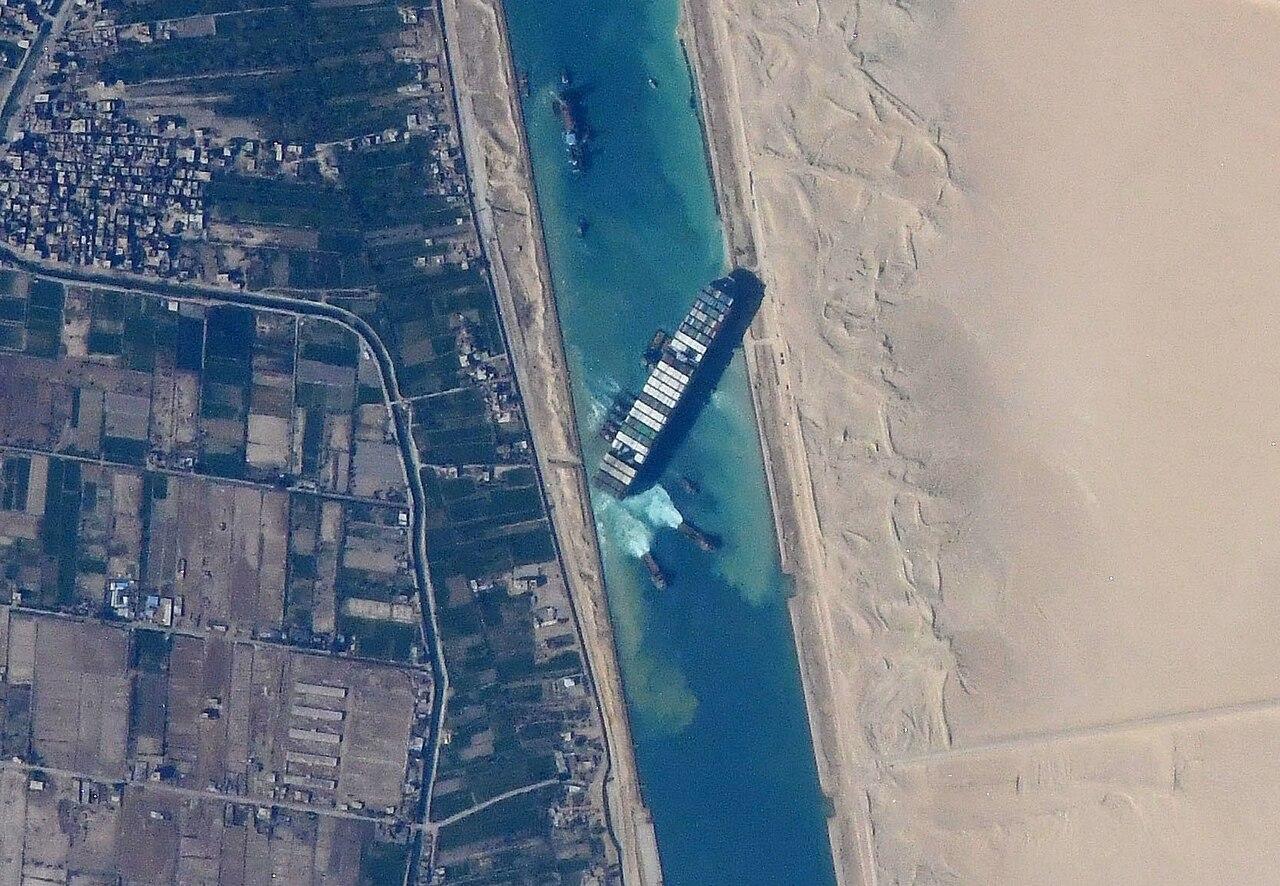
That was the problem facing cargo interests after the Ever Given grounded in the Suez Canal on March 23, 2021. The ship was refloated six days later. In early April, freight forwarders were told that the owner had declared general average. To people watching from shore, the story was about reopening a canal. To businesses with goods aboard, it was also about an old maritime rule that can turn a successful rescue into a financing problem.
Why the cargo that survived can owe money
Start with the classic example. A ship is in danger of sinking. The master deliberately throws some cargo overboard to save the ship and what remains aboard. If each owner simply absorbed whatever happened to its own property, the owner of the sacrificed goods could bear the whole cost of a decision that benefited everyone else. General average gives the parties a way to share that loss.
The modern rule covers certain expenses as well as sacrifices. The York-Antwerp Rules, which are commonly incorporated into carriage contracts, start with the idea of an extraordinary sacrifice or expense intentionally and reasonably incurred for the common safety of property in danger on a shared voyage. A reasonable emergency expense to save ship and cargo can qualify; an ordinary operating bill does not qualify simply because it arrived in the same week as a casualty.
The difference between a loss that happens and a sacrifice deliberately made to save the voyage matters. If seawater damages a crate during a storm, that is not automatically a shared loss. If cargo is deliberately sacrificed in an eligible effort to save the ship and its cargo, the analysis changes. And a buyer’s lost sales because the goods arrived late are not part of the common rescue bill merely because the delay followed the same accident.
How the bill is divided
Suppose an adjuster allows US$6 million of common rescue costs and determines that the total contributing value of the ship, cargo, and any other relevant interests is US$120 million. That produces an illustrative contribution rate of 5%. Cargo with a contributory value of US$200,000 would owe US$10,000. The shipowner’s interest also contributes. The ship is part of the property that was saved, not a spectator sending invoices from shore.
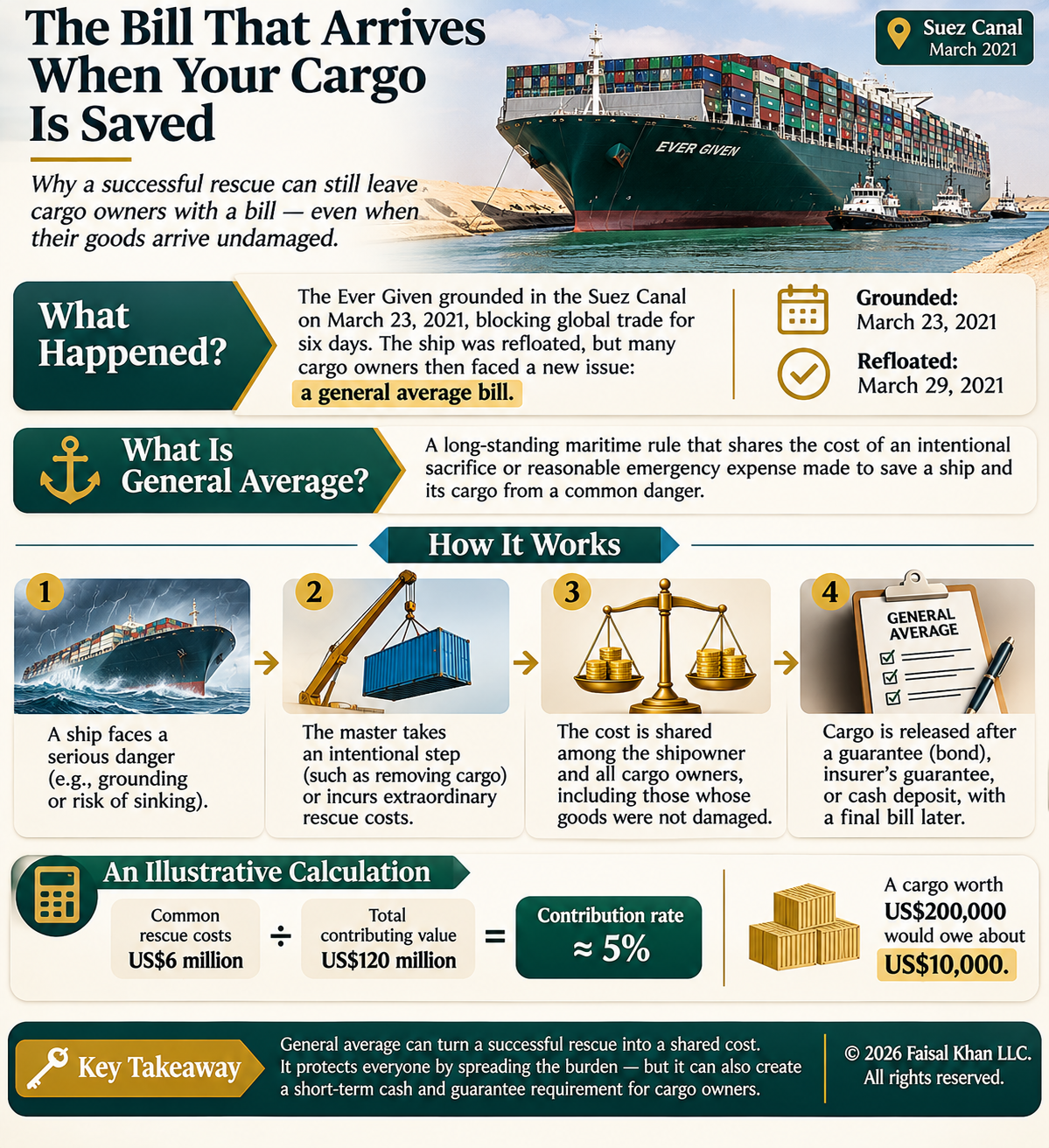
The numbers depend on value, not weight or container count. A container of high-value electronics can attract a bigger contribution than an equally large container of low-value goods. And the adjuster’s valuation is not necessarily the first number someone finds on a purchase order. Invoices, freight and insurance details, and evidence of damage may all matter under the applicable rules.
The adjuster’s job is to decide which items belong in the common account and how to allocate them. That is different from deciding which party caused the accident. It is also why an early request for security should not be read as the final bill: the initial estimate is made before every claim and value is known.
The shipment arrives before the calculation does
There is a timing problem here. An adjuster needs records from many parties to finish the calculation. An importer may need the goods on a truck this afternoon. If the cargo were handed over with no security, the parties entitled to contribution might later have to collect from businesses scattered across different countries. The system bridges that gap by seeking security before release.
The two documents that often cause confusion are the general average bond and the insurer’s guarantee. The bond is typically the cargo interest’s written undertaking to pay the contribution properly due. An acceptable guarantee from a cargo insurer can provide financial backing for that undertaking. If adequate insurance or an acceptable guarantee is unavailable, a cash deposit may be required instead. None of those instruments, by itself, makes the preliminary estimate the amount ultimately owed.
For an importer, the immediate difference is liquidity. A guarantee can allow goods to move without the same cash being tied up. A deposit may come out of money earmarked for duties, payroll, or the next supplier payment. And getting the general average paperwork right clears only that obstacle. It does not make a port restriction, a separate salvage security demand, or another reason for withholding delivery disappear.
Why the declaration doesn’t settle who was at fault
General average and legal responsibility can run on separate tracks. Consider a different grounding, involving the CMA CGM Libra. In 2021, the UK Supreme Court upheld a finding that a defective passage plan made the ship unseaworthy at the start of the voyage and that the owner had not exercised due diligence. The shipowner could not recover general average contributions from the cargo interests that defended the claim.
That judgment was not a ruling about the Ever Given. Its value is in showing the difference between declaring general average, collecting security, and establishing a right to recover. The applicable contract and law matter. A cargo owner may face an urgent decision about getting goods released while liability questions are still unresolved. The forms and wording used at that stage deserve attention precisely because the commercial pressure to sign them is so immediate.
The risk sits between insurance and working capital
A business may think it has dealt with shipping risk because someone booked the freight and the invoice says who is responsible for transport. That still leaves a different question: if security is demanded tomorrow, which insurer or other party will provide it, in what form, and how quickly? The carrier’s arrangements and the buyer’s cargo insurance are not interchangeable answers.
An importer with seasonal stock may feel the cost of delay long before the final adjustment. A lender relying on inventory as collateral may discover that physically sound goods cannot yet be delivered or sold. A supplier that has already been paid may be less exposed to that wait than the buyer whose cash is locked in the shipment. The loss at issue is not always the value of the goods. Sometimes it is the use of the money and the inventory during the weeks or months when they are unavailable.
One useful pre-shipment check is to trace what happens from the first casualty notice to actual release. Identify the applicable general average clause and the insurer or broker who can arrange acceptable security. Know where to find the commercial invoice, insurance certificate, and carriage documents. Then ask what happens if a guarantee cannot be arranged quickly: who can fund a deposit, and how long can the business wait before it needs replacement stock? That exercise reveals a risk the purchase price and freight quote cannot show.
General average survives because it addresses a problem that hasn’t changed: when ship and cargo are in danger together, the party asked to sacrifice something may not be the party that benefits most. The rule shares certain costs of the rescue. What it cannot share equally is the ability to wait. For a business watching its inventory sit offshore, that may be the part that matters first.
Important sources
Comité Maritime International, York-Antwerp Rules: https://comitemaritime.org/work/york-antwerp-rules-yar/
Comité Maritime International, General Average Guidelines and Security Forms: https://comitemaritime.org/work/cmi-general-average-guidelines-and-security-forms/
FIATA, Ever Given general average announcement, April 8, 2021: https://fiata.org/n/pr-mv-ever-given-owner-declares-general-average/
UK Supreme Court, Alize 1954 v Allianz Elementar Versicherungs AG (CMA CGM Libra): https://www.supremecourt.uk/cases/uksc-2020-0071