
Banking for Argentinian Businesses Is a Flow-of-Funds Problem
For many Argentinian businesses, the problem is not simply:
Can I open a bank account in the United States?
The real question is:
Can I build a banking and payments structure that supports how my business actually receives, holds, moves, invests, and settles money internationally?
That is a very different problem.
An Argentinian company may need to:
receive USD from customers or counterparties in the United States;
receive EUR from customers or counterparties in Europe;
hold USD or EUR outside Argentina in the company’s own name;
make payments to suppliers in the United States, Europe, the United Kingdom, Uruguay, Chile, or elsewhere;
send funds to regulated brokers, custodians, securities platforms, or investment institutions;
receive funds from investment or commercial accounts;
use ACH, Fedwire, SWIFT, SEPA, or multiple payment rails;
operate a treasury or settlement structure across several countries;
maintain named accounts or named sub-accounts;
support customer-specific accounts where the underlying program permits it;
combine fiat settlement with regulated stablecoin or crypto rails where appropriate;
move value in both directions between Argentina and international markets;
or operate under a licensed payment or money-transmission partner where third-party funds are involved.
A normal corporate account may solve one part of this.
It rarely solves all of it.
Our role is to understand the entire transaction architecture and determine what combination of account structure, payment rails, regulated partners, settlement infrastructure, compliance controls, and banking providers may realistically support it.
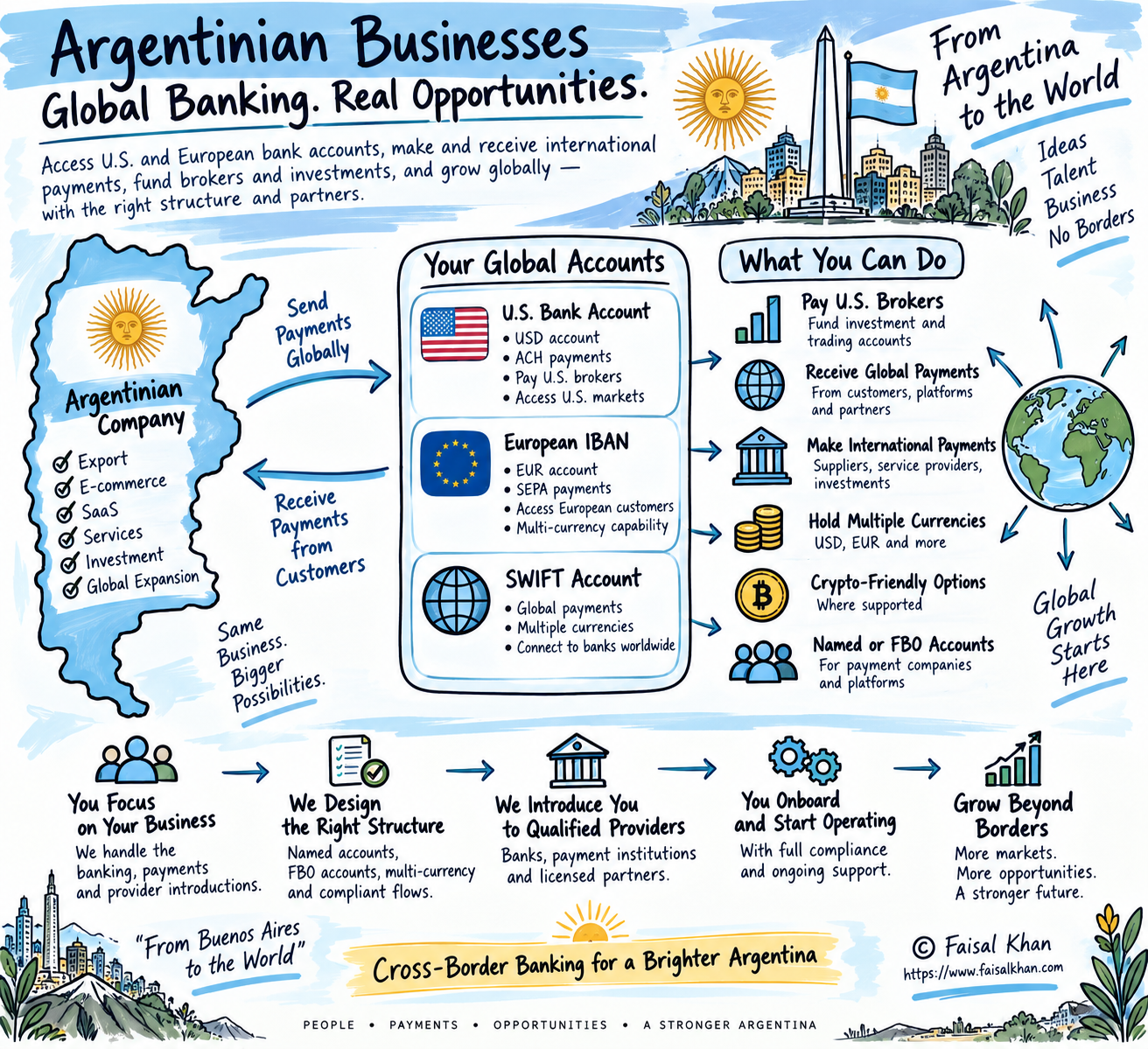
The Solution: International Banking Infrastructure Built Around Your Transaction Flow
We work backward from the transaction.
Before recommending an account or provider, we want to understand:
Who owns the funds?
Where do the funds originate?
Which bank or financial institution sends them?
What is the commercial or investment purpose?
Which currencies are involved?
Where must the funds ultimately go?
How many transactions occur each month?
What is the average and maximum transaction size?
Do you need to move only your own corporate funds, or third-party/customer funds?
Which payment rails are actually required?
Is crypto or stablecoin settlement involved?
Does the business require a named account, sub-account, FBO structure, or settlement program?
Only then do we determine the appropriate solution.
What We Can Potentially Structure
Depending on the profile and provider approval, the solution may include:
Business Requirement | Potential Infrastructure |
|---|---|
USD account in your company’s name | Named USD business account |
EUR account in your company’s name | Named EUR account / IBAN |
Receive U.S. payments | ACH credit, domestic wire, Fedwire |
Send U.S. payments | ACH, domestic wire, Fedwire |
Receive international USD | SWIFT-enabled account |
Send international USD | SWIFT outbound capability |
Receive/pay EUR in Europe | SEPA / SEPA Instant where supported |
Hold multiple currencies | Multi-currency account |
Pay brokers or custodians | Institutional wire / settlement capability |
Pay international suppliers | Cross-border B2B payment rails |
Receive from multiple jurisdictions | Multi-jurisdiction incoming capability |
Customer-specific account references | Named sub-accounts / virtual named accounts where supported |
Hold or settle program/customer funds | Pooled/FBO structure where appropriate |
Operate as a payments business | Licensed partner / Authorized Delegate structure where required |
Fiat + stablecoin settlement | Regulated crypto-compatible banking and settlement partners |
Two-way Argentina ⇆ international settlement | Correspondent / settlement partner structure with local and foreign legs |
Not every business needs every component.
The objective is to build the smallest compliant structure that actually works.
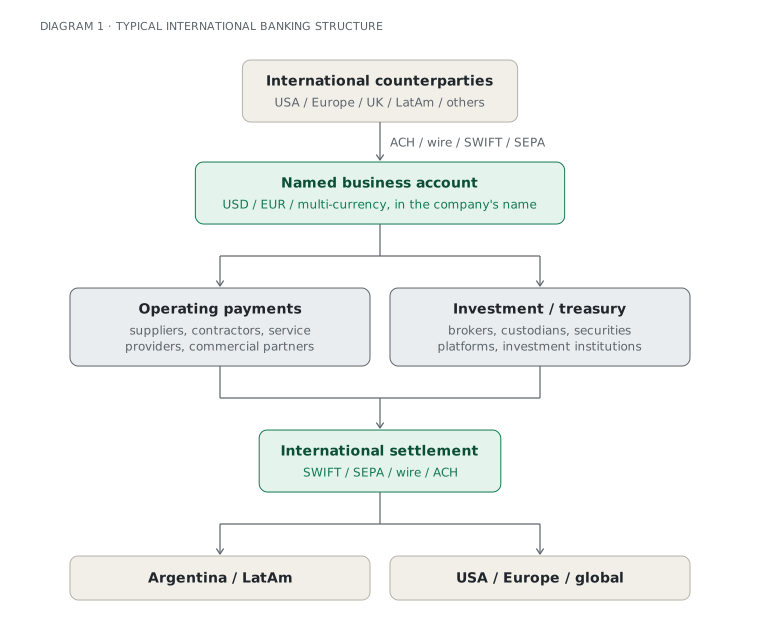
Typical International Banking Structure
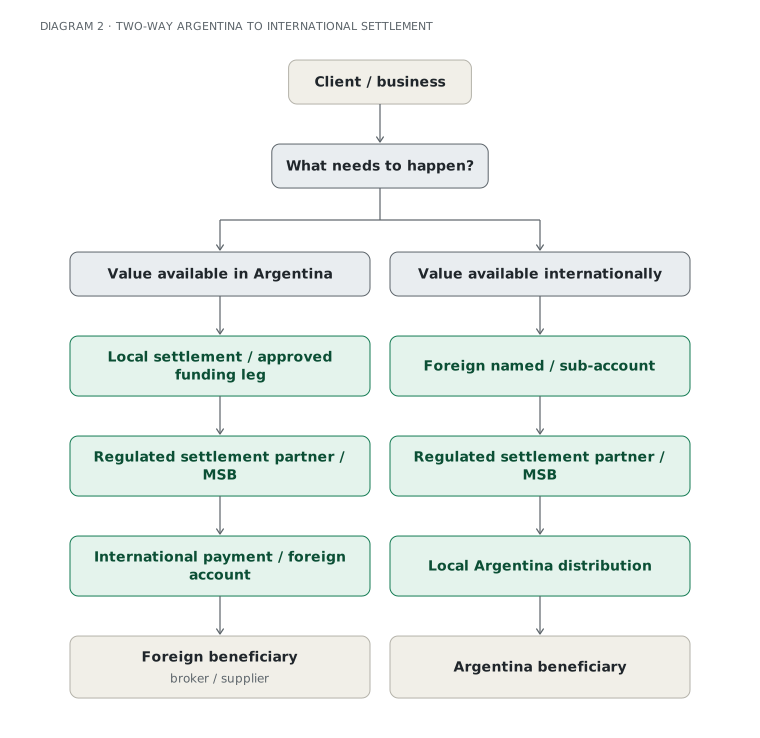
Two-Way Argentina ⇆ International Settlement
Some businesses need more than an offshore account.
They need a two-way settlement model.
That can mean:
value is available internationally and must ultimately be delivered in Argentina; or
value is available in Argentina and must ultimately fund a legitimate international account, supplier, broker, custodian, or other approved beneficiary.
A compliant architecture may involve separate local and international legs connected through a regulated settlement arrangement.
The exact structure depends on the legal ownership of the funds, the source of funds, the jurisdictions involved, and the regulated partners willing to support the corridor.
This should never be treated as a method to conceal the source or destination of funds. The underlying transaction, economic purpose, beneficial ownership, and jurisdictions must be disclosed accurately.
Named Accounts and Named Sub-Accounts
A major requirement for many businesses is that the receiving account should identify the business or underlying client by name.
There are two different concepts.
1. Named Corporate Account
This is an account issued in the name of the business itself.
Account Name: ABC Argentina S.A.
Currency: USD
Account Number: XXXXXXXX
Routing / SWIFT / IBAN: As Applicable
This structure is typically appropriate when the company is:
receiving its own business revenue;
paying its own suppliers;
holding its own treasury balances;
funding its own investments;
or receiving money owed directly to the company.
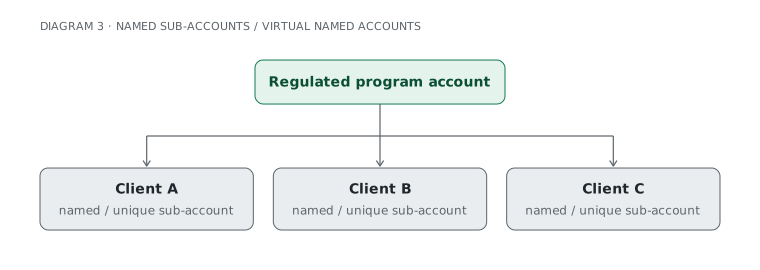
2. Named Sub-Account / Virtual Named Account
Some payment and settlement programs can provide customer-specific or program-specific account references.
These may appear as named or uniquely identifiable sub-accounts while the underlying funds remain within the regulated provider’s banking infrastructure.
This can be useful for:
payment companies;
investment platforms;
marketplaces;
treasury programs;
settlement programs;
or businesses that need to reconcile multiple underlying clients.
The precise legal nature of the account must be confirmed with the provider. A named sub-account is not automatically the same thing as an independently held bank account.
Payments to Brokers, Custodians, and Investment Institutions
This is an important use case.
Some Argentinian businesses do not primarily need an account for payroll or ordinary operating expenses.
They need international banking access because they must send funds to:
brokerage firms;
custodians;
securities platforms;
wealth-management institutions;
investment managers;
fund administrators;
institutional trading accounts;
or other regulated investment counterparties.
A typical flow may look like:
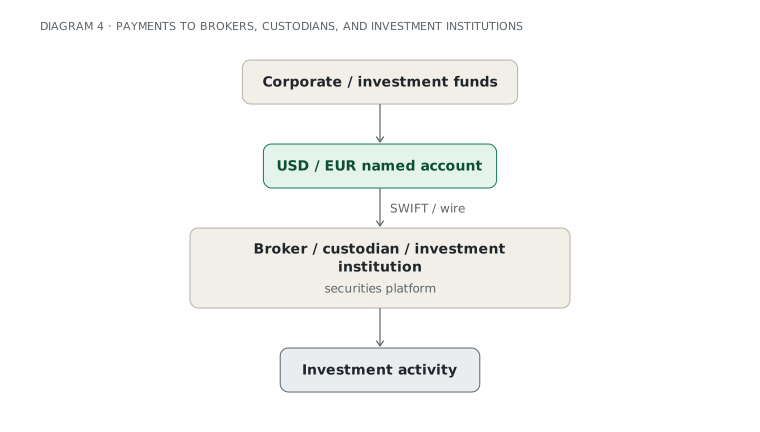
The account provider will normally want to understand:
who owns the investment account;
where the money originated;
the relationship between the sending company and the investment account;
expected transaction volumes;
the investment purpose;
the destination institution;
and whether the activity represents the business’s own funds or third-party money.
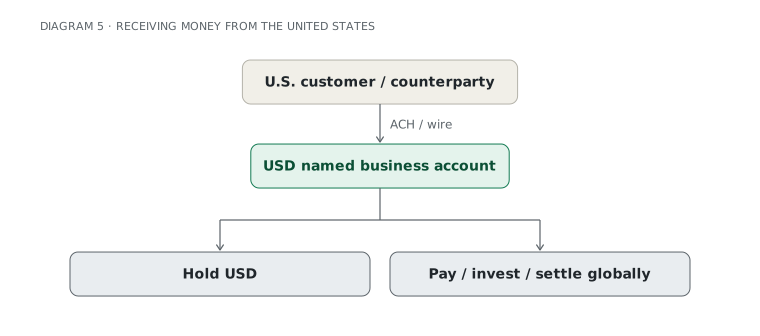
Receiving Money From the United States
An Argentinian business may have customers, commercial partners, investment counterparties, or related companies in the United States.
Depending on the provider, a USD account may support:
ACH credits;
domestic U.S. wires;
Fedwire;
SWIFT;
local routing and account details;
or API-based payment collection.
A typical structure:
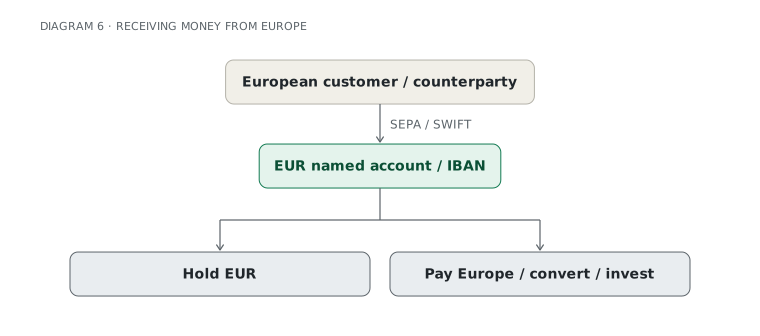
Receiving Money From Europe
A European or international account may provide:
EUR named account details;
IBAN;
SEPA;
SEPA Instant;
SWIFT;
and multi-currency capabilities.
U.S. + Europe Combined Treasury Structure
For some businesses, the strongest structure is not one account.
It is a coordinated USD and EUR treasury setup.
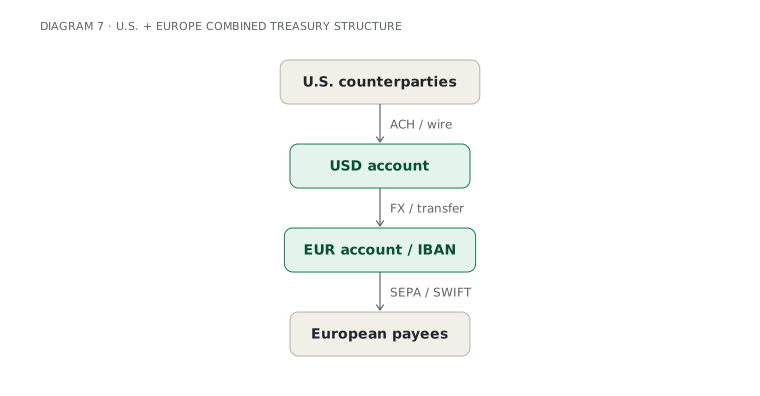
This can provide greater flexibility when the business genuinely operates across both dollar and euro corridors.
Using Crypto or Stablecoins
Some businesses need crypto or stablecoin rails as part of their settlement architecture.
That does not mean crypto replaces compliance.
It means crypto becomes another transparent settlement rail.
A possible structure is:
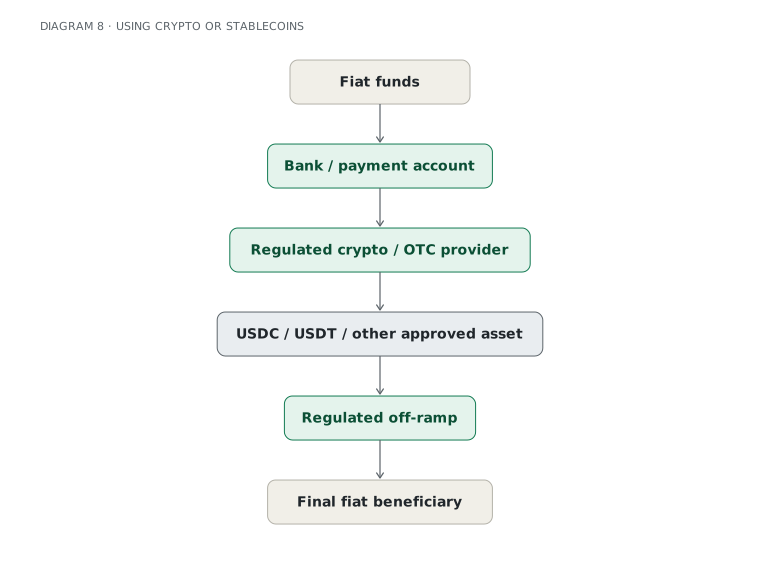
Depending on the provider, the program may support:
USDC;
USDT;
regulated exchange counterparties;
OTC conversion;
fiat on-ramp;
fiat off-ramp;
or stablecoin-based settlement.
Crypto activity must be disclosed during onboarding.
The objective is not to use digital assets to bypass banking controls. The objective is to use them where they legitimately improve settlement speed, cost, liquidity, or corridor access and where all providers approve the structure.
Named Account vs. FBO / Pooled Account
This distinction matters.
Named Account
Use a named corporate account when the business is primarily moving its own money.
Typical use cases:
business revenue;
supplier payments;
treasury;
investment funding;
intercompany payments;
operating expenses;
international collections.
FBO / Pooled Account
A pooled or FBO account may become relevant when the business is handling funds associated with multiple users, customers, merchants, or beneficiaries.
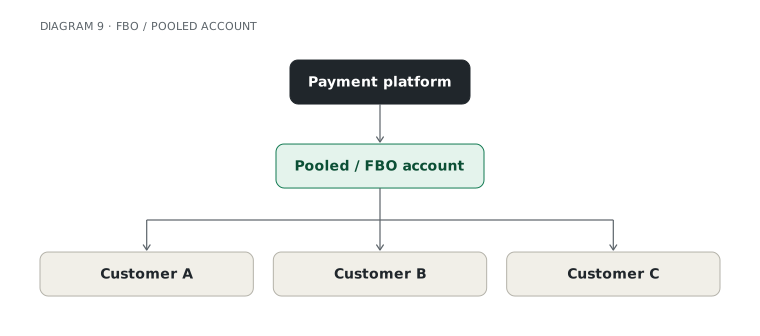
If third-party funds are involved, a normal corporate account may not be enough.
The licensing and regulatory framework must also be considered.
When Licensing Coverage May Be Required
If your business is moving only its own corporate funds, the analysis may be primarily a banking and treasury issue.
If your business is:
receiving money for customers;
transmitting money between third parties;
operating a payment platform;
settling funds for merchants;
offering remittance;
or handling customer balances,
then the solution may require a licensed payment partner.
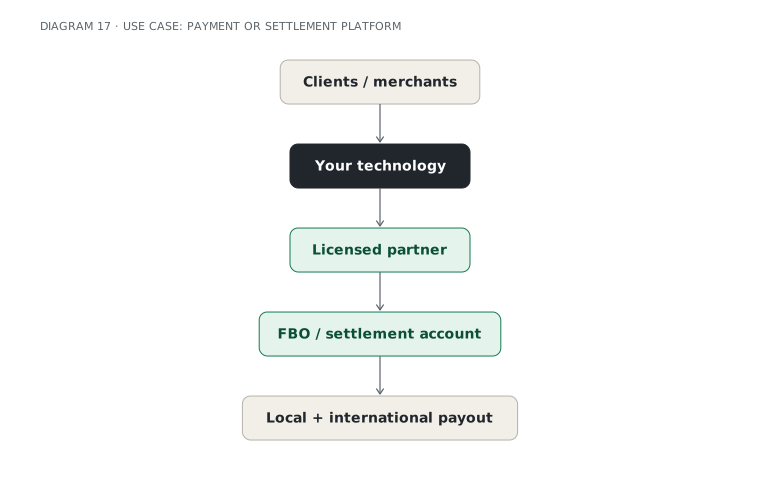
In those cases, a structure may look like:
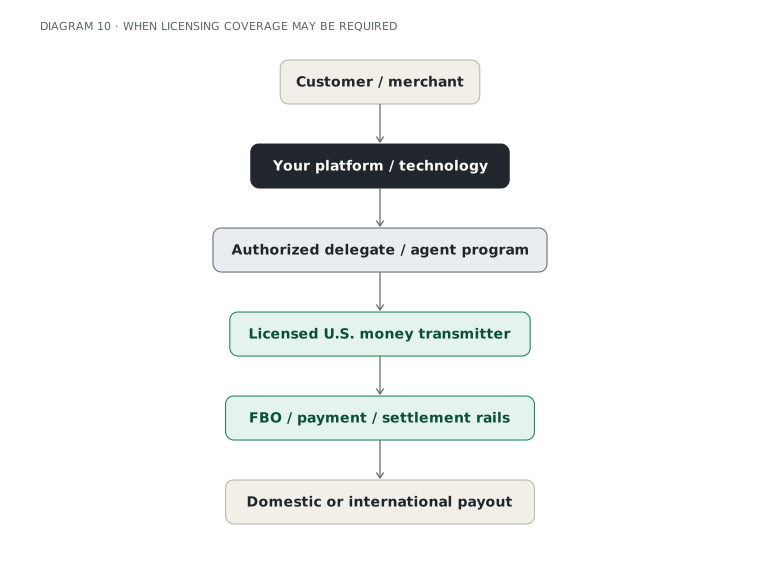
The regulated principal remains responsible for the regulated money-transmission activity, while the business may continue operating its technology, customer interface, commercial relationships, and transaction orchestration within the approved program.
Compliance Is Part of the Product
A workable cross-border banking solution is not merely an account number.
The infrastructure may include:
KYC for individuals;
KYB for companies;
beneficial-owner verification;
source-of-funds review;
source-of-wealth review where appropriate;
daily reconciliation;
transaction statements;
payment vouchers;
audit trail;
corridor controls;
transaction limits;
pre-funding or liquidity arrangements;
regulatory reporting where applicable.
This is why the strongest solution is usually a banking + compliance + settlement architecture, not an isolated account.
Why the Actual Source of Funds Matters
This is one of the most important parts of the entire assessment.
The business may be located in Argentina, but that does not automatically mean every payment originates from an Argentine bank account.
The provider will normally evaluate the actual transaction:
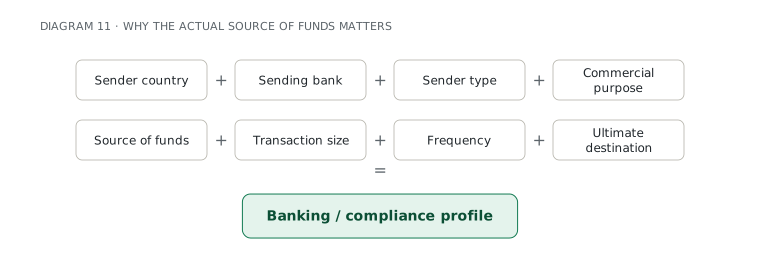
For example, an Argentinian business may receive legitimate payments from:
U.S. commercial accounts;
U.S. investment accounts;
European companies;
European banks;
UK counterparties;
Uruguayan counterparties;
Chilean counterparties;
international customers;
related companies;
or investment proceeds.
The correct structure is based on the actual facts.
The objective is not to hide Argentina exposure.
The objective is to explain the transaction accurately enough that a provider can evaluate it.
Two-Way Settlement Economics
Some settlement structures are technically viable at relatively modest volume but become substantially more efficient as transaction volume grows.
Where the structure involves:
named or program accounts;
settlement partners;
compliance oversight;
local payout partners;
FX;
banking support;
and international payment rails,
there may be:
one-time implementation fees;
monthly platform or banking fees;
named-account or sub-account fees;
KYC/KYB costs;
per-transaction charges;
ACH or wire fees;
SWIFT fees;
FX spreads;
corridor fees;
and volume-based pricing.
For larger payment or settlement programs, economics often improve materially once monthly volumes reach the multi-million-dollar range.
Pricing is highly profile-specific and should be quoted only after the flow of funds has been reviewed.
A Typical Operational Roadmap
For a more sophisticated program, a practical implementation roadmap may resemble:
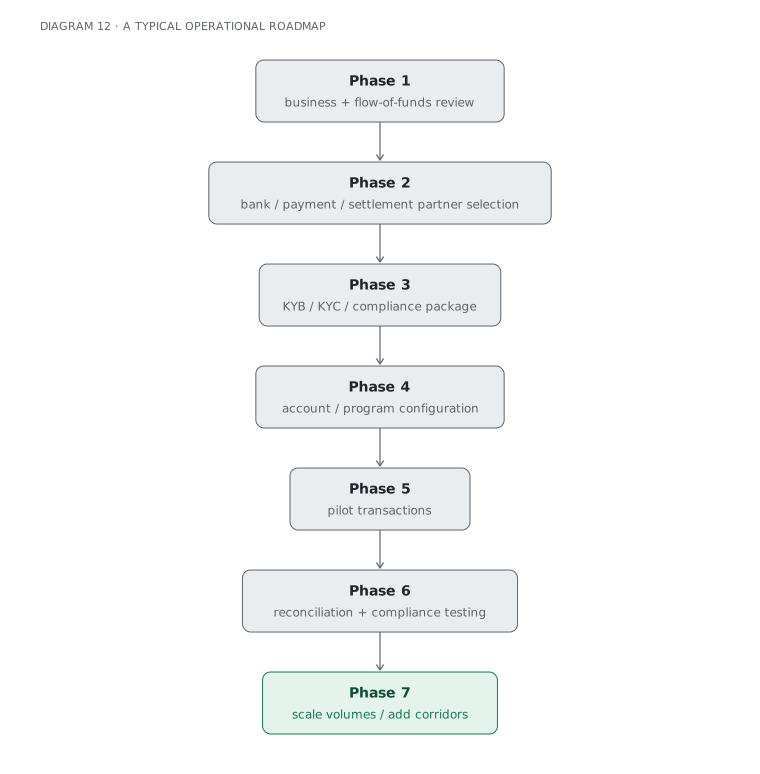
Depending on the provider and complexity, onboarding can take anywhere from a relatively short account-opening process to several weeks for a full settlement or licensed-program implementation.
The Four Layers We Analyze
1. Account Structure
We determine whether you need:
named USD account;
named EUR account;
IBAN;
multi-currency account;
settlement account;
treasury account;
named sub-accounts;
pooled/FBO structure;
or a program account under a licensed partner.
2. Payment Rails
We determine which rails matter:
ACH;
Fedwire;
domestic U.S. wire;
SWIFT;
SEPA;
SEPA Instant;
RTP where available;
stablecoin settlement;
fiat on/off-ramp.
3. Source of Funds
We map:
sender;
sending bank;
sending country;
business purpose;
transaction amount;
source of funds;
source of wealth where relevant;
frequency.
4. Destination and Use of Funds
We determine whether funds are going to:
Argentina;
U.S. suppliers;
EU suppliers;
brokers;
custodians;
investment institutions;
related companies;
customers;
settlement partners;
regulated crypto counterparties;
or other beneficiaries.
Use Cases
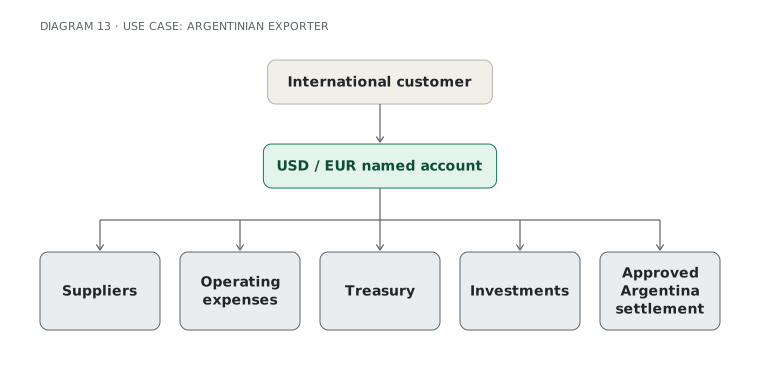
Argentinian Exporter
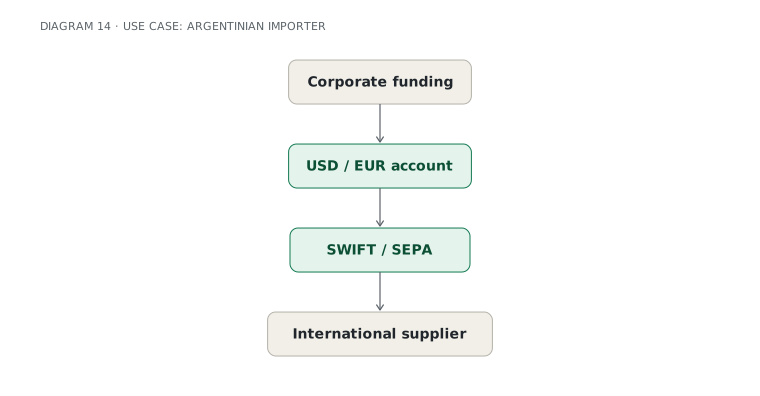
Argentinian Importer
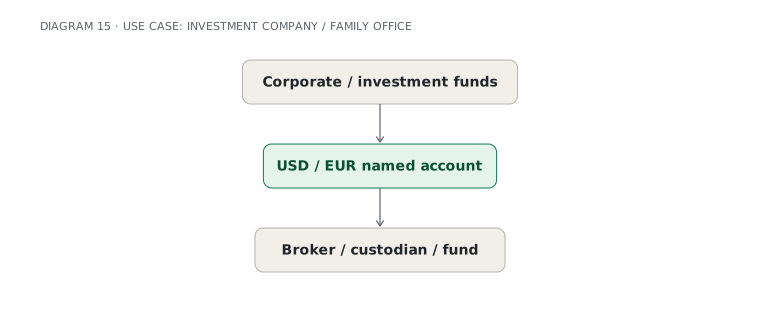
Investment Company / Family Office
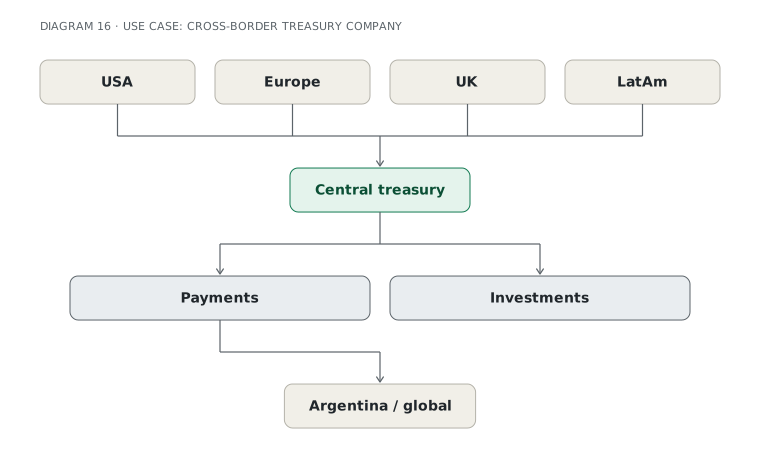
Cross-Border Treasury Company
Payment or Settlement Platform
Information We Need From You
Before we approach a banking or payment provider, we want a complete transaction profile: who you are, where the money comes from and where it goes, the currencies and rails involved, your volumes and ticket sizes, and the problem you are trying to solve.
There is nothing to prepare in advance. The form asks for it a section at a time, it takes about ten minutes, and you can leave anything you do not yet know.
If you already have a flow-of-funds diagram, you can attach it. If you do not, describe the transaction in plain English and we will convert it into one.
Frequently Asked Questions
Can an Argentinian company obtain a U.S. account?
The answer depends on the provider, company ownership, business model, expected transaction activity, source of funds, countries involved, and required payment capabilities.
There is no single universal account that works for every Argentina-linked business.
Can the account be in the Argentinian company’s own name?
Possibly. Named business accounts may be available depending on the company and provider.
Can I get a USD account with ACH?
Some providers can support ACH credits and domestic wires. More specialized programs may support ACH debits/pulls subject to underwriting and transaction approval.
Can I get a EUR IBAN?
Depending on the provider, the account may support EUR balances, SEPA, SEPA Instant, and SWIFT.
Can I receive SWIFT payments?
The provider will review the sender countries, expected counterparties, transaction purpose, and source of funds.
Can I send money to Argentina?
Potentially, yes, where the provider and corridor partner approve the transaction.
The payment purpose and beneficiary must be transparent.
Can I send money to a broker or custodian?
Payments to regulated brokers, custodians, and investment institutions may be supported where the provider permits the activity.
Can I receive funds from brokers or investment accounts?
The provider will normally want to understand ownership of the investment account, source of funds, and relationship between the parties.
Can I use crypto or stablecoins?
Possibly. Some structures can support USDC, USDT, regulated exchanges, OTC desks, or fiat on/off-ramp partners.
Crypto involvement must be disclosed.
Can I operate both fiat and crypto settlement?
Only if the structure is approved by the banking, payment, and crypto counterparties involved.
Can I have named accounts for my customers?
Potentially.
Some providers support named or uniquely identifiable customer sub-accounts.
If the money belongs to customers rather than your business, the licensing and FBO structure must also be considered.
Do I need a money transmitter license?
Not necessarily.
If you are moving only your own corporate funds, the issue may be banking rather than money transmission.
If you are receiving or transmitting funds on behalf of third parties, regulatory coverage may be required.
Can you provide licensing coverage as part of the solution?
Where appropriate, we can explore licensed-partner or Authorized Delegate structures that may allow a business to operate within an existing regulated program rather than obtaining individual U.S. state licenses immediately.
Approval depends on the principal license holder and the business model.
Can this work in both directions between Argentina and the United States?
A two-way settlement solution may be structured using local settlement capability in Argentina together with U.S. or international banking and regulated payment infrastructure.
The exact model depends on the source of funds, beneficiary, currencies, licensing structure, and participating institutions.
What We Actually Do
We are not simply selling an account.
We help structure the opportunity.
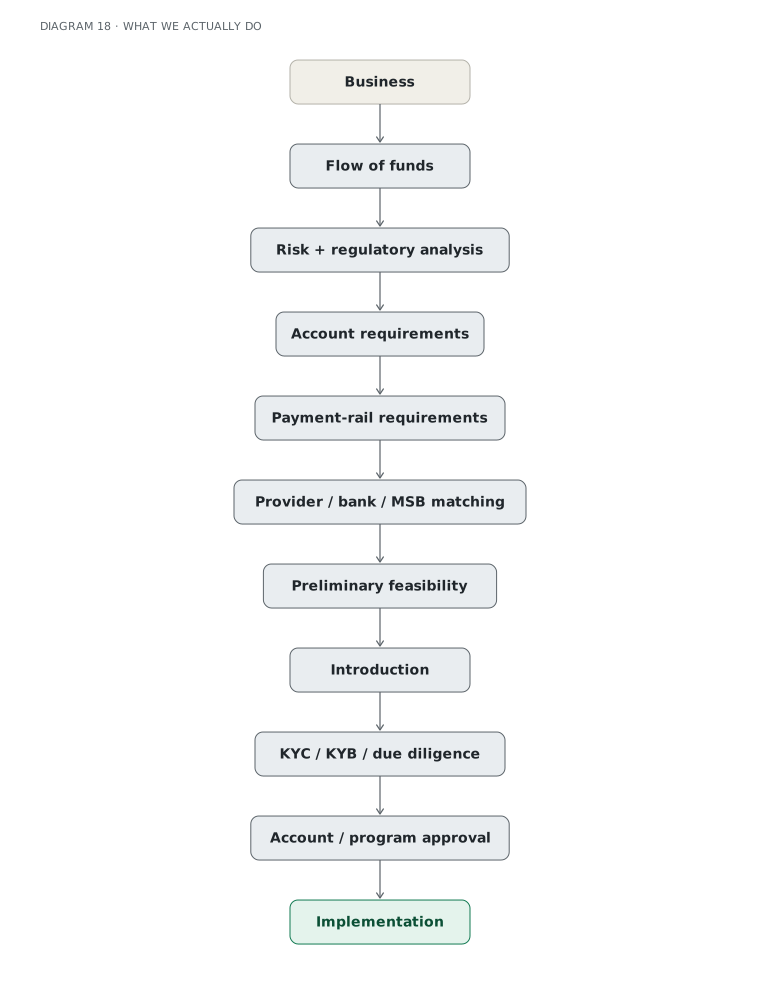
The objective is to avoid wasting months with providers that were never capable of supporting the transaction in the first place.
Why This Approach Works Better
A provider may be perfectly willing to onboard an Argentinian-owned company but still reject:
the source country of incoming wires;
the intended beneficiary;
investment-related payments;
third-party funds;
crypto transactions;
pooled funds;
a particular corridor;
very large tickets;
or the expected transaction frequency.
The reverse is also true.
A transaction that initially appears difficult may become perfectly understandable once the flow is explained correctly.
That is why we focus on transaction architecture before account placement.
The Objective
The objective is to build a reliable international financial operating structure for the business.
That may include:
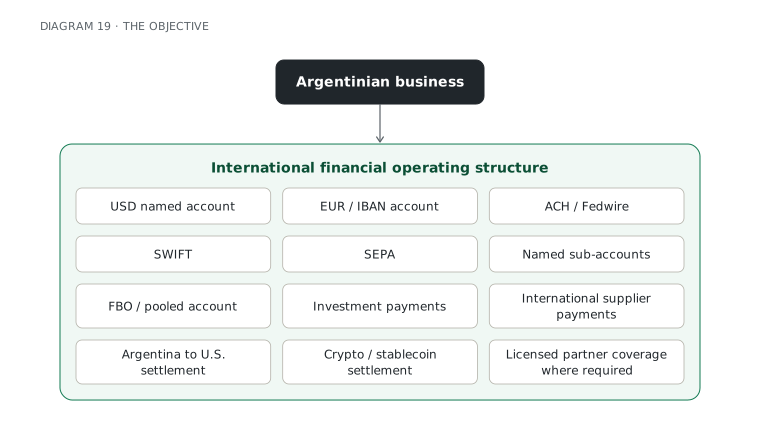
The exact solution depends on your business.
Argentina Banking and Payments: Detailed Guides
Each page below covers one account type, payment rail, or settlement structure in detail. The intake form is listed alongside them.
-
ACH Account for Argentinian Company
U.S. domestic collection and payment capability for Argentina-connected businesses.
-
Argentina to U.S. Cross-Border Settlement
A compliant settlement architecture for moving legitimate value from Argentina-linked activity into approved U.S. accounts and beneficiaries.
-
Crypto-Friendly Banking for Argentinian Businesses
Banking and settlement structures that can accommodate disclosed, regulated crypto or stablecoin activity.
-
European IBAN for Argentinian Company
EUR account access, SEPA capability, and European payment infrastructure for Argentina-connected companies.
-
FBO Accounts for Argentina Payment Businesses
Pooled or For-Benefit-Of account structures for payment companies handling multiple underlying users.
-
Investment Banking Accounts for Argentinian Companies
International account structures for corporate treasury, brokerage, custody, and investment-related payments.
-
Named Sub-Accounts for Argentina Payment Companies
Customer-specific account references and sub-account structures for payment, treasury, and settlement programs.
-
Pay U.S. Brokers From Argentina
Banking and settlement structures for legitimate transfers to U.S. brokers, custodians, and investment institutions.
-
SEPA Account for Argentinian Business
Receive and send euro payments across the SEPA area through an approved European account structure.
-
SWIFT Account for Argentinian Business
International wire capability for businesses that need to receive and send funds across multiple countries.
-
Submit Your Argentina Flow of Funds
The complete transaction profile we need before approaching a banking or payment provider for an Argentina-connected business. It takes about ten minutes, and you can leave anything you do not yet know.
-
U.S. Bank Account for Argentinian Company
A practical route to USD banking, domestic U.S. payment rails, and international settlement for Argentina-connected businesses.
-
U.S. to Argentina Business Payments
Receive or collect legitimate U.S. funds and settle value to approved beneficiaries in Argentina.
-
USD Named Account for Argentinian Business
Receive and hold U.S. dollars in an account identified in your company’s own name.
A U.S. or European Banking Solution for Your Argentinian Business
Do not start by asking for a random bank account.
Start with the transaction.
Tell us:
Where does the money come from?
Who owns it?
How much moves each month?
What is the average transaction size?
Which currencies are involved?
Where does the money ultimately need to go?
Do you need ACH, SWIFT, SEPA, named accounts, investment payments, FBO infrastructure, or crypto settlement?
We will review the flow and determine what type of account, banking partner, payment provider, licensed intermediary, or settlement architecture may realistically support it.