
Banking for Bolivian Businesses Is a Flow-of-Funds Problem
For many Bolivian businesses, the problem is not simply:
Can I open a bank account in the United States?
The real question is:
Can I build a banking and payments structure that allows my business to obtain, receive, hold, convert, and send U.S. dollars internationally?
That is a different problem.
A Bolivian company may need to:
obtain access to USD for international trade;
receive USD from customers or counterparties outside Bolivia;
hold USD outside Bolivia in the company's own name;
pay suppliers in China, the United States, Europe, Brazil, Argentina, Chile, Peru, or elsewhere;
convert BOB into USDT or USDC and subsequently settle into USD;
convert stablecoin into fiat for legitimate commercial payments;
receive export proceeds from overseas buyers or trading houses;
maintain named USD accounts;
obtain individual virtual accounts for multiple businesses;
use SWIFT or Fedwire;
maintain FBO or pooled payment infrastructure;
operate a payment platform for multiple underlying clients;
or operate under a licensed U.S. money-transmission partner where third-party funds are involved.
A normal corporate account may solve one part of this.
It rarely solves the entire transaction.
Our role is to understand the complete transaction architecture and determine what combination of account structure, payment rails, regulated partners, stablecoin settlement, compliance controls, and licensing coverage may realistically support it.
The Solution: International Banking Infrastructure Built Around Your Transaction Flow
We work backward from the transaction.
Before recommending an account or provider, we want to understand:
Who owns the funds?
Where do the funds originate?
Are the original funds BOB, USD, USDT, USDC, or another currency?
How are the dollars obtained?
Is stablecoin conversion involved?
What is the underlying commercial purpose?
Where must the money ultimately go?
How many transactions occur each month?
What is the average and maximum transaction size?
Are you moving only your own company's funds or third-party/customer funds?
Do you require SWIFT, Fedwire, ACH, or another payment rail?
Do you need a named account, virtual account, FBO structure, or licensed payment program?
Only then do we determine the appropriate solution.
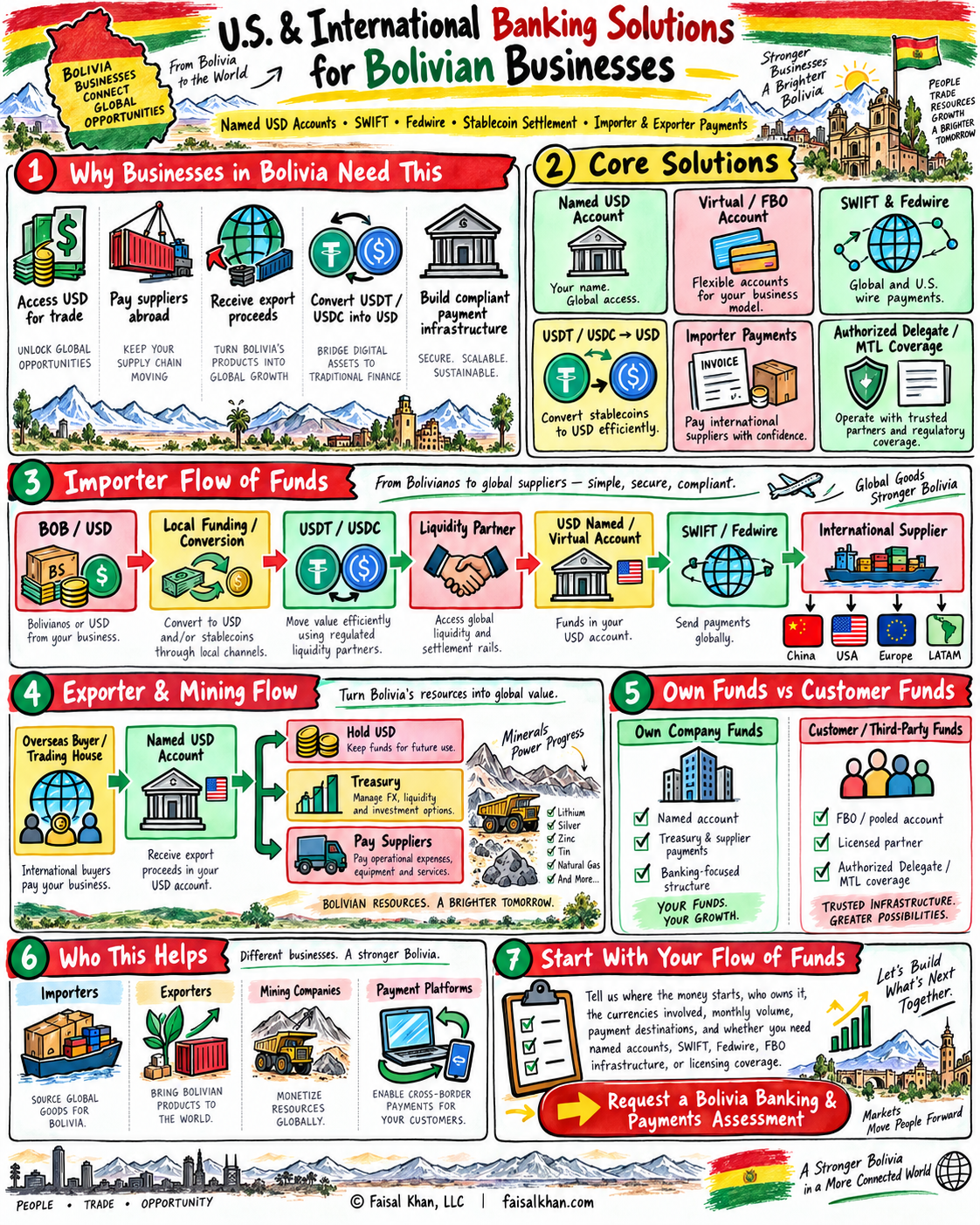
What We Can Potentially Structure
Depending on the profile and provider approval, the solution may include:
Business Requirement | Potential Infrastructure |
|---|---|
USD account in your company's name | Named USD business account |
Receive USD internationally | SWIFT-enabled account |
Pay international suppliers | SWIFT / cross-border B2B payment rails |
Pay U.S. suppliers | Fedwire / domestic wire / ACH where supported |
Separate multiple customers | Virtual accounts / named sub-accounts |
Receive exporter proceeds | Named USD receiving account |
Hold multiple customer balances | FBO / pooled account structure |
Convert USDT/USDC to USD | Institutional off-ramp / liquidity provider |
Convert fiat into stablecoin | Approved on-ramp / OTC structure |
Pay from stablecoin proceeds | Crypto → fiat → bank payment |
Operate a payment platform | Licensed partner / API / white-label infrastructure |
Handle third-party funds in the U.S. | Authorized Delegate / MTL coverage where required |
Make payments outside the U.S. | International settlement provider |
Bolivia ⇆ international settlement | Local + foreign settlement architecture |
Not every business needs every component.
The objective is to build the smallest compliant structure that actually works.
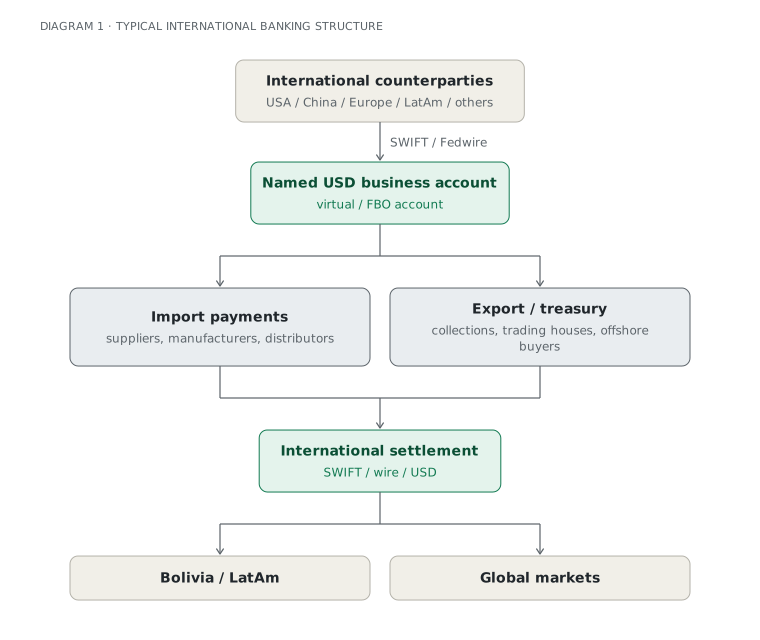
Typical International Banking Structure
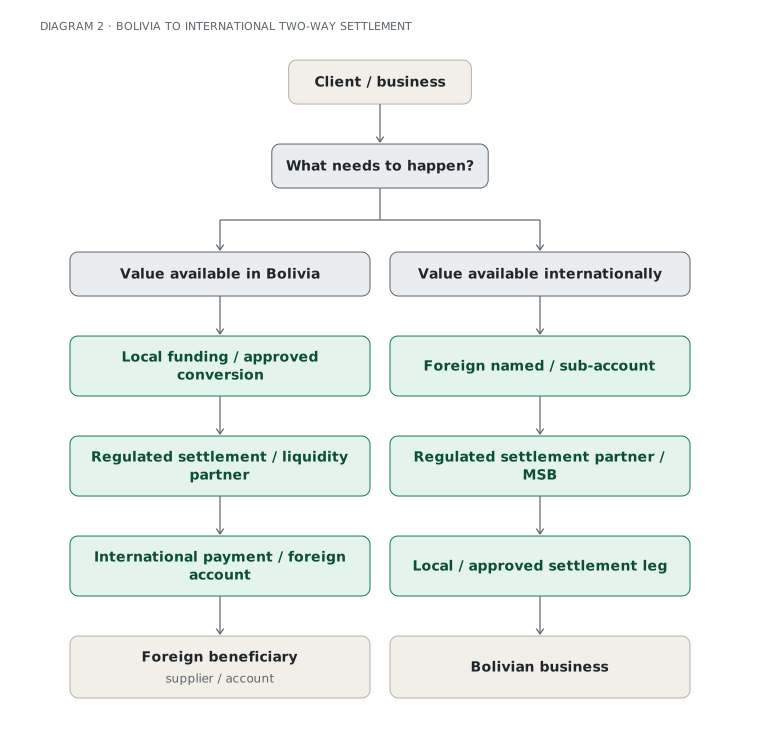
Bolivia ⇆ International Settlement
Some businesses need more than an offshore account.
They need a two-way settlement model.
That can mean:
value is available in Bolivia and must ultimately fund an approved foreign supplier or account; or
value is available internationally and must ultimately be attributed to or settled for a Bolivian business.
A compliant architecture may involve separate Bolivian and international legs connected through an approved settlement arrangement.
The exact structure depends on ownership of funds, source of funds, currencies, jurisdictions, stablecoin involvement, and the regulated counterparties willing to support the transaction.
The underlying transaction, commercial purpose, beneficial ownership, wallets, counterparties, and beneficiary must be disclosed accurately.
Named Accounts and Named Sub-Accounts
A major requirement for Bolivian businesses is often that the account or originating payment identify the underlying company by name.
There are two different concepts.
1. Named Corporate Account
This is an account issued or allocated in the name of the business itself.
Account Name: ABC Bolivia S.R.L.
Currency: USD
Account Number: XXXXXXXX
Routing / SWIFT: As Applicable
This structure is normally appropriate when the company is:
receiving its own business revenue;
receiving export proceeds;
paying its own suppliers;
holding its own treasury balances;
or making its own international commercial payments.
2. Named Sub-Account / Virtual Account
Some payment and settlement programs can provide customer-specific account references.
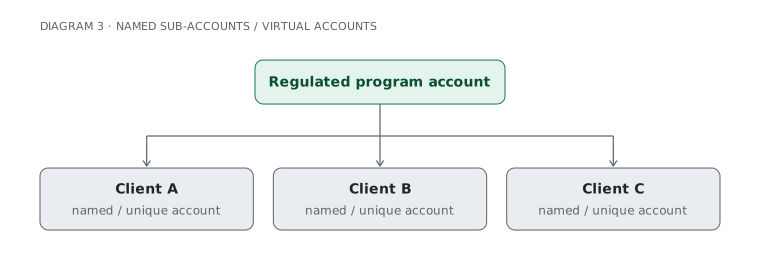
This can be useful for:
import platforms;
payment businesses;
exporters;
trading companies;
marketplaces;
settlement programs;
or businesses that need to reconcile multiple underlying clients.
The precise legal nature of the account must be confirmed with the provider.
A virtual or named sub-account is not automatically the same thing as a standalone bank account.
Import Payments From Bolivia
This is one of the most important Bolivia use cases.
A Bolivian importer may need to pay:
manufacturers;
medical suppliers;
consumer-goods suppliers;
appliance manufacturers;
auto-parts suppliers;
agricultural-equipment companies;
machinery manufacturers;
fuel-related suppliers;
wholesalers;
or international trading companies.
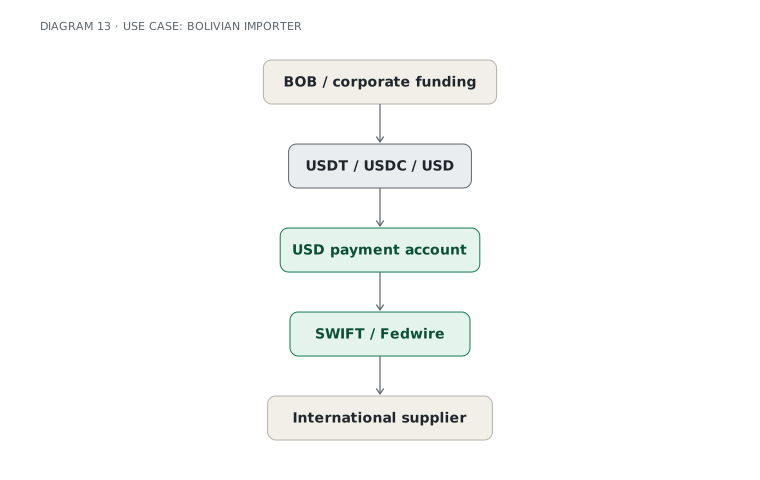
A typical structure may look like:
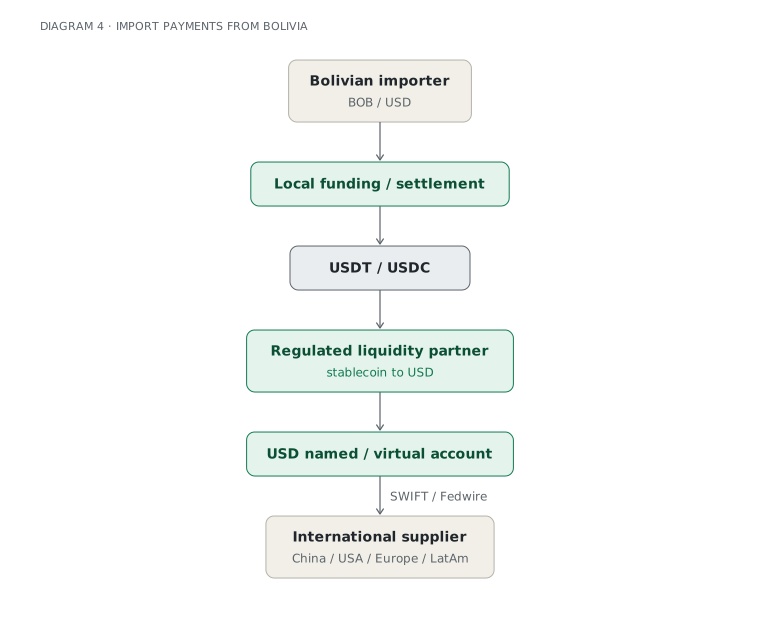
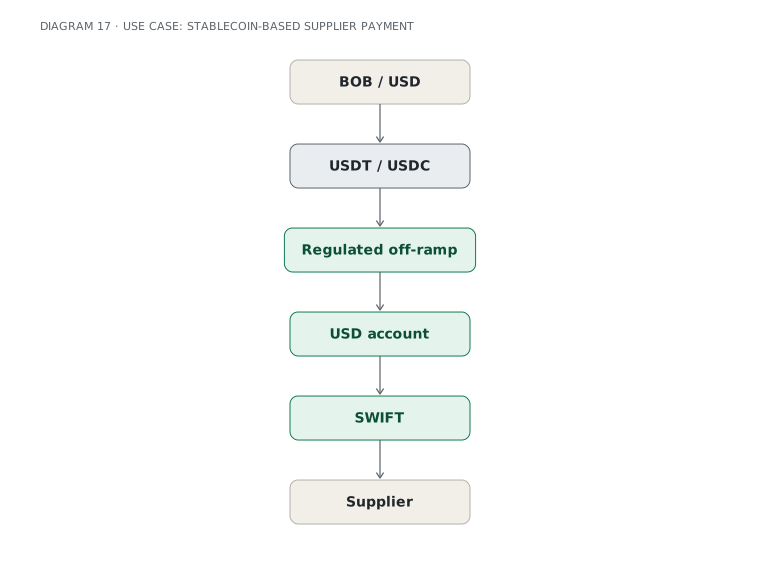
The original Bolivia structure contemplated exactly this type of stablecoin-to-fiat payment path: USDT could be sent to the solution provider, converted into fiat, and subsequently delivered to the end vendor or credited to an appropriate banking account.
Paying Suppliers in China
China is a particularly important use case for Bolivian importers.
A transaction may look like:
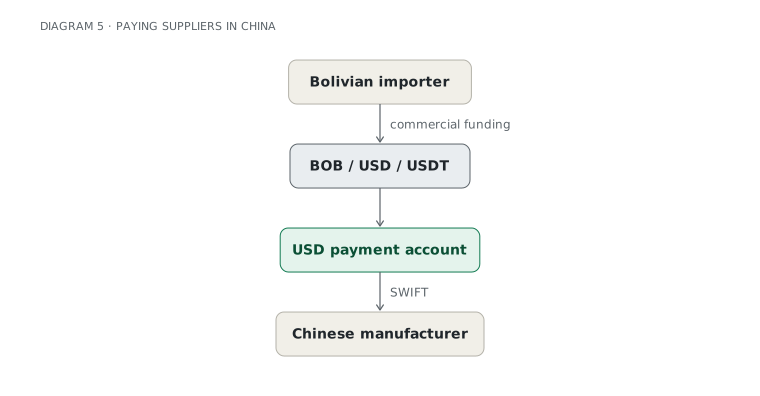
The provider will normally want to understand:
who the importer is;
what goods are being purchased;
the commercial invoice;
purchase order or contract;
source of funds;
transaction amount;
beneficiary company;
beneficiary bank;
and expected transaction frequency.
The objective is to ensure that the commercial story and the payment story match.
Exporters, Mining Companies, and Trading Houses
The exporter side has a different requirement.
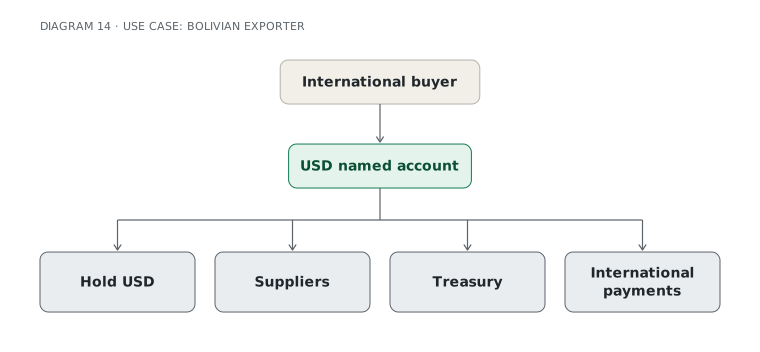
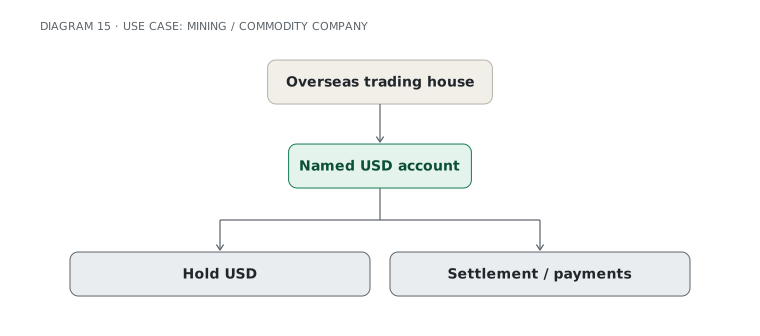
A mining or export company may generate USD outside Bolivia.
The question becomes:
Where should the dollars be received, and how can the exporter subsequently hold or deploy those funds?
A typical structure might be:
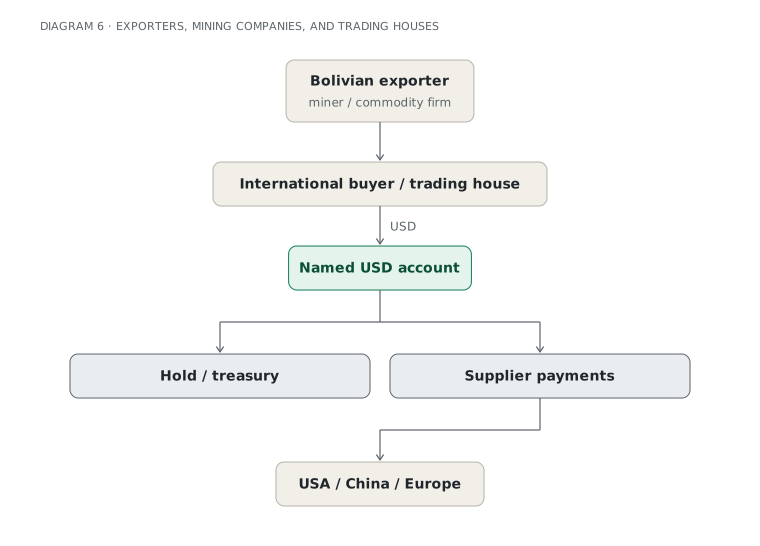
For some exporters, a master virtual-account structure may be sufficient.
Others require a legally named, DDA-like account in the underlying business's name.
That distinction must be identified at the beginning of the engagement.
Using Crypto or Stablecoins
Stablecoin settlement can form part of the banking architecture.
That does not mean crypto replaces compliance.
It means stablecoin becomes another transparent settlement rail.
A possible structure is:
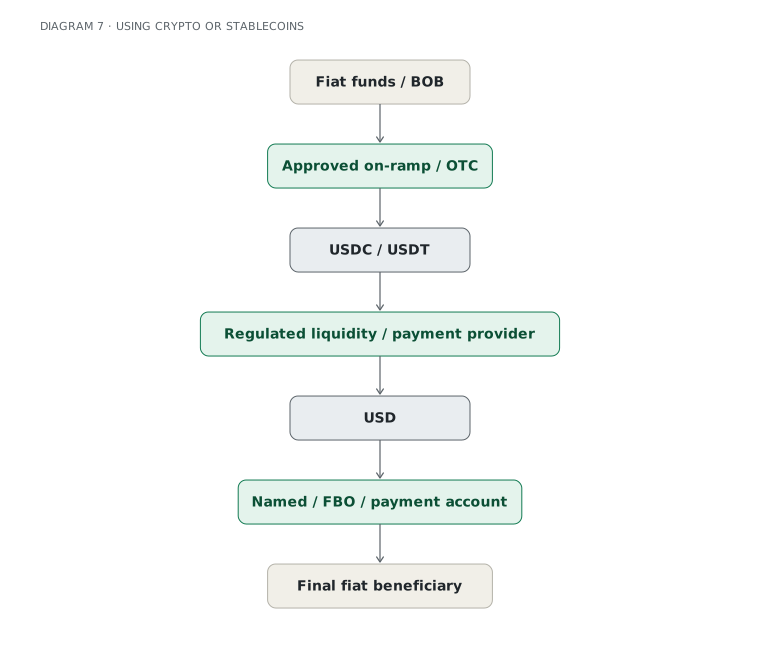
Depending on the provider, the structure may support:
USDC;
USDT;
institutional exchanges;
OTC conversion;
fiat on-ramp;
fiat off-ramp;
wallet screening;
stablecoin settlement;
and subsequent bank payments.
The existing Bolivia architecture contemplated fiat, stablecoin, and non-U.S. settlement paths rather than requiring every transaction to use the same rail.
Crypto involvement must be disclosed during onboarding.
The objective is not to use stablecoin to obscure the source or destination of money.
The objective is to use stablecoin where it legitimately improves liquidity, settlement speed, cost, or corridor access.
Named Account vs. FBO / Pooled Account
This distinction matters.
Named Account
Use a named corporate account when the business is primarily moving its own money.
Typical use cases:
export revenue;
supplier payments;
treasury;
operating expenses;
international collections;
commercial settlements.
FBO / Pooled Account
A pooled or FBO account may become relevant when the business is handling funds associated with multiple customers, merchants, importers, exporters, or beneficiaries.
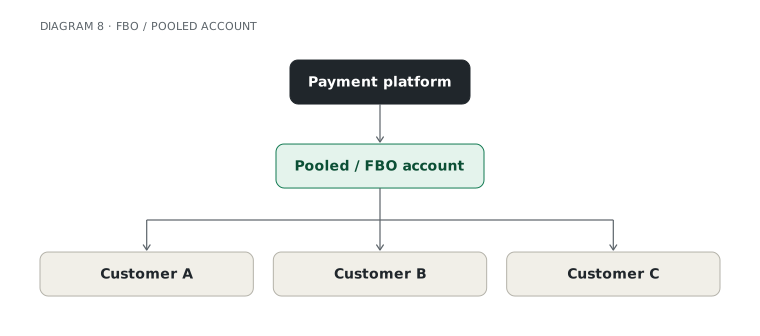
If third-party funds are involved, a normal corporate account may not be sufficient.
The licensing framework must also be considered.
When Licensing Coverage May Be Required
If your business is moving only its own corporate money, the analysis may primarily be a banking and treasury matter.
If your business is:
receiving money for customers;
transmitting money between third parties;
accepting instructions from customers as to where funds should be sent;
operating a payment platform;
settling funds for importers or exporters;
offering remittance;
handling customer balances;
or onboarding U.S. customers,
then a licensed payment structure may be required.
In those cases, the architecture may look like:
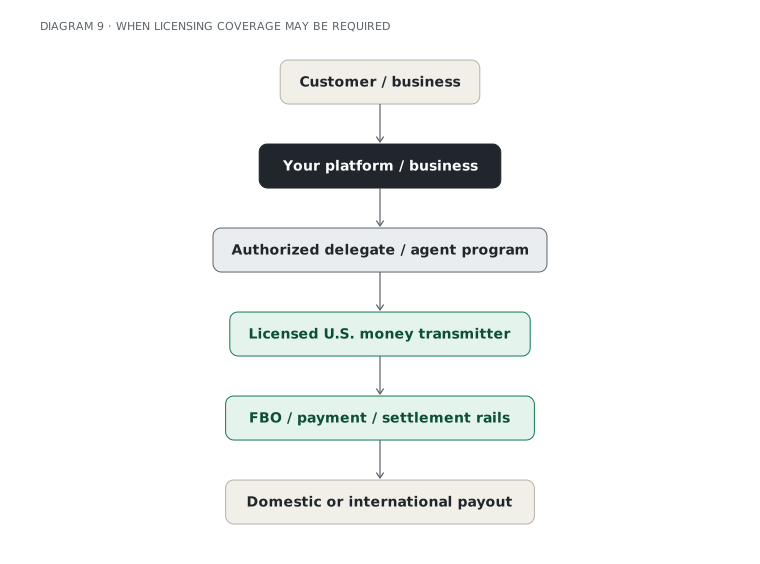
This distinction came up directly in the original Bolivia work.
The API or banking-only structure is different from an Authorized Delegate arrangement. An Authorized Delegate participates in the Flow of Funds and therefore assumes a materially different compliance and operational role.
Authorized Delegate / Money Transmitter License Coverage
A company does not necessarily need to obtain its own U.S. state Money Transmitter Licenses before launching.
Where commercially and operationally appropriate, a licensed Principal Money Services Business may potentially appoint the company as an Authorized Delegate.
Conceptually:
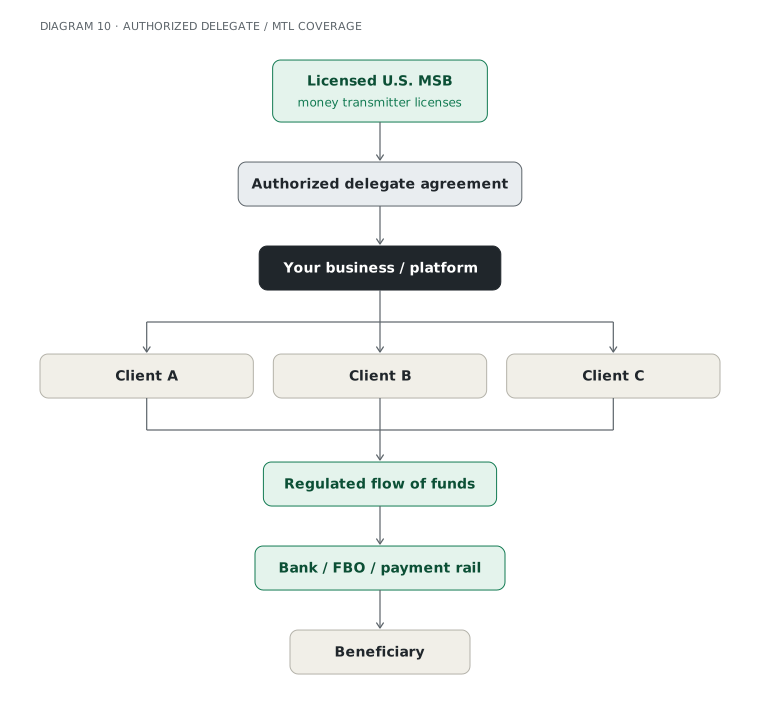
Approval is subject to the Principal License Holder's:
compliance requirements;
financial requirements;
business model;
volumes;
ownership;
jurisdictions;
technology;
AML/KYC procedures;
and risk appetite.
API vs. Authorized Delegate vs. Own License
There are three fundamentally different approaches.
Structure | In Flow of Funds? | Regulatory Position | Control |
|---|---|---|---|
API / Referral | Usually No | Provider performs regulated activity | Lower |
Authorized Delegate | Yes | Operates within Principal's licensed program | Medium / High |
Own Licenses | Yes | Business holds its own licensing | Highest |
The correct choice depends on the business.
A company should not obtain an expensive licensing structure merely because licensing sounds more sophisticated.
Likewise, an API relationship should not be used where the company actually needs to control customer money.
The Flow of Funds determines the appropriate model.
Compliance Is Part of the Product
A workable Bolivia cross-border solution is not merely an account number.
The infrastructure may include:
KYC for individuals;
KYB for companies;
beneficial-owner verification;
sanctions screening;
AML transaction monitoring;
wallet screening;
source-of-funds review;
source-of-wealth review where appropriate;
invoices and purchase orders;
daily reconciliation;
transaction statements;
payment confirmations;
audit trail;
corridor controls;
transaction limits;
pre-funding;
liquidity arrangements;
and regulatory reporting where applicable.
This is why the strongest solution is normally a banking + compliance + settlement architecture, rather than an isolated account.
Why the Actual Source of Funds Matters
This is one of the most important parts of the assessment.
A business may be located in Bolivia, but that does not mean every transaction begins in a Bolivian bank account.
Funds may originate as:
BOB;
USD cash;
offshore USD;
export proceeds;
USDT;
USDC;
international customer payments;
trading-house payments;
or related-company transfers.
The provider evaluates the actual transaction:
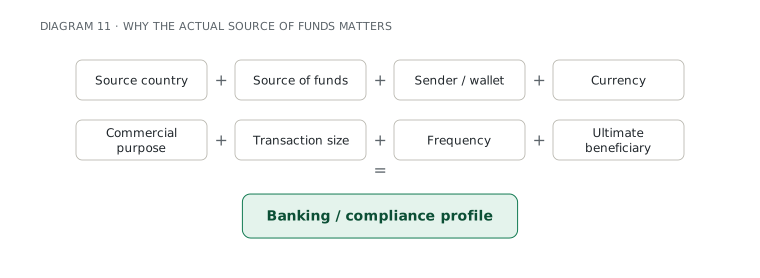
The correct structure is based on the actual facts.
The objective is not to hide Bolivia exposure.
The objective is to explain the transaction clearly enough that a regulated provider can properly assess it.
Payment and Settlement Economics
Some structures are technically possible at modest volume but become considerably more efficient as transaction volume increases.
Where the structure involves:
named accounts;
virtual accounts;
FBO infrastructure;
licensed payment providers;
stablecoin settlement;
liquidity partners;
compliance oversight;
SWIFT;
banking support;
and international payment rails,
there may be:
one-time implementation fees;
monthly platform fees;
banking fees;
named-account fees;
virtual-account fees;
KYC/KYB charges;
per-transaction fees;
wire charges;
SWIFT fees;
FX spreads;
stablecoin conversion fees;
corridor fees;
and volume-based pricing.
For more sophisticated payment or MTL-sponsored structures, economics generally improve as monthly transaction volume increases.
Pricing should be quoted only after the Flow of Funds has been reviewed.
A Typical Operational Roadmap
For a more sophisticated Bolivia program, a practical implementation roadmap may resemble:
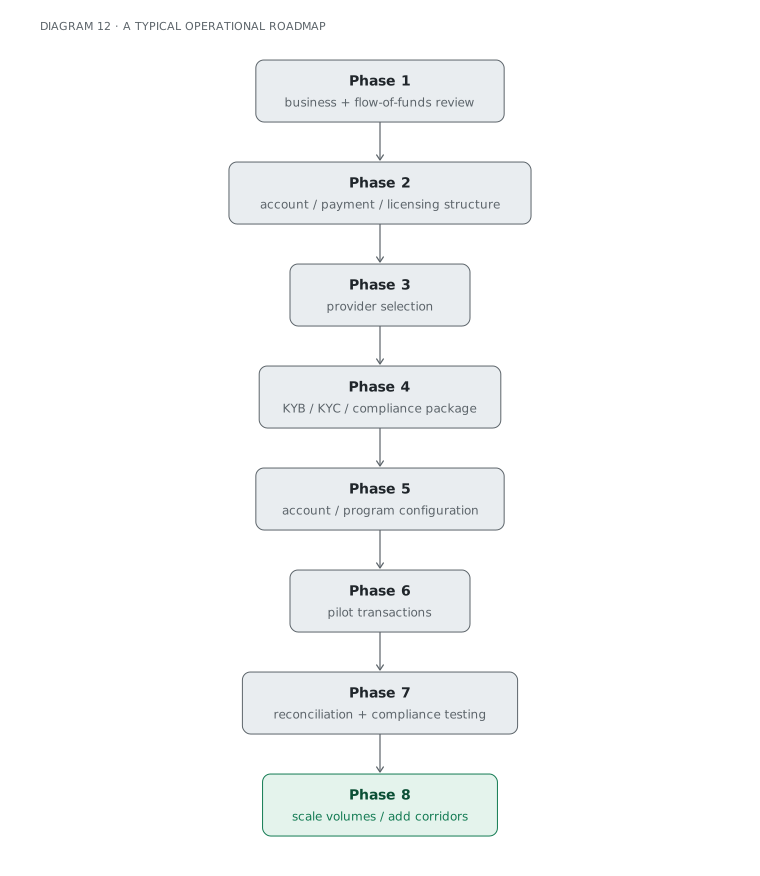
Depending on the provider and complexity, onboarding can range from a relatively straightforward account-opening process to several weeks for a complete payment or licensed-program implementation.
The Four Layers We Analyze
1. Account Structure
We determine whether you need:
named USD account;
virtual account;
named sub-account;
FBO account;
pooled account;
settlement account;
treasury account;
exporter receiving account;
or program account under a licensed partner.
2. Payment Rails
We determine which rails matter:
Fedwire;
ACH;
domestic U.S. wire;
SWIFT;
international B2B payments;
stablecoin settlement;
fiat on-ramp;
fiat off-ramp.
3. Source of Funds
We map:
sender;
sending bank;
sender country;
wallet;
exchange or OTC provider;
business purpose;
transaction amount;
source of funds;
frequency.
4. Destination and Use of Funds
We determine whether funds are going to:
U.S. suppliers;
Chinese manufacturers;
European suppliers;
Brazil;
Argentina;
Chile;
Peru;
Colombia;
related companies;
customers;
overseas trading houses;
settlement partners;
regulated crypto counterparties;
or other beneficiaries.
Use Cases
Bolivian Importer
Bolivian Exporter
Mining / Commodity Company
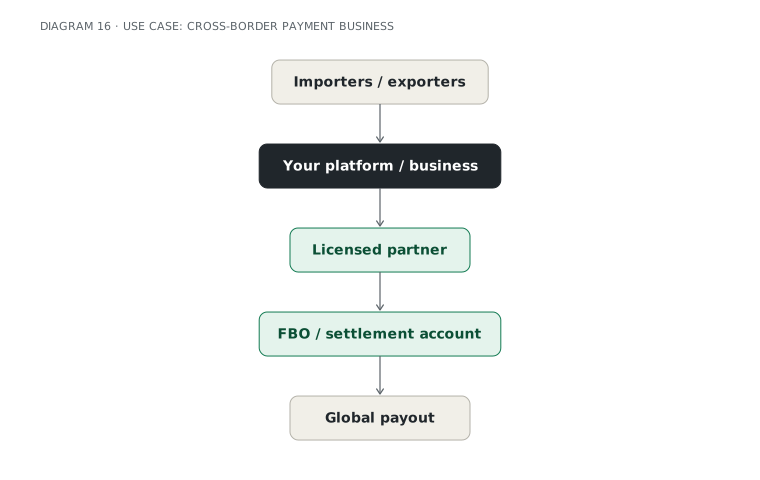
Cross-Border Payment Business
Stablecoin-Based Supplier Payment
Information We Need From You
Before we approach a banking or payment provider, we want a complete transaction profile: who you are, where the money comes from and where it goes, the currencies and rails involved, your volumes and ticket sizes, and the problem you are trying to solve.
There is nothing to prepare in advance. The form asks for it a section at a time, it takes about ten minutes, and you can leave anything you do not yet know.
If you already have a flow-of-funds diagram, you can attach it. If you do not, describe the transaction in plain English and we will convert it into one.
Frequently Asked Questions
Can a Bolivian company obtain a U.S. account?
The answer depends on the provider, company ownership, business model, source of funds, expected transaction activity, jurisdictions, and required payment capabilities.
Can the account be in the Bolivian company's own name?
Named business accounts may be available depending on the company and provider.
Can I have separate accounts for multiple Bolivian companies?
Potentially. A provider may support dedicated virtual or named sub-accounts under a larger program.
Can I receive USD?
The provider will review who is sending the money, where it originates, the reason for the payment, and the expected transaction profile.
Can I send SWIFT payments?
Possibly, yes.
The provider must support the beneficiary countries and business activity.
Can I pay suppliers in China?
China supplier payments are a common requirement for import businesses, subject to normal KYB, invoice, source-of-funds, and beneficiary review.
Can I pay U.S. suppliers?
Depending on the provider, Fedwire, domestic wire, ACH, or SWIFT may be available.
Can I use USDT or USDC?
Some structures support stablecoin on-ramp, off-ramp, institutional OTC conversion, and subsequent fiat settlement.
Crypto involvement must be disclosed.
Can USDT be converted to USD and then sent to my supplier?
The provider needs to approve the wallet, source of funds, conversion provider, account structure, beneficiary, and underlying transaction.
Can exporters receive USD into named accounts?
This may be particularly relevant to mining companies, commodity exporters, and trading businesses.
Can I obtain named accounts for my customers?
Some providers support customer-specific named or uniquely identifiable sub-accounts.
If the money belongs to customers rather than your business, licensing and FBO requirements must also be considered.
Do I need a Money Transmitter License?
Not necessarily.
If your business is moving only its own corporate funds, the issue may primarily be banking.
If your business receives or transmits money on behalf of third parties, regulatory coverage may be required.
Can you provide MTL coverage as part of the solution?
Where appropriate, we can explore licensed-partner or Authorized Delegate structures that may allow a business to operate within an existing regulated U.S. money-transmission program rather than obtaining individual state licenses immediately.
Approval depends on the Principal License Holder and the business model.
Can this work with a white-label solution?
Potentially.
Some providers offer APIs, dashboards, semi-automated platforms, or white-label capabilities.
Can we start manually before building technology?
Yes.
For some businesses, beginning with controlled manual transactions is preferable to building an expensive platform before the banking and payment model has been proven.
What happens if a transaction is flagged?
It may be:
processed;
delayed pending additional documentation;
returned;
or frozen where required.
Transaction reviews and requests for supporting documentation are normal elements of regulated financial activity.
What We Actually Do
We are not simply selling an account.
We help structure the opportunity.
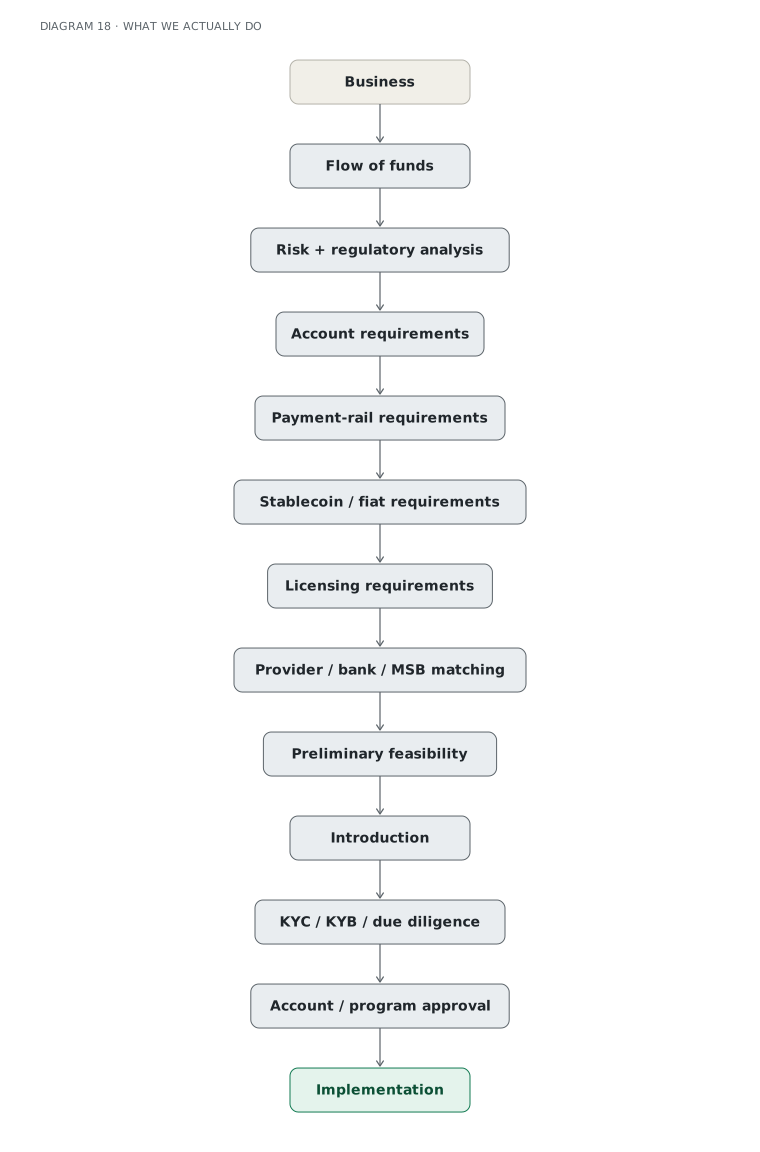
The objective is to avoid wasting months approaching providers that were never capable of supporting the transaction in the first place.
Why This Approach Works Better
A provider may be perfectly willing to onboard a Bolivian-owned company but still reject:
the source of funds;
stablecoin involvement;
a particular wallet;
the intended beneficiary;
mining activity;
third-party funds;
pooled funds;
a particular corridor;
large transaction sizes;
cash-originated funds;
or the expected transaction frequency.
The reverse is also true.
A transaction that initially appears difficult may become understandable once the Flow of Funds is explained correctly.
That is why we focus on transaction architecture before account placement.
The Objective
The objective is to build a reliable international financial operating structure for the business.
That may include:
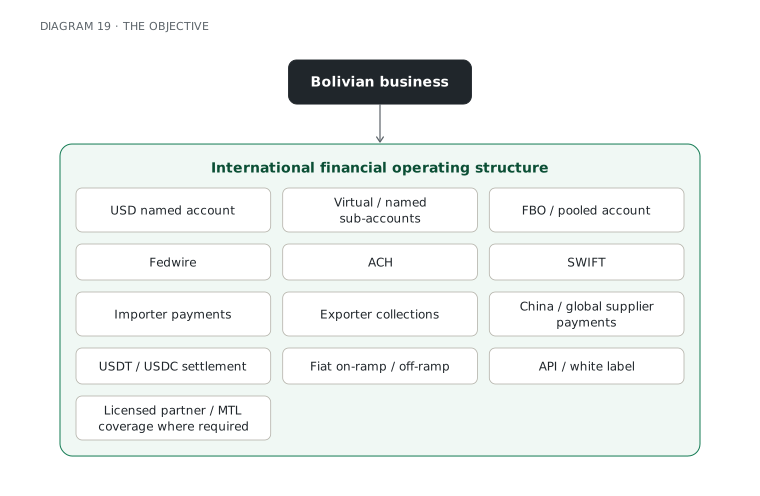
The exact solution depends on your business.
Bolivia Banking and Payments: Detailed Guides
Each page below covers one account type, payment rail, corridor, or industry in detail. The intake form is listed alongside them.
-
Authorized Delegate Solutions for Bolivia Payment Companies
For Bolivia-linked payment companies that need to participate directly in the U.S. flow of funds under a licensed principal. Covers Authorized Delegate structures, compliance responsibilities, program banking, and when an agent model makes commercial sense.
-
Banking for Bolivian Mining Companies
Banking and settlement structures for mining, mineral, and commodity businesses that need named USD accounts, trading-house collections, supplier payments, and higher-value international settlement.
-
Bolivia to China Business Payments
Cross-border payment infrastructure for Bolivian companies paying Chinese manufacturers, suppliers, and trading partners through USD accounts, SWIFT, and approved fiat or stablecoin settlement routes.
-
Bolivia to U.S. Cross-Border Payments
Payment structures for Bolivian businesses that need to pay U.S. suppliers, service providers, banks, or other approved beneficiaries using USD, Fedwire, domestic wire, or SWIFT.
-
FBO Accounts for Bolivian Payment Businesses
For payment businesses that need pooled or For Benefit Of account structures to hold, segregate, and reconcile funds associated with multiple underlying customers.
-
Fedwire Account for a Bolivian Company
U.S. domestic wire access for qualified Bolivian companies that need to make or receive high-value USD payments to U.S. suppliers, institutions, or commercial counterparties.
-
Money Transmitter License Coverage for Bolivia Businesses
For Bolivia-linked businesses that receive or transmit third-party funds and may require U.S. Money Transmitter License coverage through a licensed principal or sponsored program.
-
Named Sub-Accounts for Bolivia Payment Companies
Customer-specific virtual or named sub-account structures for payment companies that need separate account references, cleaner reconciliation, and identifiable client-level payment activity.
-
Pay Chinese Suppliers From Bolivia
A practical payment structure for Bolivian importers that need to convert local or stablecoin liquidity into USD and make documented SWIFT payments to Chinese suppliers.
-
SWIFT Account for a Bolivian Business
International USD payment infrastructure for Bolivian businesses that need to send or receive cross-border wires to suppliers, customers, and approved counterparties worldwide.
-
Stablecoin Payments for Bolivian Businesses
USDT and USDC settlement structures for qualified Bolivian businesses using stablecoins as part of commercial payments, treasury, liquidity, or cross-border settlement.
-
Submit Your Bolivia Flow of Funds
The complete transaction profile we need before approaching a banking or payment provider for a Bolivia-connected business. It takes about ten minutes, and you can leave anything you do not yet know.
-
U.S. Accounts for Bolivian Exporters
Named USD receiving accounts and treasury structures for exporters that need to collect international proceeds from buyers, trading houses, or commercial counterparties outside Bolivia.
-
U.S. Accounts for Bolivian Importers
USD account and payment structures for importers that need to pay overseas suppliers through SWIFT, Fedwire, or other approved cross-border banking rails.
-
U.S. Bank Account for a Bolivian Company
General U.S. banking access for qualified Bolivian companies that need to receive, hold, and send USD through named accounts, wires, Fedwire, ACH, or international payment rails.
-
USD Named Account for a Bolivian Business
Dedicated USD account structures for Bolivian companies that need payments to originate from, or be received into, an account clearly associated with the business itself.
-
USDT to USD Settlement for Bolivia
Institutional USDT-to-USD off-ramp and settlement infrastructure for documented commercial transactions that ultimately need banked USD and onward supplier or beneficiary payments.
A U.S. Banking and Cross-Border Payment Solution for Your Bolivian Business
Do not start by asking for a random bank account.
Start with the transaction.
Tell us:
Where does the money come from?
Who owns it?
Is the original funding BOB, USD, USDT, or USDC?
How much moves each month?
What is the average transaction size?
Where does the money ultimately need to go?
Do you need a named USD account?
Do you need SWIFT or Fedwire?
Do you need individual accounts for multiple clients?
Are you processing your own company's money or customer money?
Do you require stablecoin settlement, FBO infrastructure, API access, or Money Transmitter License coverage?
We will review the Flow of Funds and determine what type of account, banking provider, payment company, licensed intermediary, stablecoin settlement provider, or regulatory architecture may realistically support it.