
x402 vs API Billing and Conventional Subscriptions
Dimension | Conventional API account | x402 model |
|---|---|---|
Account required | Usually | Not inherently |
API key | Usually | Not inherently |
Payment setup | Prior onboarding | Can occur at request time |
Billing | Prepaid/postpaid/subscription | Per request / usage / batch |
Buyer | Human/company account | Human, app, agent, service |
One-off use | Often awkward | Natural |
Long-tail buyer | Poor economics | Potentially strong |
Discovery | Vendor-specific | Can be machine-readable |
Identity | Account-centric | Can be separate from payment |
Chargeback model | Depends on rail | On-chain settlement differs materially |
Compliance | Merchant/platform model | Still required as applicable |
Treasury | Usually fiat processor settlement | Often asset/network-specific today |
x402 should usually be added alongside conventional commercial models, not as an immediate replacement.
x402 vs Card Payments
Cards solve a different problem extremely well.
Cards provide:
consumer familiarity;
broad acceptance;
chargebacks;
issuer authorization;
network rules;
merchant acquiring;
statementing;
fraud ecosystems.
x402 currently excels more naturally at:
programmatic purchase;
machine identity/payment separation;
tiny digital resources;
cross-border software interactions;
agent wallets;
service discovery;
immediate resource-level payment.
The question is not:
x402 OR cards?Long term it may be:
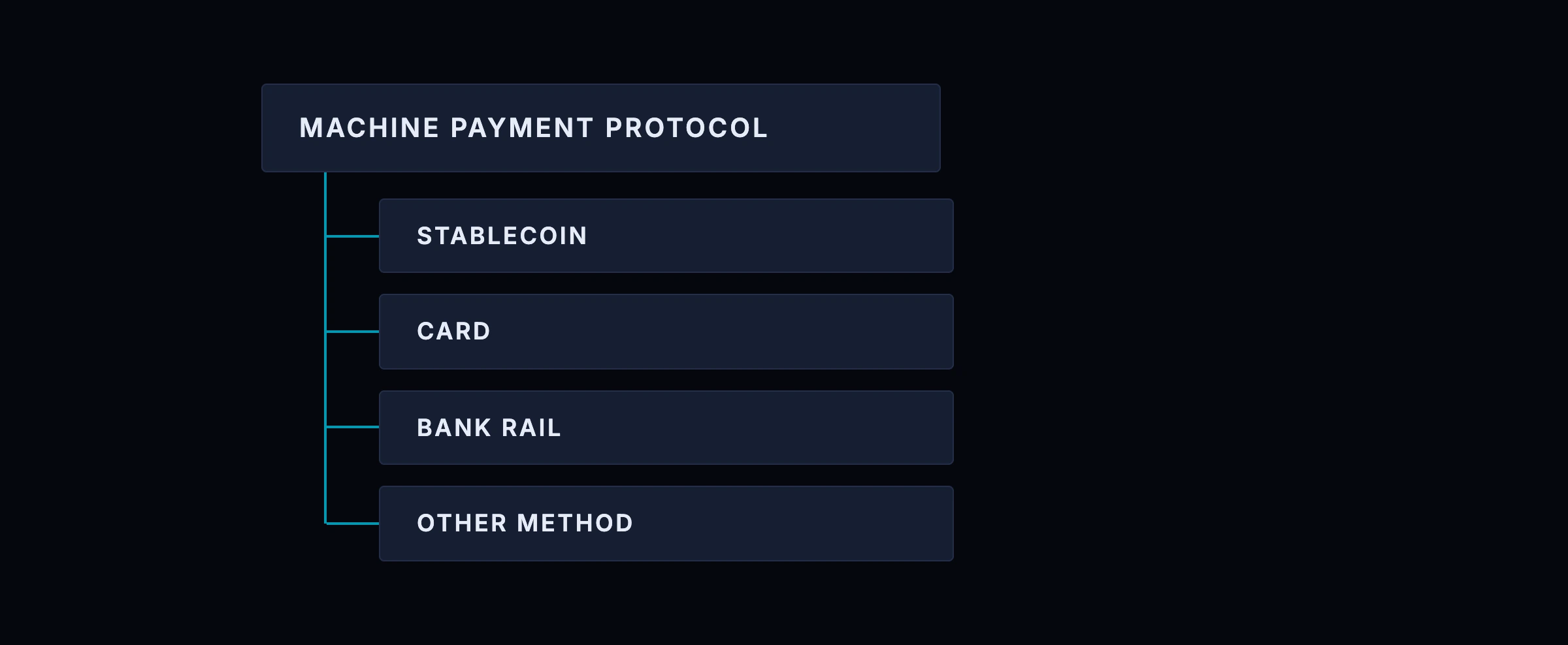
The Linux Foundation describes x402's intended scope as extensible across payment types, including traditional cards and stablecoins.
But an architect should distinguish that broad protocol direction from today's most mature reference implementations, which remain heavily on-chain.
x402 vs Cloudflare MPP
This is strategically important.
x402 is not the only attempt to standardize HTTP-native machine payment.
Cloudflare's Machine Payments Protocol (MPP) also uses HTTP 402 Payment Required.
MPP currently describes:
stablecoin payment methods;
cards through Stripe;
custom payment methods;
charge;session;subscription;HTTP and MCP use.
Cloudflare also states that MPP clients can consume existing x402 services.
A useful conceptual comparison:
Dimension | x402 | MPP |
|---|---|---|
Core idea | HTTP-native machine payment | HTTP-native machine payment |
Governance | x402 Foundation / Linux Foundation | Open protocol ecosystem led heavily by Cloudflare work |
Strong early association | On-chain/stablecoin agent payments | Payment-method-agnostic machine payments |
Fixed charge | Yes | Yes |
Usage |
| Session intent |
Subscription | Can be constructed at application layer / evolving patterns | Explicit subscription intent |
Cards | Protocol direction is broad; current reference stack more on-chain | Explicit Stripe card support |
MCP | Yes | Yes |
x402 compatibility | Native | Backward-compatible client support stated by Cloudflare |
Do not force an artificial winner.
The rational architecture is:
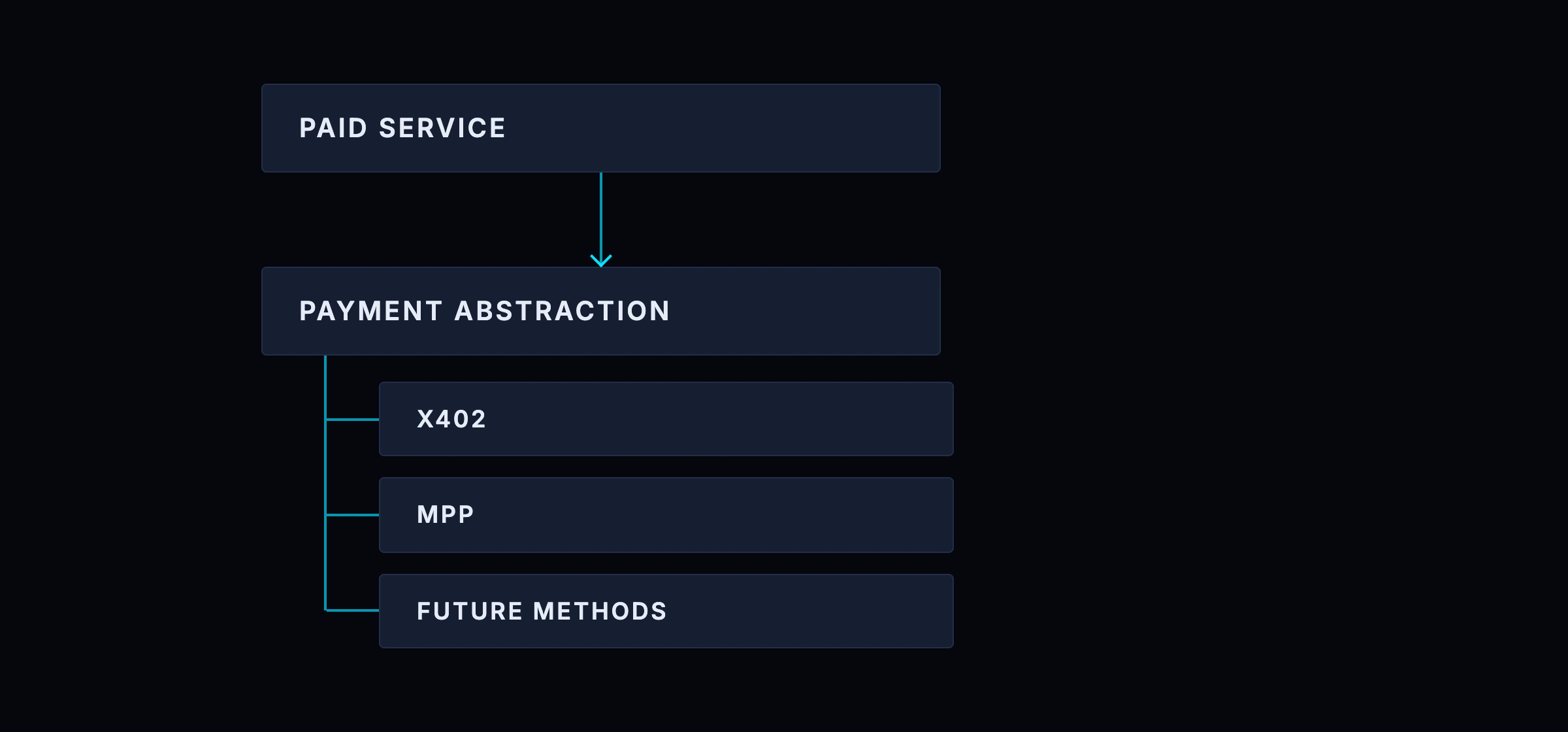
The strategic asset is your paid resource and policy layer—not allegiance to one wire format.
Related x402 Explainers
If You Are Building This Commercially
Regardless of the front-end protocol, businesses may still need ordinary fiat banking. If machine-payment revenue ultimately operates in USD, EUR, GBP, or other currencies, multi-currency accounts or named accounts can remain part of the stack.
Key Takeaway
The durable product asset is the paid digital resource and its policy layer. Keep the payment interface modular enough to support x402, MPP, conventional billing, or future methods where appropriate.
This page is part of x402 Protocol Explained, the full guide to how machine-to-machine payments work.