

Build the Payment Channel Around Your Customer
International vehicle buyers often have no difficulty finding the car they want. The difficulty is paying for it.
A buyer may be located in Mexico, Latin America, Africa, the Middle East, Europe, or Asia. The vehicle may be listed through Copart, IAA, or another U.S. auction. The buyer may want to fund the purchase in local currency. The auction expects U.S. dollars. The payment may need to be attributed to a specific buyer, member account, invoice, or lot number.
For businesses processing this activity at scale, this is not simply a banking problem. It is a payment-infrastructure problem.
We help payment companies, auto brokers, exporters, vehicle importers, international dealers, MSBs, and auction intermediaries structure the collection, foreign exchange, licensing, banking, compliance, settlement, liquidity, and reconciliation infrastructure required to support recurring U.S. auto auction payments.
Your customer funds the purchase. Regulated payment infrastructure moves the money. The auction receives payment under an acceptable structure. Your business owns the customer relationship.
The Problem
International buyers and the businesses serving them can encounter multiple problems:
The account sending the payment may need to match the auction member or buyer.
International wires may take too long for time-sensitive purchases.
Payments can be delayed, rejected, or difficult to trace.
Customers may prefer to fund locally in their own currency.
Local currency must often be converted into U.S. dollars.
The individual physically initiating a transaction may not always be the ultimate buyer.
Payment intermediaries may trigger money-transmission, AML, KYC, sanctions, and reporting obligations.
The auction needs enough information to properly associate the payment with the buyer, member, invoice, and vehicle.
Manual reconciliation becomes increasingly difficult as transaction volume grows.
A business may want to maintain the customer relationship instead of sending the customer through a third-party remittance network.
At scale, every one of these issues becomes more important.
The Solution
A typical architecture may look like this:
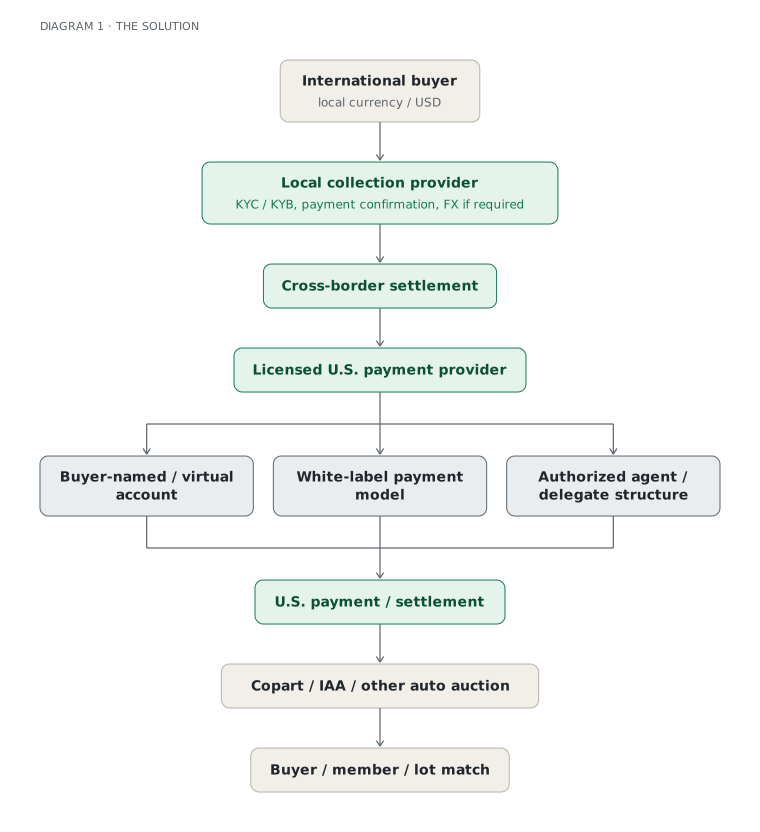
The exact structure depends on who accepts the customer's funds, who converts the currency, who controls the funds, who transmits them, who contracts with the customer, which entity is licensed, which account structure is used, and what the receiving auction accepts.
Model 1 — Buyer-Named U.S. Account
The buyer is onboarded through the participating regulated provider and may be assigned a U.S. account, virtual account, ledger account, or other customer-specific payment structure.
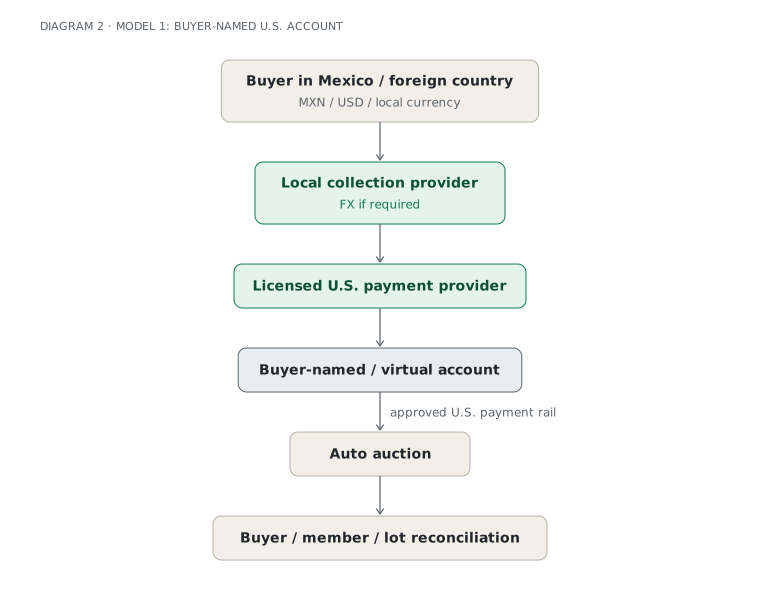
This can be useful when the receiving auction needs to identify the sender, member, buyer, invoice, or lot.
Model 2 — White-Label Payment Platform
A white-label structure allows your company to own the customer-facing relationship while a regulated provider supplies the underlying financial infrastructure.
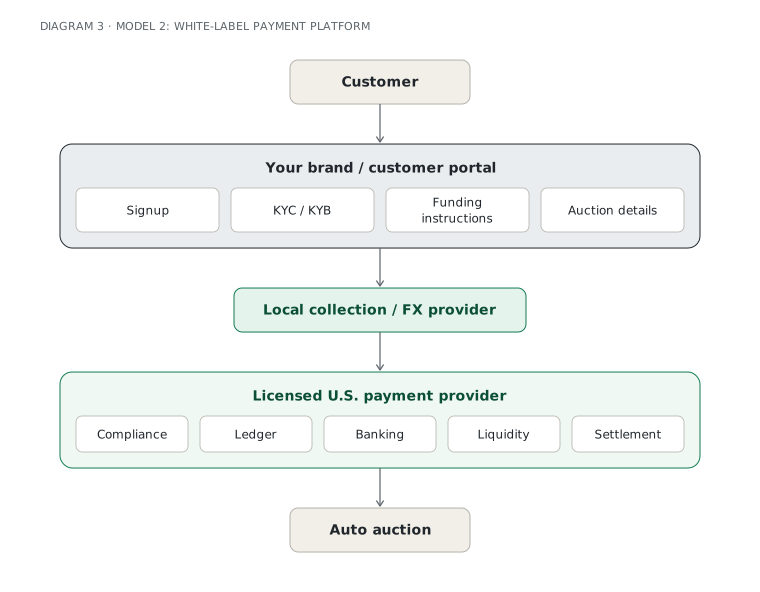
The precise compliance responsibilities depend on the operating model, contracts, and activities performed by each party.
Model 3 — Authorized Agent or Delegate Structure
A business may also be able to operate as an authorized agent or delegate of a licensed money transmitter.
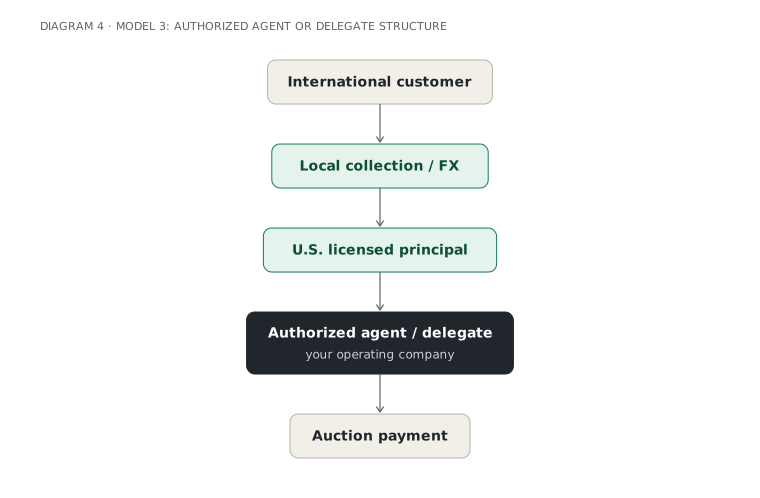
This model gives the operating company greater involvement, but also requires a more serious compliance and oversight framework.
Model 4 — Direct Auction or Biller Payment Arrangement
Where commercially available, a payment provider may seek an approved relationship with the auction or biller.
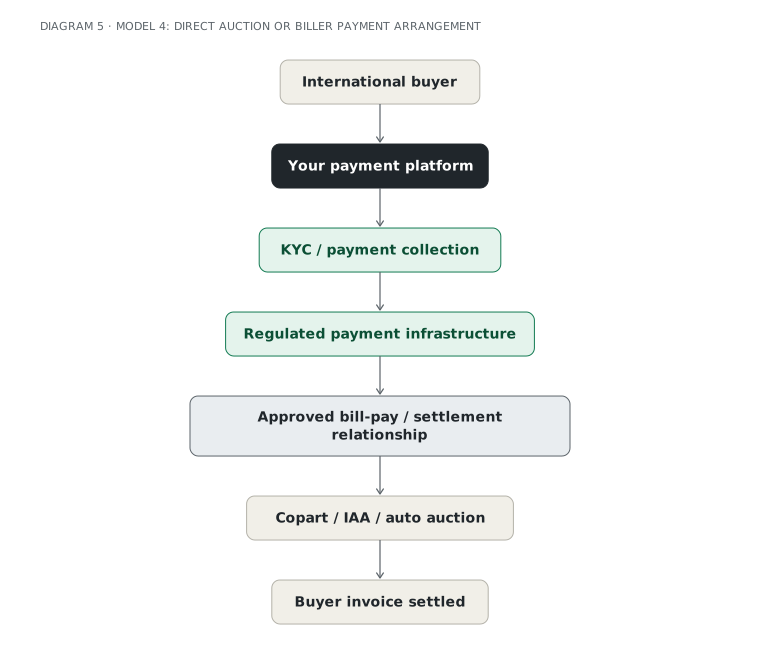
This is an institutional payment relationship, not an attempt to disguise a third-party payment.
Mexico-to-U.S. Auto Auction Payments
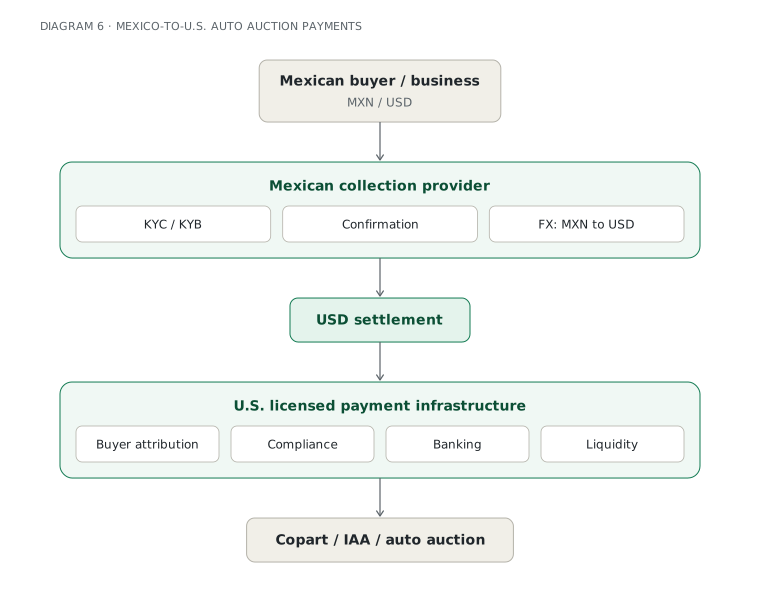
The customer experiences a local payment. The auction receives a U.S. payment. The infrastructure handles the complexity in between.
Know the Actual Buyer
A proper platform should determine whether the person funding the transaction is acting for themselves, a registered business, a dealer, a broker, or another beneficial party.
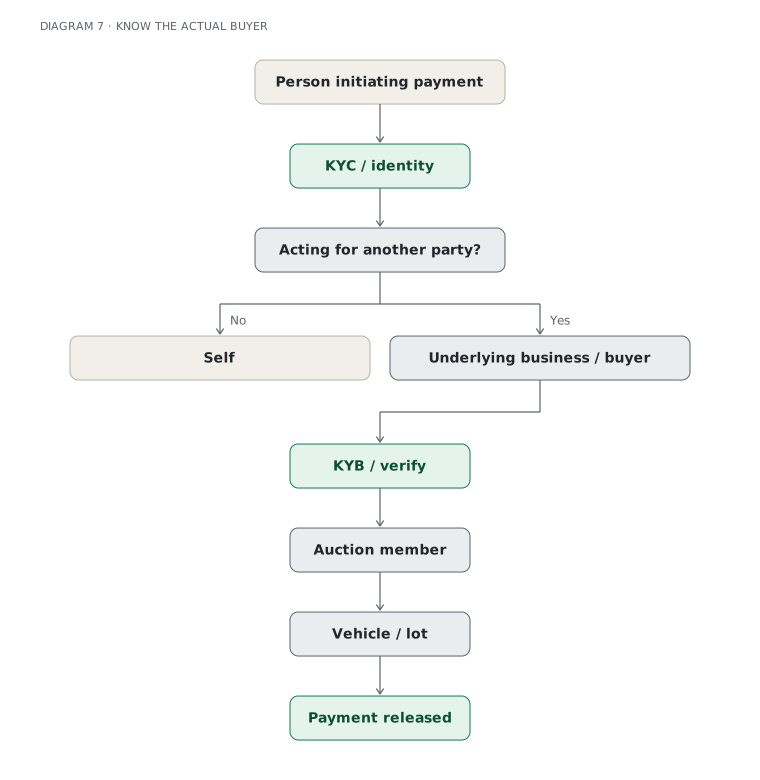
Real-Time Payment Is Really a Liquidity Problem
A real-time domestic rail does not automatically make the entire end-to-end transaction real time.
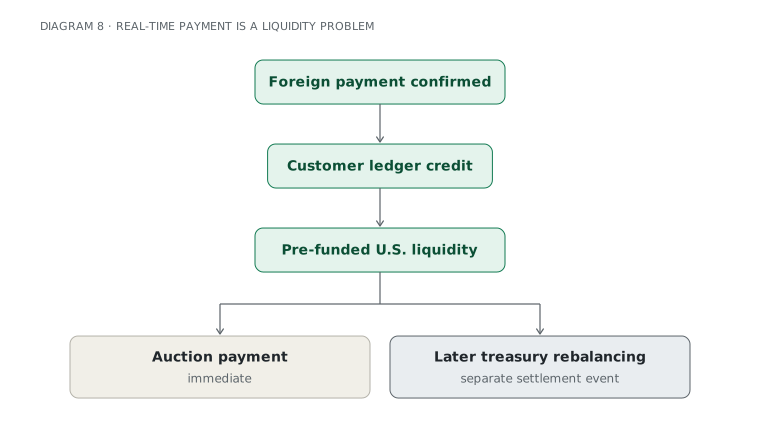
For high-volume businesses, pre-funded U.S. liquidity can separate the customer transaction from the later treasury settlement event and materially improve payment speed.
What We Can Help Structure
Component | Potential Solution |
|---|---|
Local Collection | Local-currency and/or USD collection |
Mexico Payments | MXN collection and supported domestic rails |
Foreign Exchange | Local currency to USD conversion |
Cross-Border Settlement | USD settlement into U.S. infrastructure |
U.S. Licensing | Licensed money transmission infrastructure |
Authorized Agent Model | Agent or delegate structure where available |
White-Label Program | Branded payment service under your company |
Customer Accounts | Named or virtual account structures where supported |
Banking | U.S. operating, settlement, FBO, or pooled structures |
KYC/KYB | Individual and business onboarding |
AML | Transaction monitoring and compliance controls |
Liquidity | Pre-funding and treasury design |
U.S. Payment Rails | ACH, wire, RTP, FedNow, or other supported rails |
Auction Reconciliation | Buyer, member, lot, and invoice matching |
Technology | API, dashboard, portal, ledger, and transaction orchestration |
FX Economics | Commercial FX and pricing structure |
Distribution | Multi-location and partner expansion |
The Economics
The opportunity is not simply to save a few dollars on one transaction. It is to control more of the economics surrounding the customer.
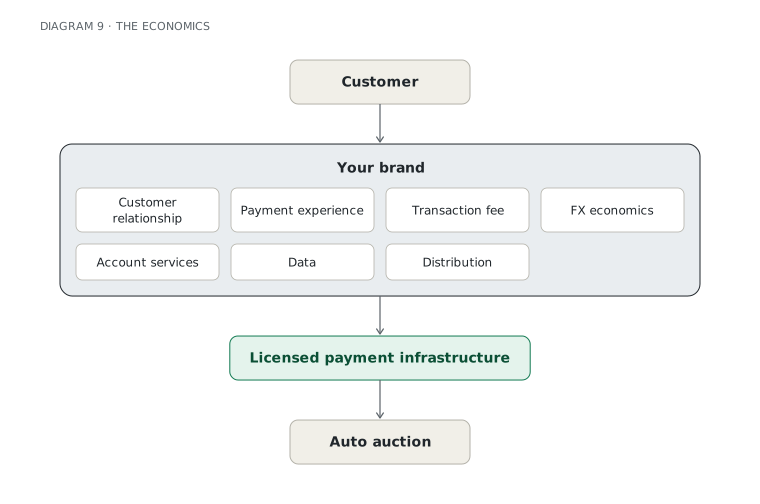
A business operating this channel may potentially generate revenue from transaction fees, FX margin, convenience fees, account fees, technology fees, distribution economics, and partner revenue.
From One Location to a Payment Network
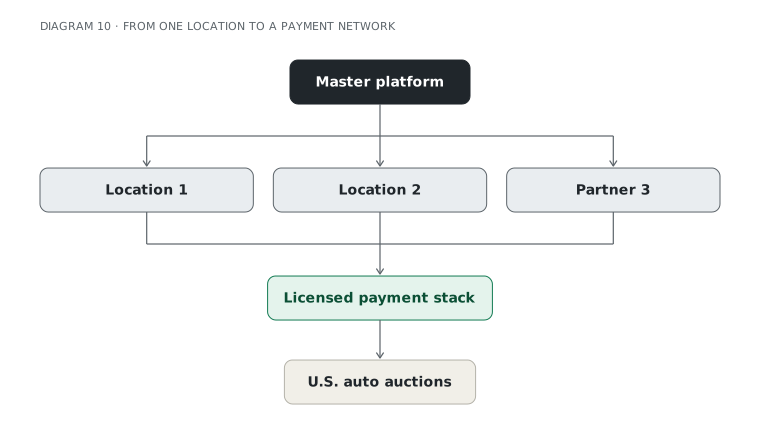
The business can evolve from “we process auction payments” into operating payment infrastructure for businesses serving international auto-auction buyers.
Compliance Is Part of the Product
The structure may need to account for:
KYC
KYB
beneficial ownership
sanctions screening
transaction monitoring
CTR obligations
SAR obligations
recordkeeping
cash aggregation
geographic risk
state money-transmission requirements
FinCEN registration
principal-agent oversight
provider-specific risk controls
The correct structure depends on the exact flow of funds.
Do You Need Your Own Money Transmitter Licenses?
Not necessarily.
Depending on the transaction and provider appetite, a company may be able to operate through an existing licensed principal, an authorized agent or delegate model, a white-label regulated platform, a buyer-specific account structure, a direct approved payment arrangement, or another compliant sponsored model.
The first step is not “get a license.” The first step is to map the transaction.
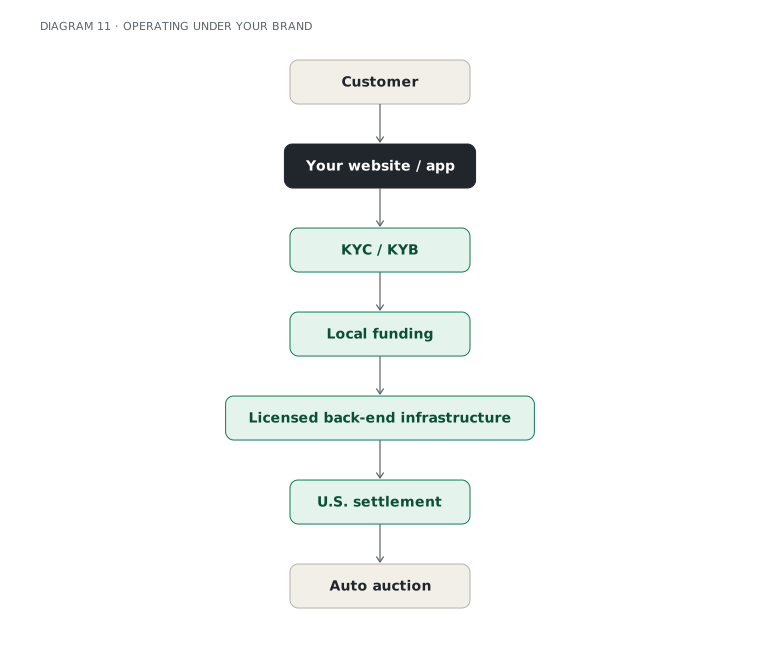
Can the Service Operate Under Your Brand?
Potentially, yes.
Can the Solution Be API-Based?
Depending on provider capabilities, the workflow can potentially expose customer creation, KYC/KYB status, funding instructions, FX quotes, payment initiation, status updates, webhooks, and reconciliation data.
Who This Is For
Copart brokers
IAA brokers
vehicle exporters
Mexican auto dealers
international dealers
vehicle importers
border MSBs
payment companies
fintechs
auction intermediaries
automotive marketplaces
sourcing companies
dealer networks
high-volume auction buyers
Our Role
We Design the Stack. We Do Not Force You Into One Provider.
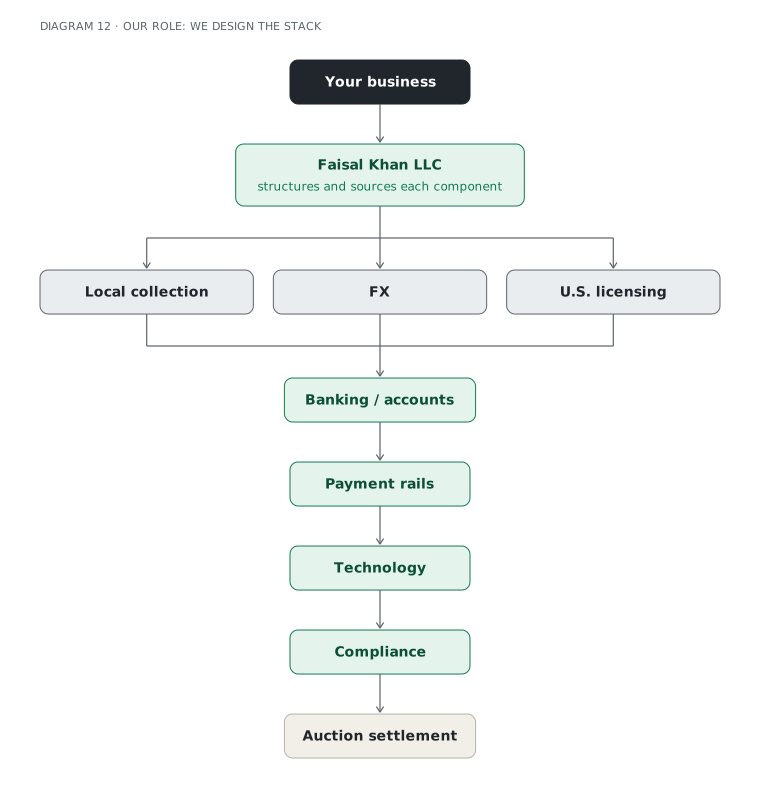
The goal is to create a practical architecture using the right combination of providers rather than forcing one provider to solve every component.
Implementation Process
Map the Existing Payment Flow — countries, entities, customers, transaction sizes, funding methods, banking, compliance, and auction relationships.
Create the Transaction Set — local currency to USD, USD to USD, individual or business payments, refunds, reversals, failed payments, and settlement.
Design the Regulatory Structure — principal, agent, white-label, named-account, bill-payment, or hybrid model.
Build the Local Collection Layer — identify appropriate local banking or payment providers.
Build the U.S. Infrastructure — banking, accounts, licensing, compliance, ledgering, liquidity, and payment rails.
Validate Auction Payment Mechanics — acceptable sender, member matching, references, payment rail, reconciliation, and confirmation.
Pilot — begin with controlled transaction volume and selected customers.
Scale — expand into more customers, countries, currencies, auctions, locations, and distribution partners.
Information We Need
To assess whether a dedicated payment structure makes commercial and regulatory sense, we need the shape of your current flow: your buyers and the auctions they buy through, your volumes and ticket sizes, how customers fund their purchases today, and where you stand on banking and licensing.
There is nothing to prepare in advance. The form asks for it a section at a time, it takes about ten minutes, and you can leave anything you do not yet know.
If you already have a flow-of-funds diagram, you can attach it. If you do not, describe the transaction in plain English and we will convert it into one.
Frequently Asked Questions
Can you help us pay Copart without Western Union or MoneyGram?
Potentially, yes. The solution may involve buyer-specific accounts, a licensed payment provider, an authorized-agent structure, a white-label platform, pre-funded U.S. settlement, or a direct approved auction-payment relationship.
Can a Mexican customer pay in pesos?
Yes, where an appropriate local collection and FX provider is available.
Can the payment be attributed to the buyer?
Potentially. Buyer-specific account structures, virtual accounts, customer ledgers, payment references, and reconciliation data can be used to preserve buyer-level attribution.
Do we need our own money transmitter licenses?
Not necessarily. Sponsored, agency, white-label, or principal-license structures may be available depending on the transaction and provider.
Can the payment be real-time?
Potentially. The system may use confirmed local funding combined with pre-funded U.S. liquidity to reduce the time between customer funding and auction payment.
Can the system operate under our brand?
Potentially, yes. White-label and embedded-payment models may allow the customer-facing service to operate under your brand.
Can this support IAA as well as Copart?
Yes. The underlying architecture can potentially support multiple auction platforms, subject to each auction's payment requirements.
Can this expand beyond one location?
Yes. A successful payment program can potentially be replicated across additional offices, partners, dealers, brokers, or geographic markets.
Build the Payment Channel Instead of Renting It
If your business already has customers, transaction volume, or distribution, the larger opportunity may be to build a payment channel around that business rather than continuing to send customers through someone else's payment network.
The key is to align customer, funding source, regulation, banking, FX, liquidity, payment rail, auction requirements, and reconciliation.
When those pieces are properly structured, the result is not merely a payment.
It is infrastructure.
Related Pages
Auto Auction Payment Guides
Each page below covers one auction, corridor, operating model, or integration in detail. The intake form is listed alongside them.
-
Auto Auction Payment API
Embed Collection, FX, U.S. Settlement, and Auction Payment Workflows Into Your Platform
-
Auto Auction Payment Processing
Payment Infrastructure for Brokers, Exporters, Dealers, and International Auction Buyers
-
Copart Payment Alternative
Build an Alternative Payment Channel for Recurring International Copart Purchases
-
Copart Payment Solution
Build a Compliant Payment Infrastructure for International Copart Buyers
-
Copart Payments for International Buyers
Payment Infrastructure for Overseas Dealers, Brokers, Exporters, and Vehicle Buyers
-
Cross-Border Auto Auction Payments
Move Customer Funds Across Borders and Settle U.S. Vehicle Auctions
-
IAA Payment Solution
Cross-Border Payment Infrastructure for International IAA Buyers
-
Mexico-U.S. Auto Auction Payments
Payment Infrastructure for Mexican Buyers Purchasing Vehicles in the United States
-
Pay Copart From Mexico
Build a Mexico-to-U.S. Payment Flow for Copart and Auto Auction Purchases
-
Submit Your Flow of Funds
The payment profile we need to assess whether a dedicated auto auction payment structure makes commercial and regulatory sense for your business.
-
White-Label Auto Auction Payments
Launch an Auto Auction Payment Service Under Your Own Brand
Build Your Auto Auction Payment Infrastructure
If your company processes meaningful transaction volume for international vehicle buyers, we can assess your existing flow and determine whether a dedicated payment structure makes commercial and regulatory sense.
Recommended minimum monthly payment volume: US$1 million.