
USDC and USDT are economically interesting in the GCC because most GCC currencies are closely linked to the U.S. dollar.
But the regulatory question is not:
Is USDC worth roughly one dollar?
The regulatory question is:
Can this specific entity use this specific stablecoin for this specific payment in this specific GCC jurisdiction?
Those are different questions.
There is no single GCC stablecoin law
The six member states have different approaches.
That makes a single statement such as:
Stablecoins are legal in the GCC
too broad to be useful.
Stablecoin-funded versus stablecoin-settled
A useful distinction is:
Stablecoin-funded
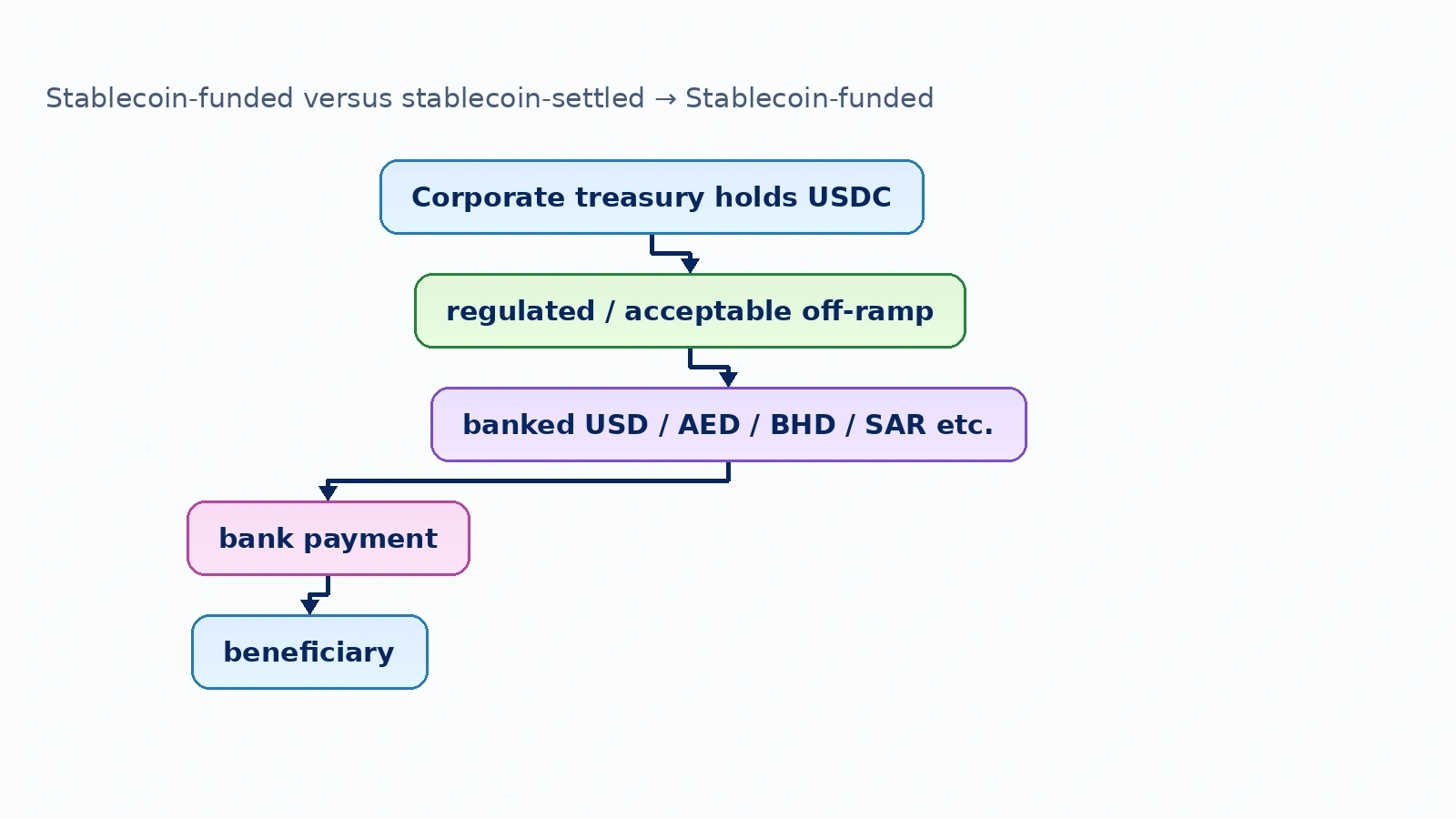
Stablecoin-settled
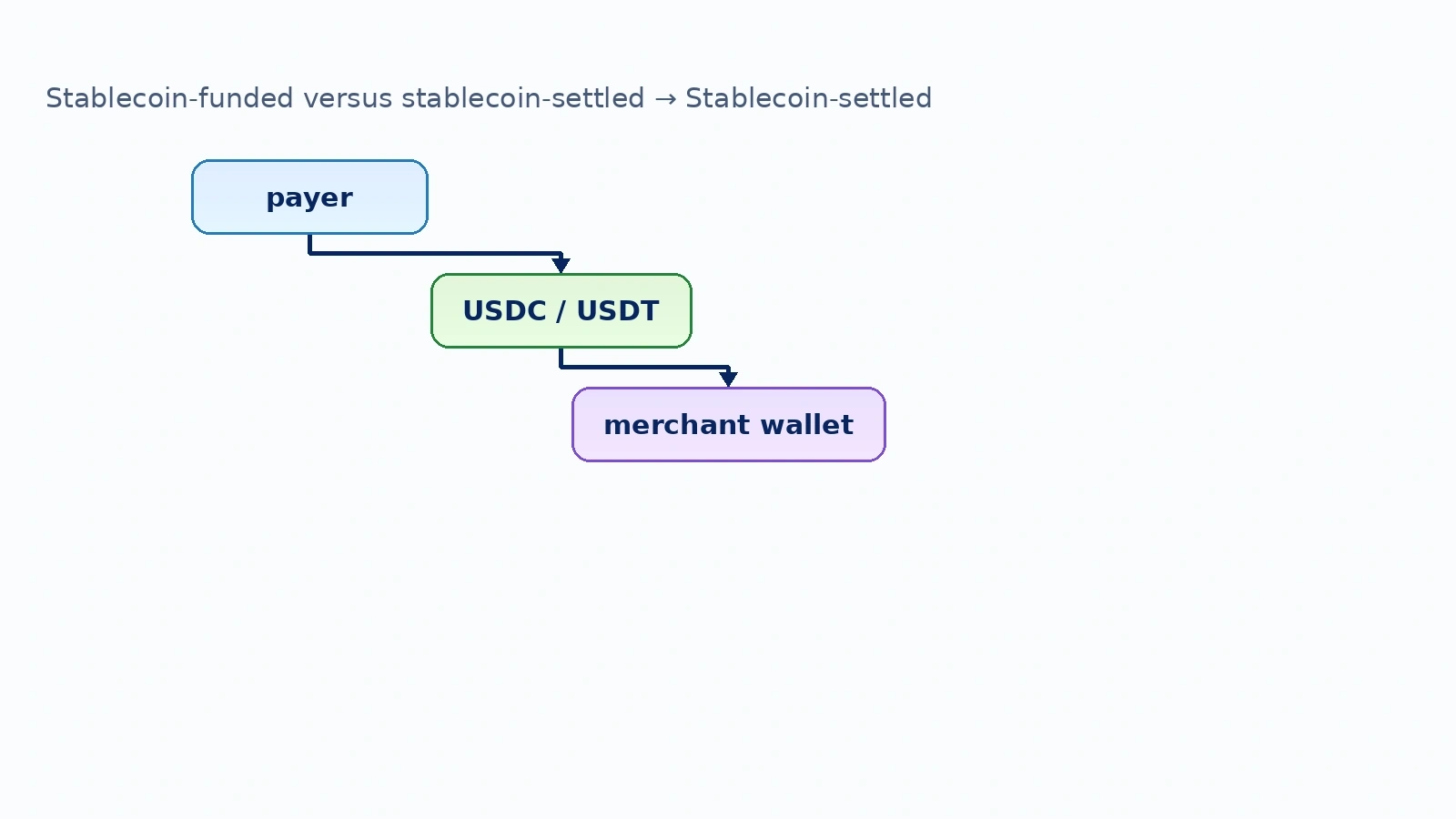
The second structure raises the direct "means of payment" question in the local jurisdiction.
UAE
The Central Bank of the UAE has an in-force Payment Token Services Regulation.
It distinguishes Dirham Payment Tokens and Foreign Payment Tokens.
Under the onshore CBUAE framework, foreign payment tokens have restricted use as a means of payment. The regulation permits a registered foreign payment token to be used as a means of payment for purchases of virtual assets or virtual-asset derivatives, rather than creating a blanket rule allowing USD stablecoins to purchase ordinary goods and services.
This is critical.
A crypto exchange operating with USDC is not proof that an ordinary UAE merchant can use USDC as unrestricted local settlement.
The UAE's financial free zones and other virtual-asset regulatory regimes can have separate jurisdictional treatment, so the exact location/entity matters.
Bahrain
Bahrain introduced a specific Stablecoin Issuance and Offering framework.
Licensed stablecoin issuers may issue fully backed single-currency stablecoins tied to:
BHD;
USD;
other fiat currencies acceptable to the CBB.
The stablecoin must be fully backed 1:1 by the same fiat currency it tokenizes.
This creates a more explicit regulatory pathway for stablecoin issuance.
Kuwait
Kuwait is materially more restrictive.
The Central Bank of Kuwait's 2023 virtual-asset circular requires:
Strict prohibition on using virtual assets as a payment instrument/means;
Prohibition on dealing in virtual assets as an investment service;
No licensing of VASPs under the described framework;
Prohibition of virtual-asset mining.
Therefore USDC/USDT should not be presented as ordinary local payment rails in Kuwait.
Qatar
Qatar's QFC Digital Assets Framework allows regulated tokenization of permitted assets.
But QFCRA expressly clarified that:
Cryptocurrencies;
Stablecoins;
CBDCs used as substitutes for currency;
are Excluded Tokens from that framework, and earlier restrictions remain relevant.
Separately, the Qatar Central Bank is experimenting with wholesale CBDC infrastructure.
That is not the same as permitting USDT as a retail payment rail.
Saudi Arabia
Saudi authorities have historically stated that virtual currencies are not recognized as legal currency by local legal/financial entities and have warned against them.
As of this update, a business should not assume that USDC or USDT is a regulated substitute for SAR domestic payment infrastructure.
The position should be confirmed for the exact product, entity and activity.
Oman
Oman has required virtual-asset service providers to register and comply with AML/CFT requirements through the financial regulator.
This creates a supervised VASP perimeter.
But a VASP regime is not the same thing as declaring USDC/USDT general-purpose legal tender.
Payment use and banking acceptance should be analyzed separately.
Why stablecoins can still matter
24/7 treasury
Stablecoin rails can move USD-linked value outside bank cut-off times.
Cross-border treasury
A group can reposition value across eligible entities/jurisdictions before fiat conversion.
Crypto-native revenue
A business that earns USDC may need a structured route into GCC fiat.
Tokenized finance
The region is actively developing payment-token, tokenization and CBDC infrastructure.
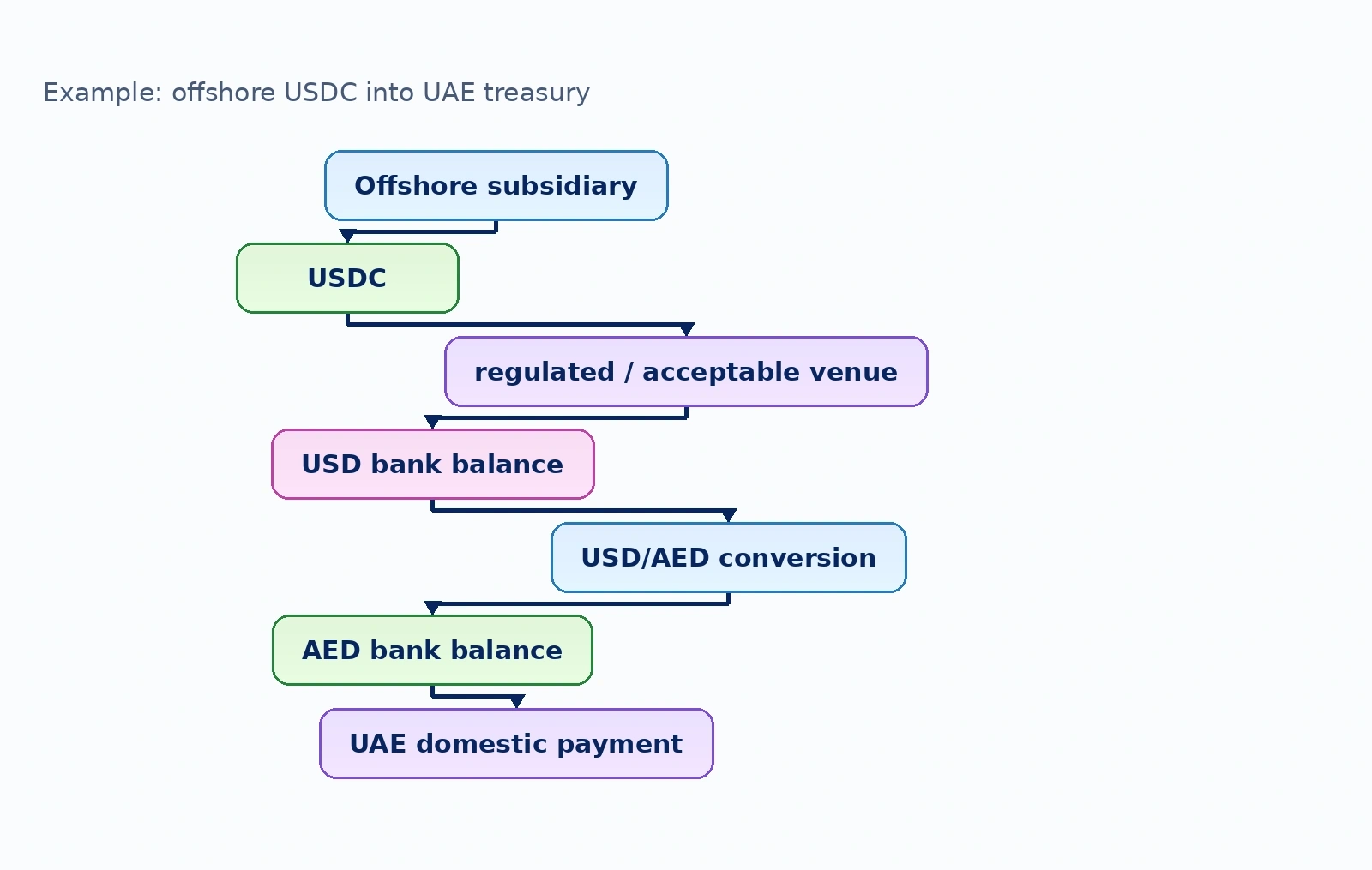
Example: offshore USDC into UAE treasury
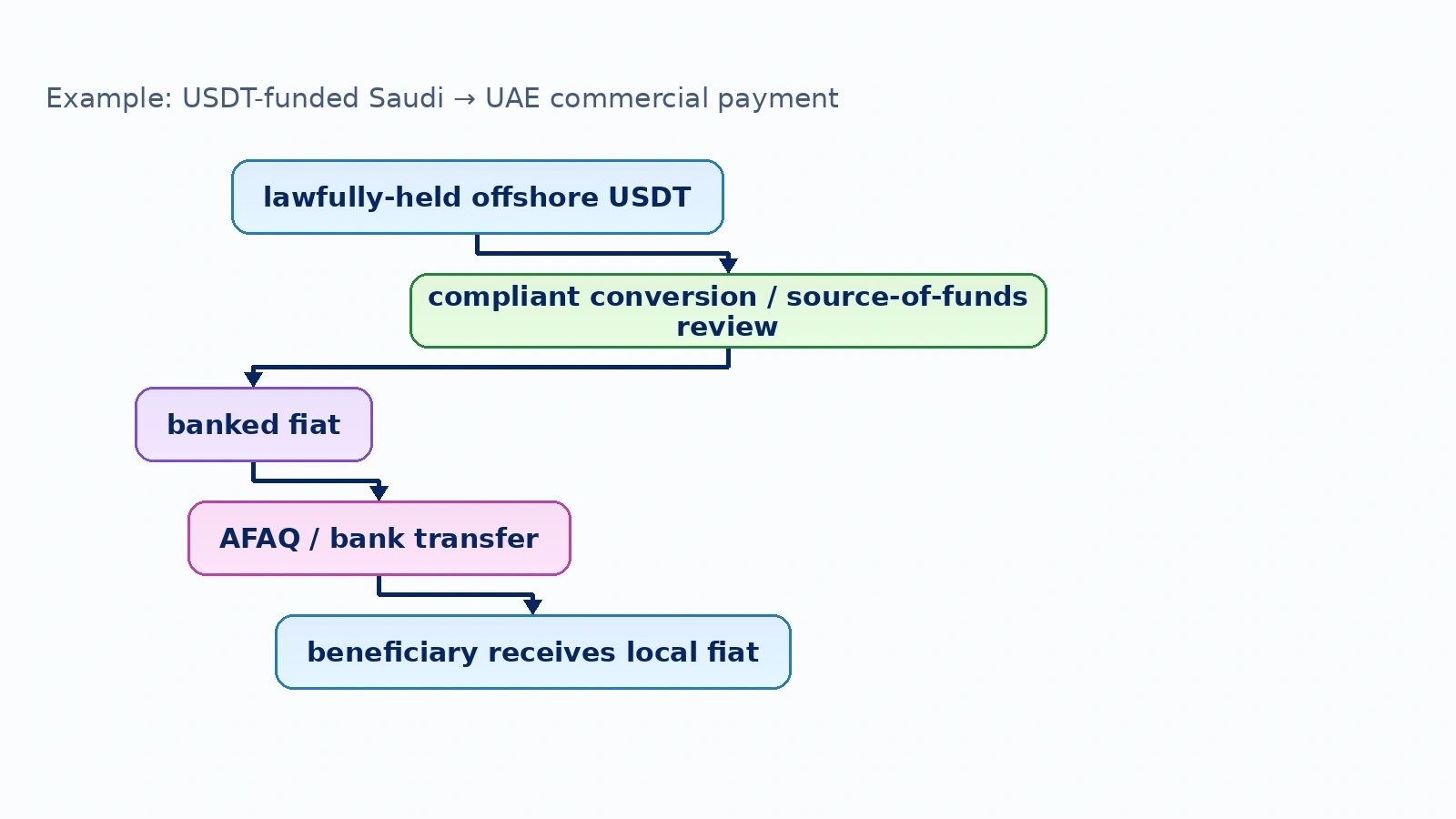
Example: USDT-funded Saudi → UAE commercial payment
A defensible architecture is generally not:
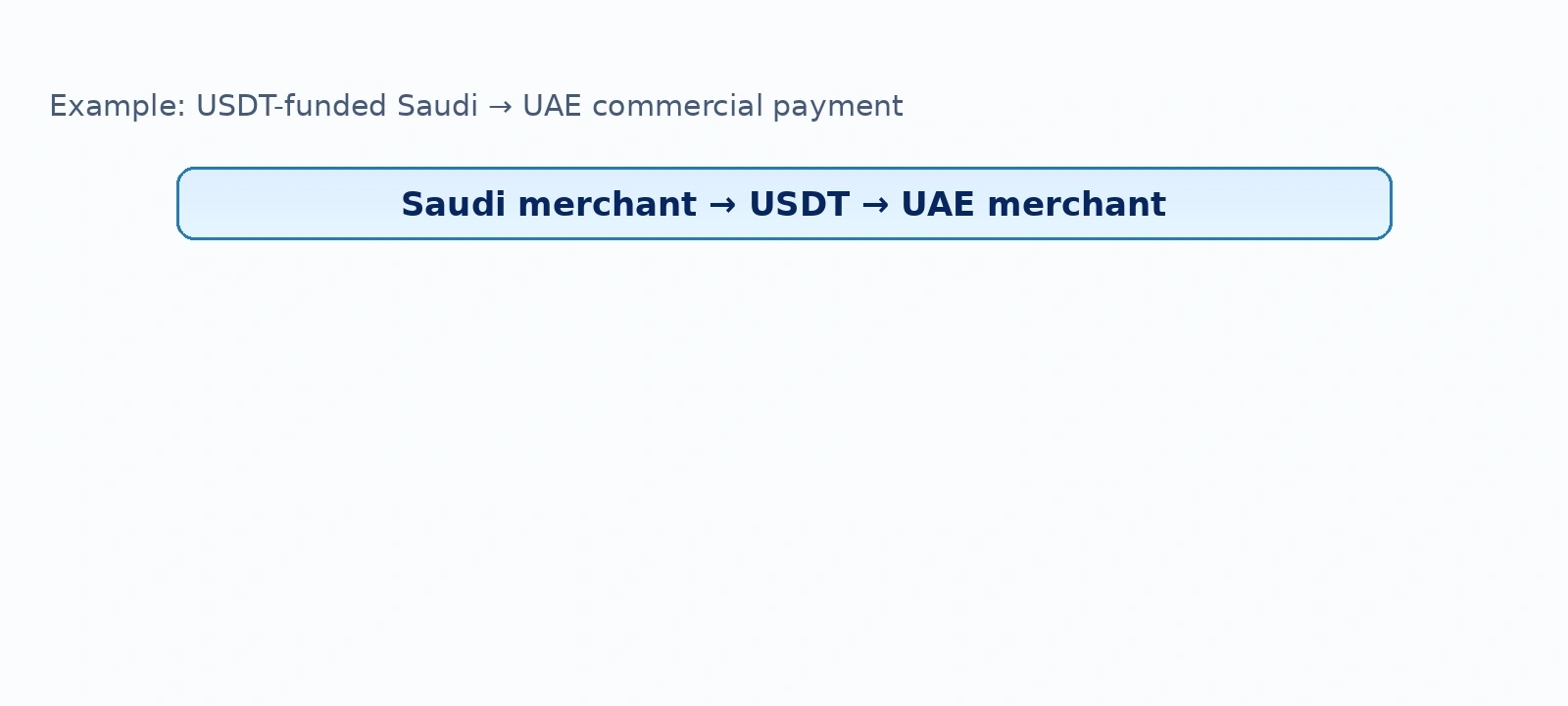
without regulatory analysis.
A more conventional structure may be:
Stablecoins versus AFAQ
They solve different problems.
Stablecoins | AFAQ |
|---|---|
Blockchain-based digital asset | Fiat payment infrastructure |
Potentially 24/7 | Operates under banking/payment-system framework |
Private issuer | Central-bank-owned regional infrastructure |
Regulation differs by jurisdiction | GCC institutional payment rail |
May require fiat off-ramp | Direct local-currency settlement |
They can potentially exist in the same architecture, but one does not automatically replace the other.
Related guides
Authoritative sources and update date
Research updated: September 16, 2026.
This content is designed as an explainer. Payment availability, participant-bank coverage, cut-off times, fees, FX spreads, stablecoin treatment, and licensing requirements can change. For an actual transaction, confirm the current position with the relevant central bank, payment-system operator, sending institution and receiving institution.