
There are four major ways to think about a payment from one GCC country to another:
AFAQ local-currency payment
Conventional bank/correspondent payment
Card/retail GCCNet transaction
Stablecoin-funded payment followed by compliant fiat settlement
They are not interchangeable.
Flow 1 — Saudi Arabia to UAE through AFAQ
Assume a Saudi company owes a UAE supplier AED 1 million.
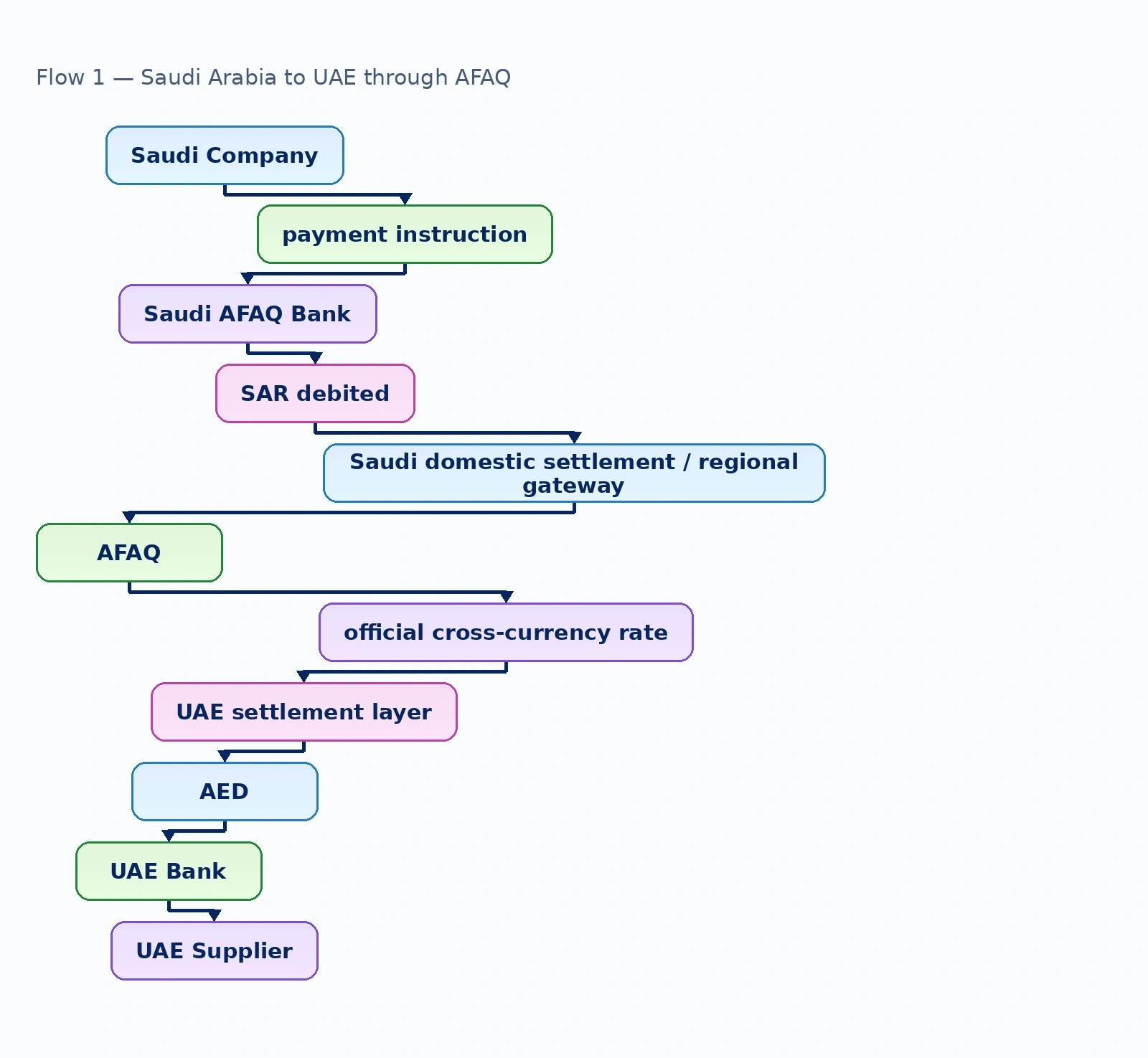
Commercial questions:
Does the Saudi bank participate?
Does the UAE bank participate?
What rate does the bank pass to the customer?
What fee does each bank charge?
What beneficiary information is required?
Is the invoice in AED, SAR or USD?
Flow 2 — UAE to Bahrain using USD/correspondent banking
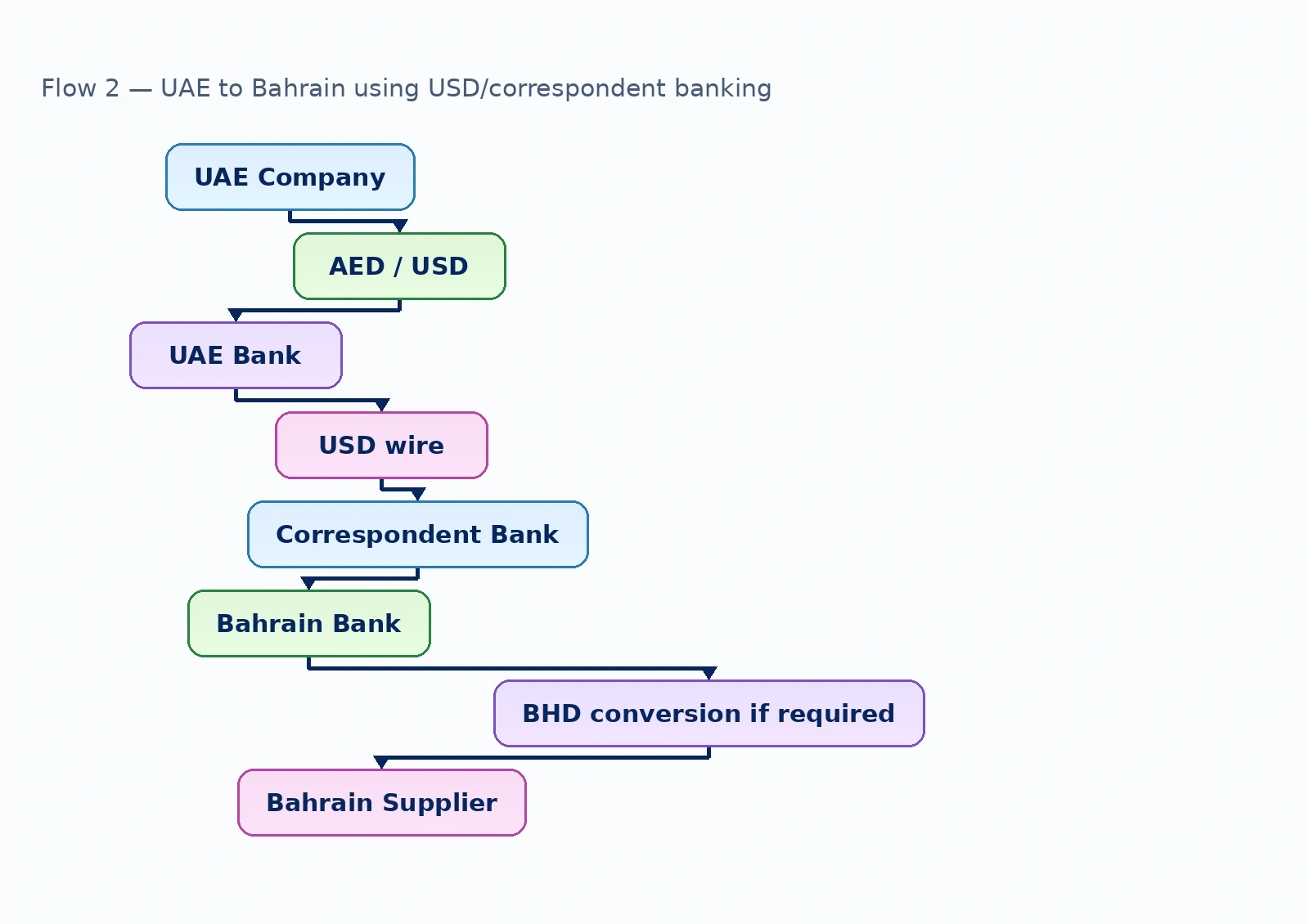
This remains completely viable.
AFAQ is an alternative architecture, not a prohibition on conventional banking.
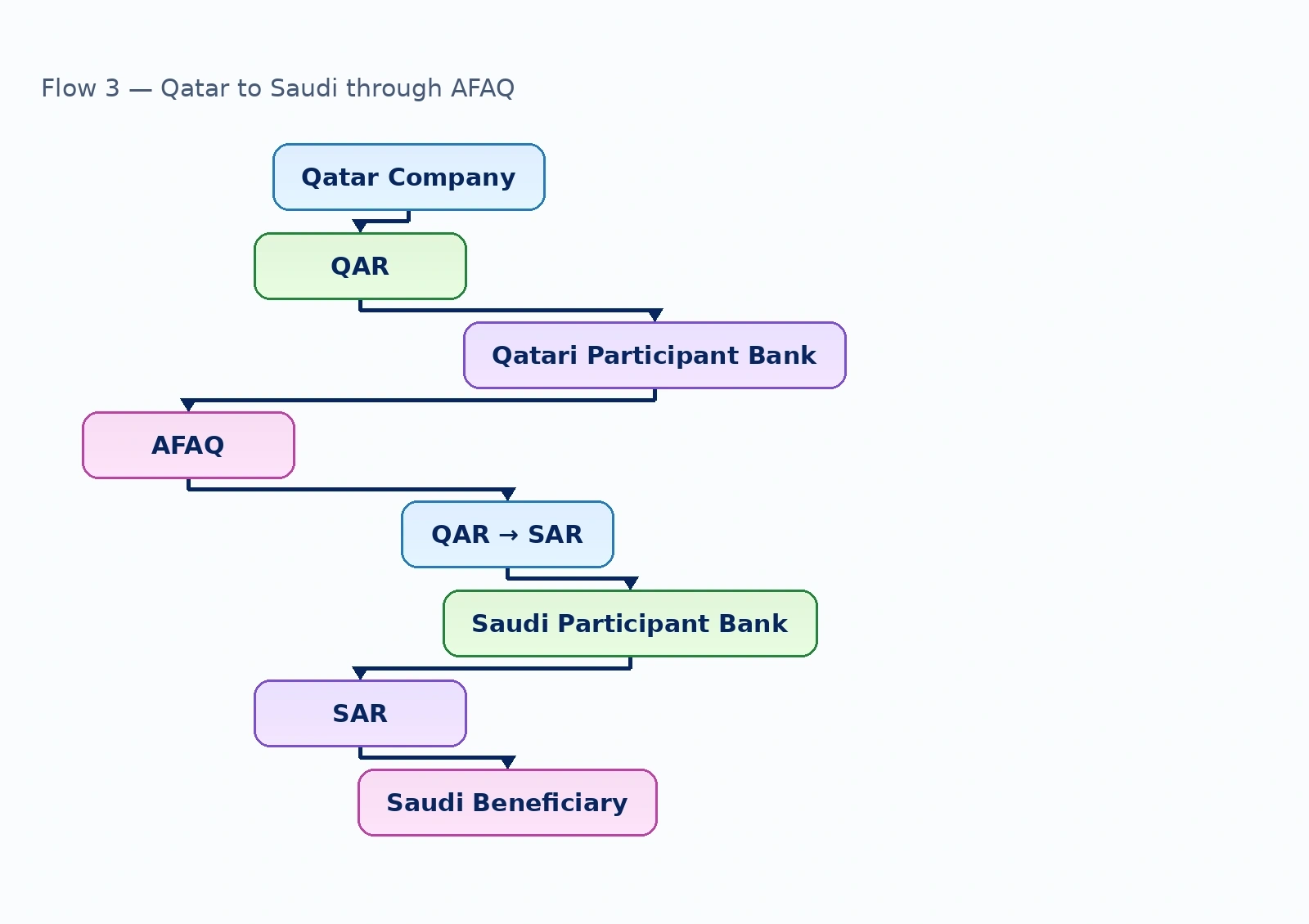
Flow 3 — Qatar to Saudi through AFAQ
Because Qatar only joined AFAQ in September 2026, customer availability needs to be confirmed at bank level.
Conceptually:
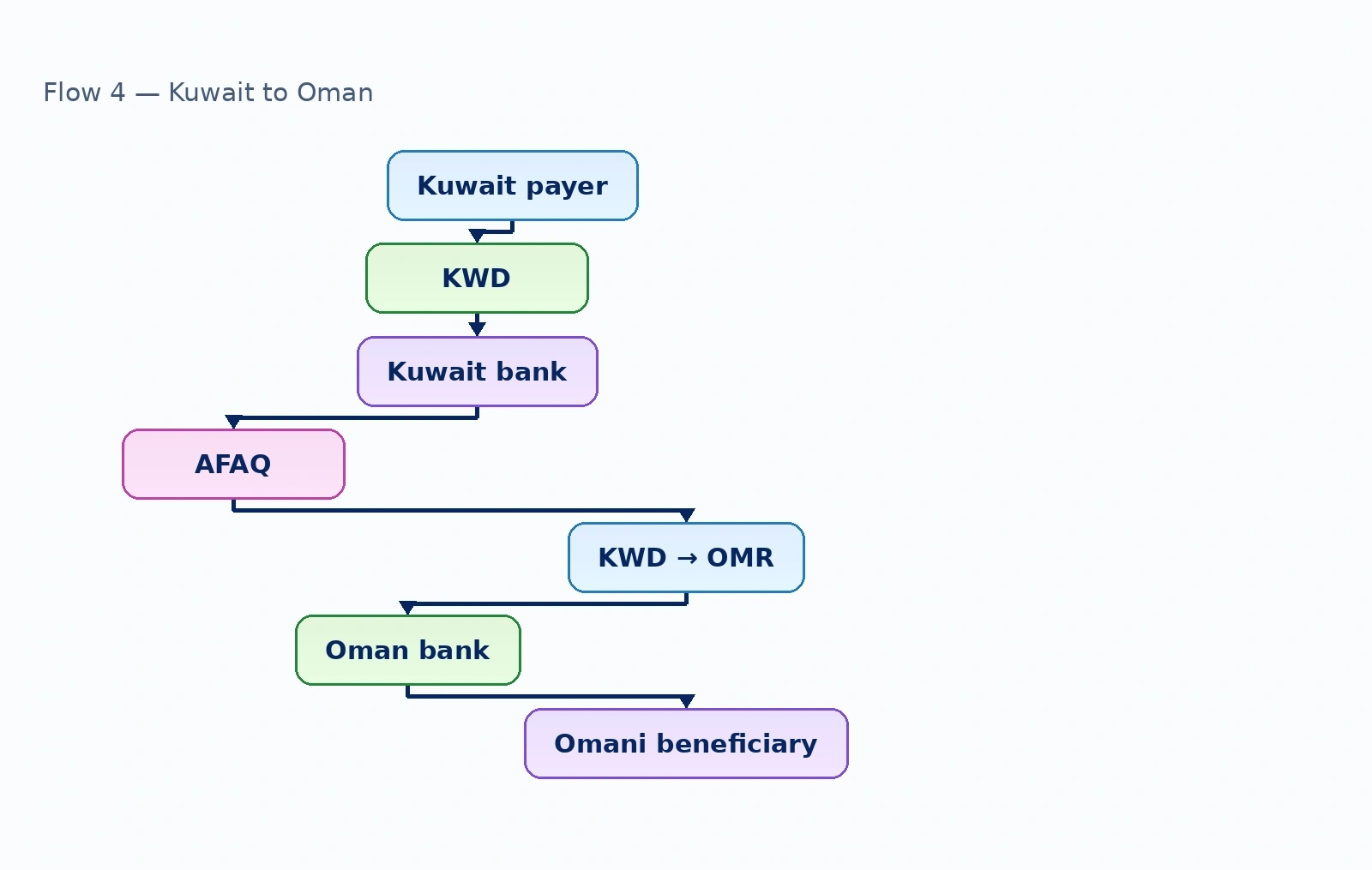
Flow 4 — Kuwait to Oman
KWD is basket-managed rather than fixed to USD.
An AFAQ route can still use supported cross-currency pricing.
Flow 5 — USDC-funded corporate treasury
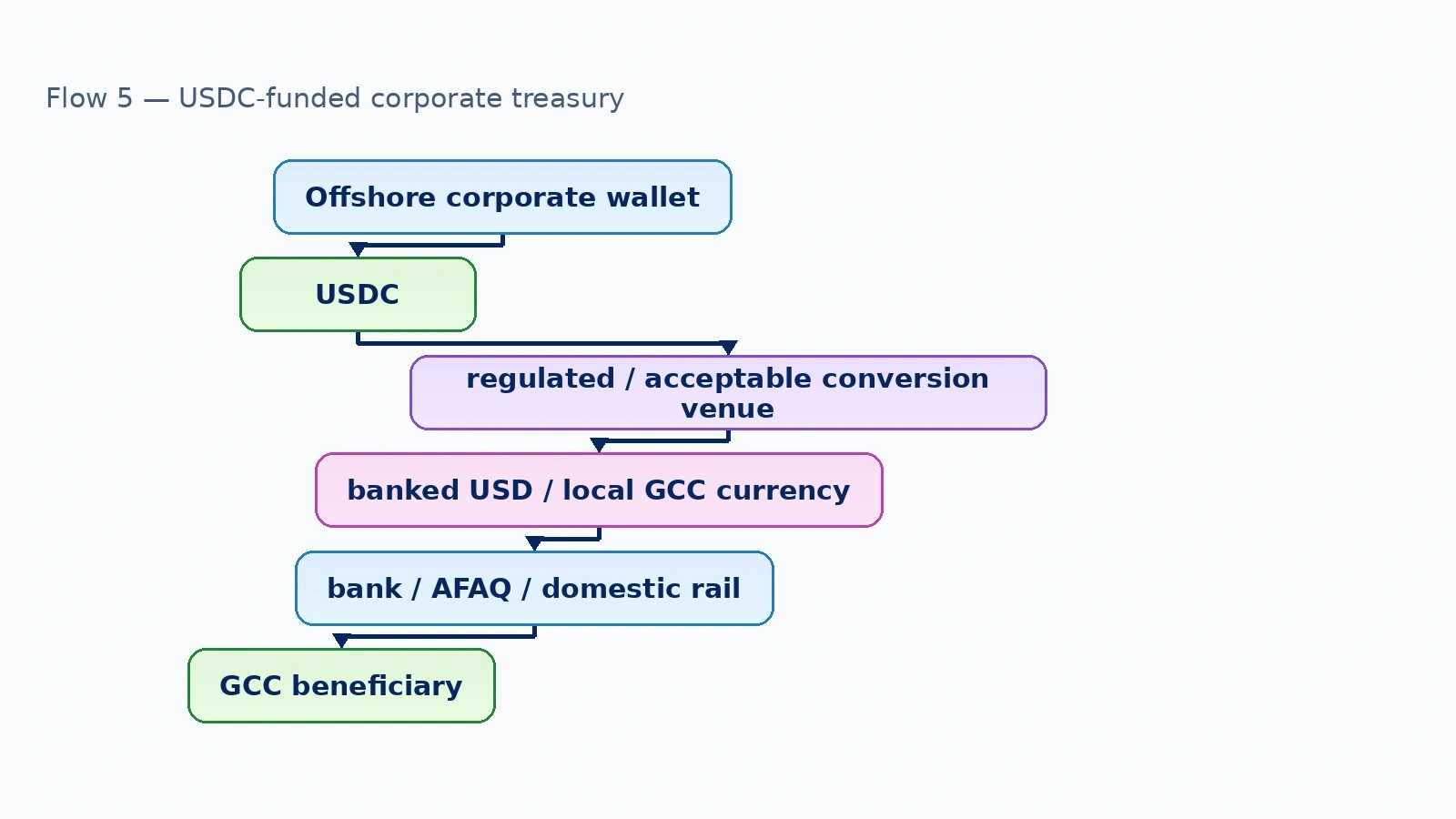
This should be described as a stablecoin-funded fiat payment, not automatically as a stablecoin merchant payment.
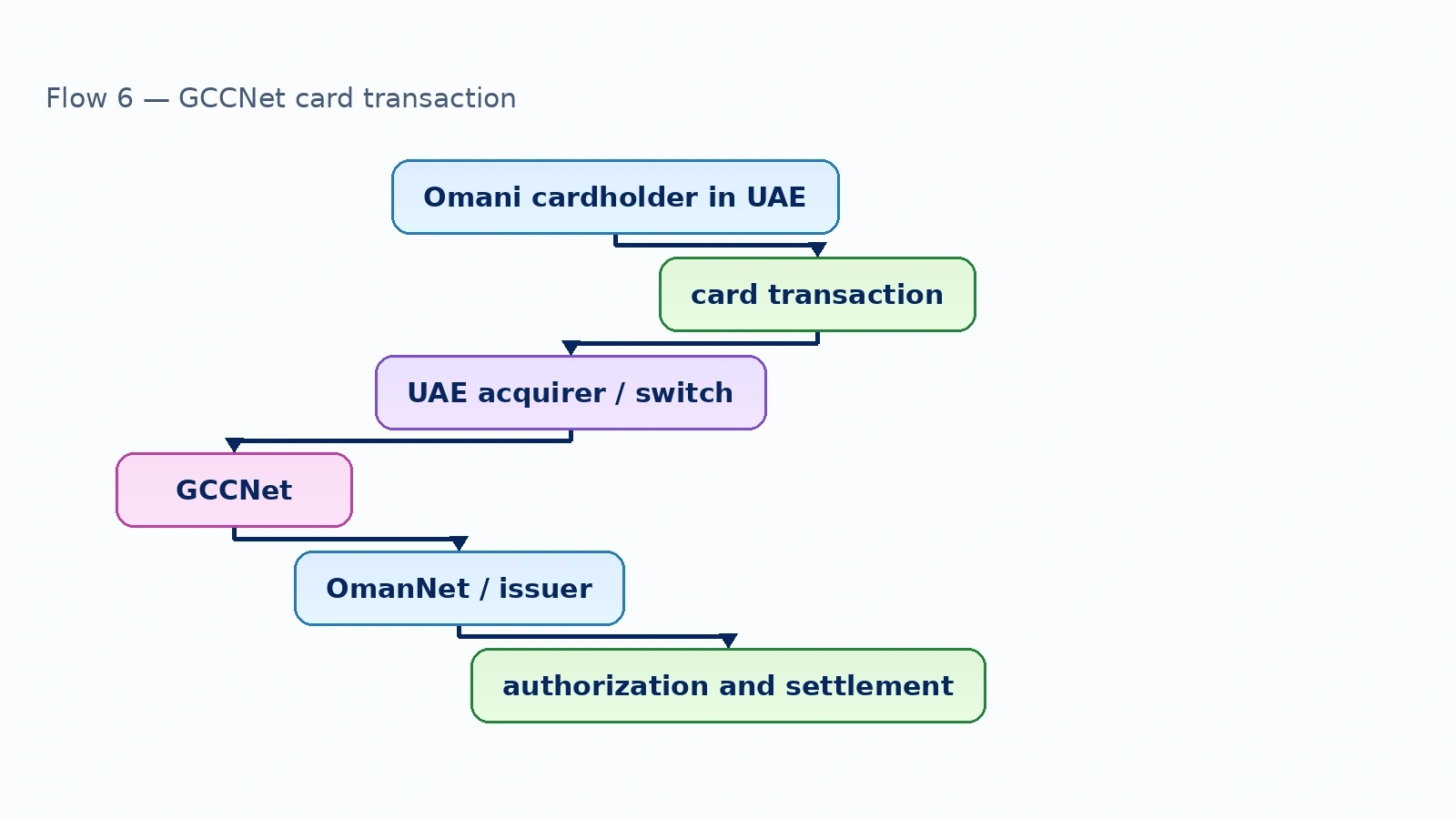
Flow 6 — GCCNet card transaction
Which route should a business choose?
Compare:
Bank participation;
Beneficiary preference;
Contract currency;
FX rate;
Bank spread;
Transfer fee;
Settlement speed;
Operating hours;
Compliance;
Transaction size.
A practical pricing worksheet
For every route calculate:
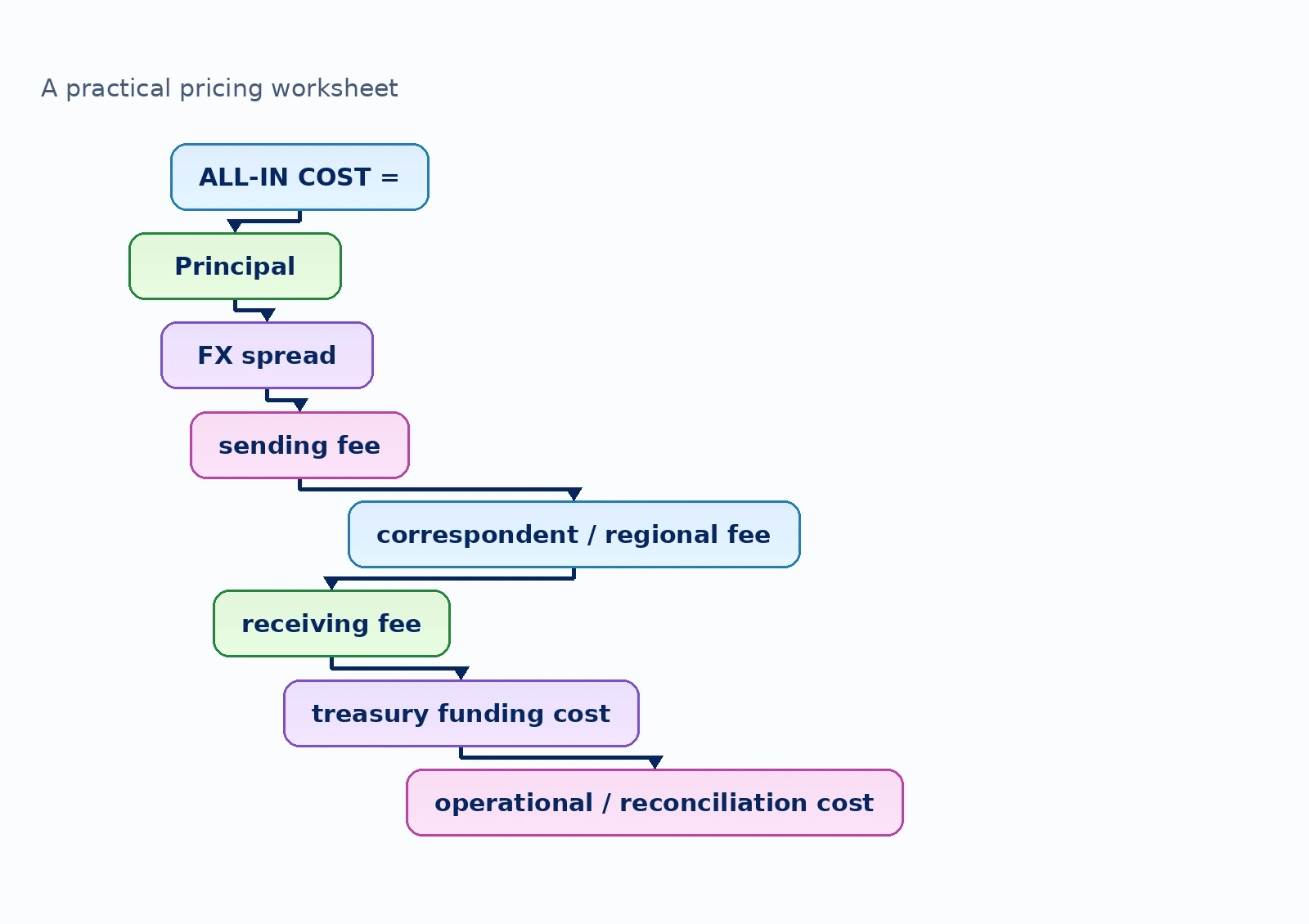
The lowest visible transfer fee is not necessarily the cheapest route.
Related pages
Authoritative sources and update date
Research updated: September 16, 2026.
This content is designed as an explainer. Payment availability, participant-bank coverage, cut-off times, fees, FX spreads, stablecoin treatment, and licensing requirements can change. For an actual transaction, confirm the current position with the relevant central bank, payment-system operator, sending institution and receiving institution.