
AFAQ, Buna and SWIFT are often mentioned in the same conversation, but they solve different parts of the cross-border-payment problem.
The shortest comparison
Infrastructure | Core role | Geographic focus |
|---|---|---|
AFAQ | Regional cross-currency RTGS | GCC |
Buna | Multi-currency clearing/settlement platform | Arab region and eligible international links |
SWIFT | Global financial messaging network | Global |
AFAQ
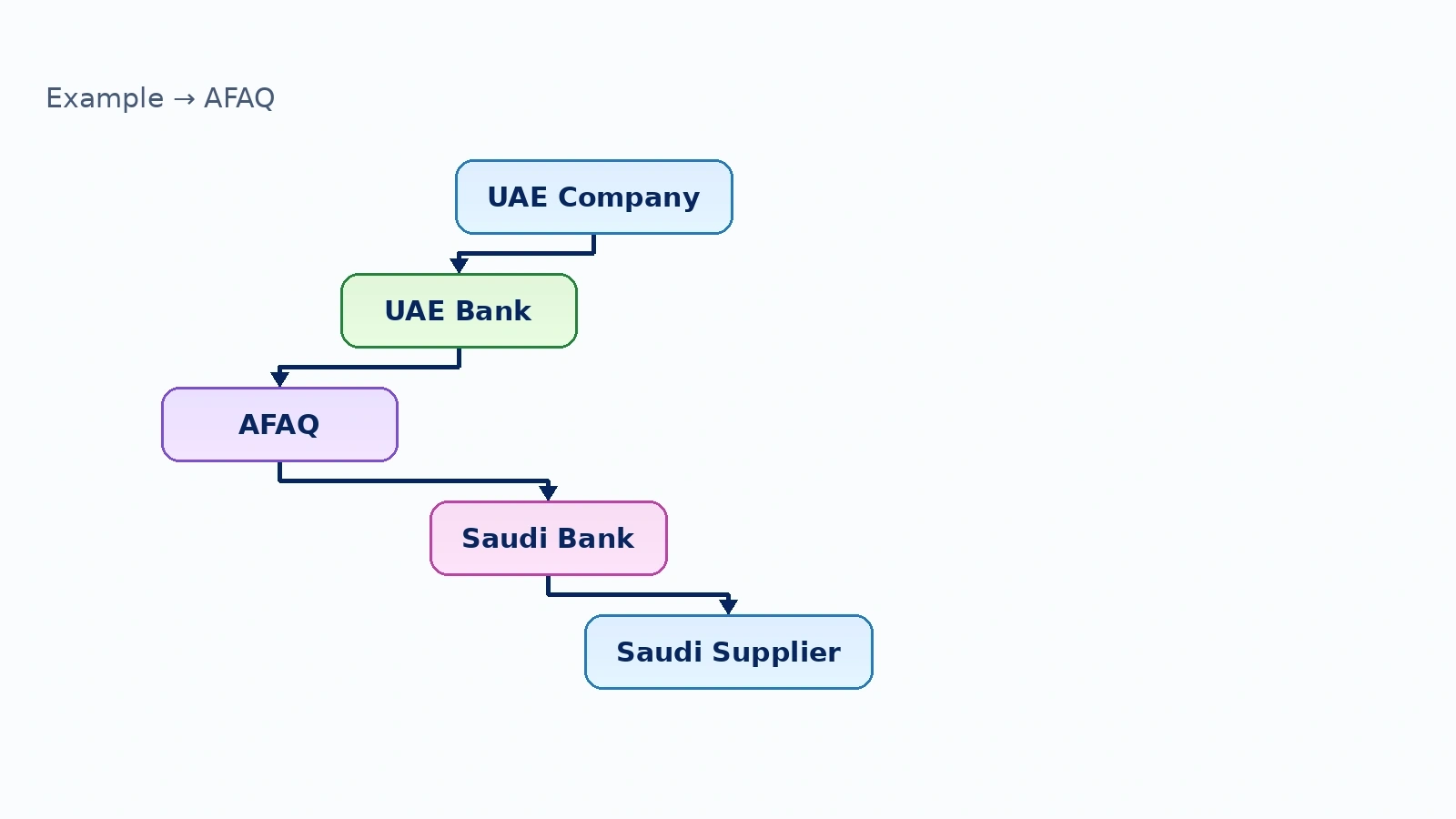
Best understood as the GCC's own cross-border regional settlement infrastructure.
It links GCC domestic payment systems and supports local-currency cross-currency payments.
Buna
Buna was launched by the Arab Monetary Fund as a centralized multi-currency platform for eligible financial institutions.
Its geographic proposition is broader than the GCC.
SWIFT
SWIFT provides standardized financial messaging used by banks globally.
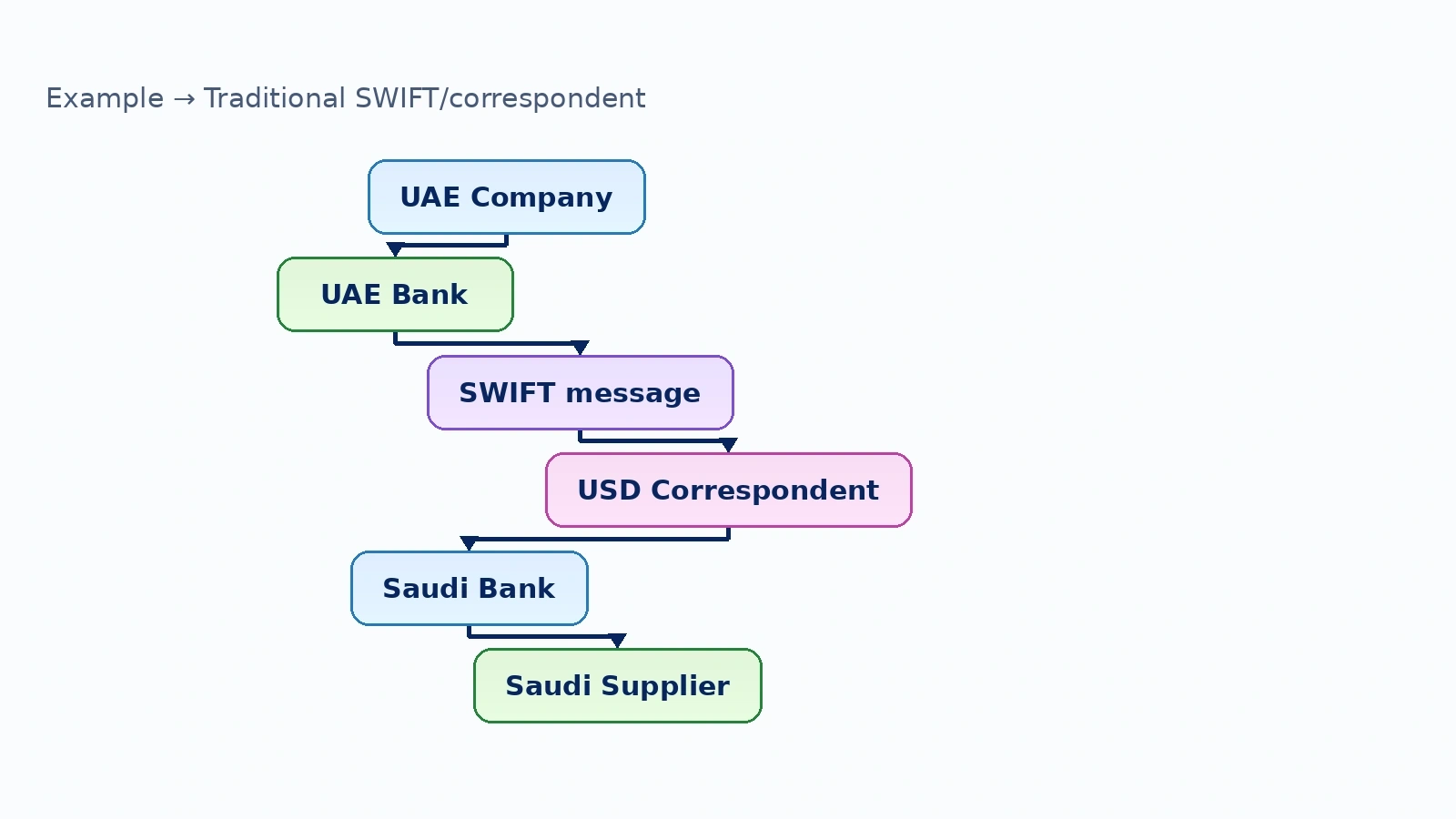
A conventional GCC cross-border payment can use SWIFT while actual settlement occurs through correspondent-bank accounts.
Example
Traditional SWIFT/correspondent
AFAQ
Buna
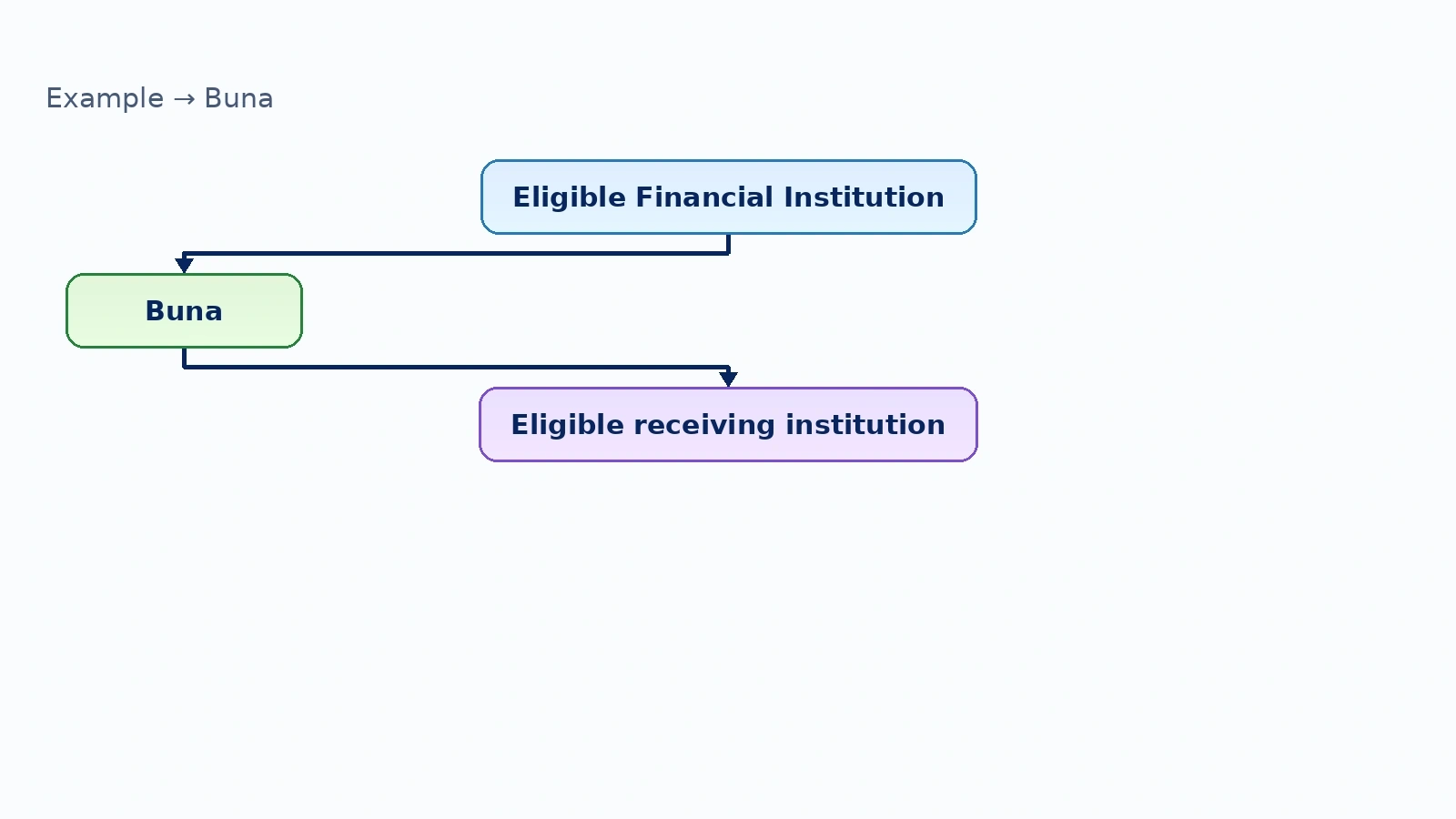
The exact currency and participant eligibility determine whether Buna is suitable.
Which is better?
That is the wrong universal question.
The correct decision depends on:
Sending country;
Receiving country;
Currency;
Bank membership;
Transaction type;
Fees;
Settlement speed;
FX;
Liquidity;
Compliance.
For a pure GCC local-currency corridor, AFAQ is specifically designed for the use case.
For a broader Arab-region corridor, Buna may be relevant.
For global reach, SWIFT/correspondent banking remains fundamental.
Related guides
Authoritative sources and update date
Research updated: September 16, 2026.
This content is designed as an explainer. Payment availability, participant-bank coverage, cut-off times, fees, FX spreads, stablecoin treatment, and licensing requirements can change. For an actual transaction, confirm the current position with the relevant central bank, payment-system operator, sending institution and receiving institution.