
If you are doing business in West or Central Africa, do not start with:
What is today’s XOF or XAF rate?
Start with:
What currency is the contract in, where is the beneficiary account, and what currency does the seller actually want to receive?
The three most common patterns
Pattern 1 invoice in local currency
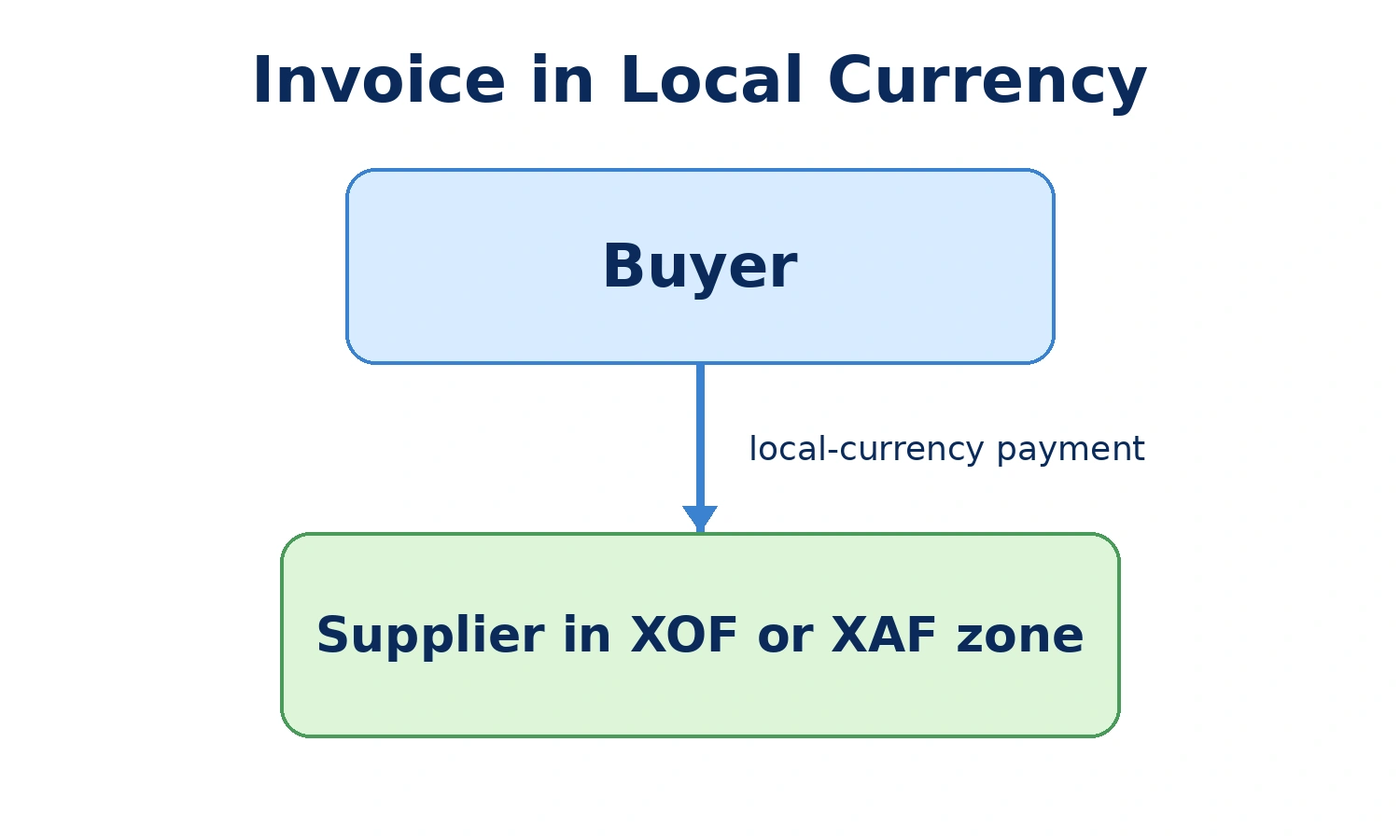
This is most natural when both parties are in the same zone.
Pattern 2 invoice in EUR
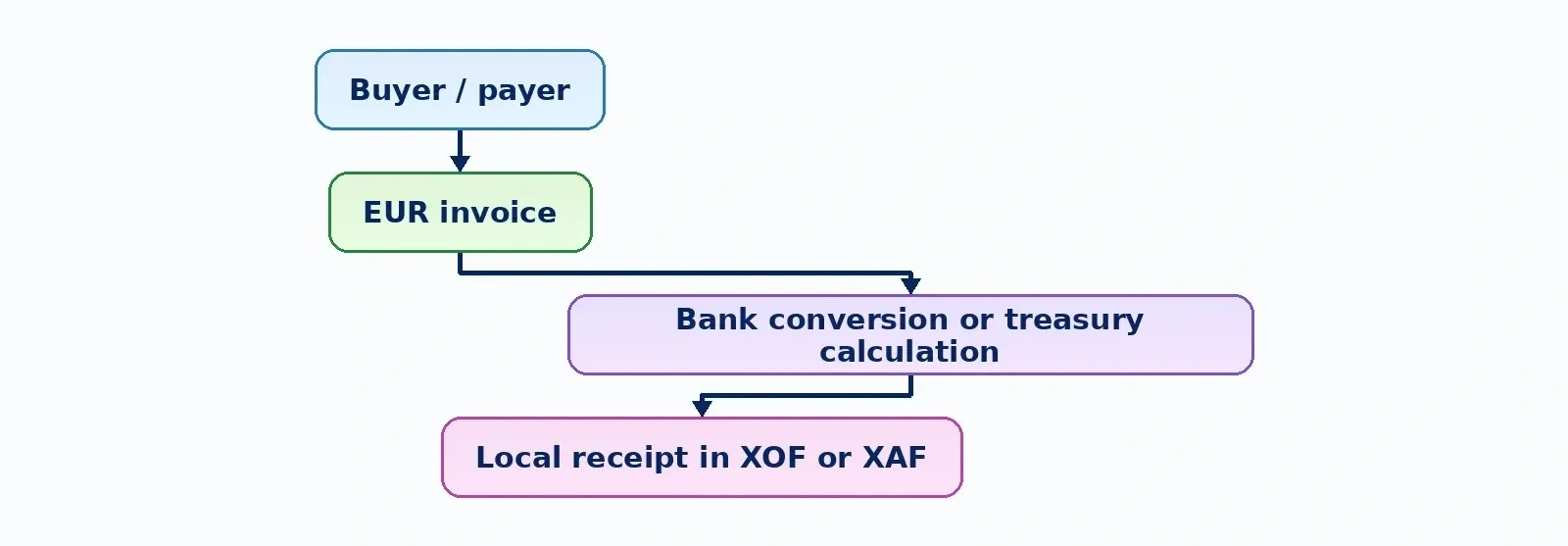
Because the euro peg is fixed, EUR-linked pricing is often straightforward.
Pattern 3 invoice in USD
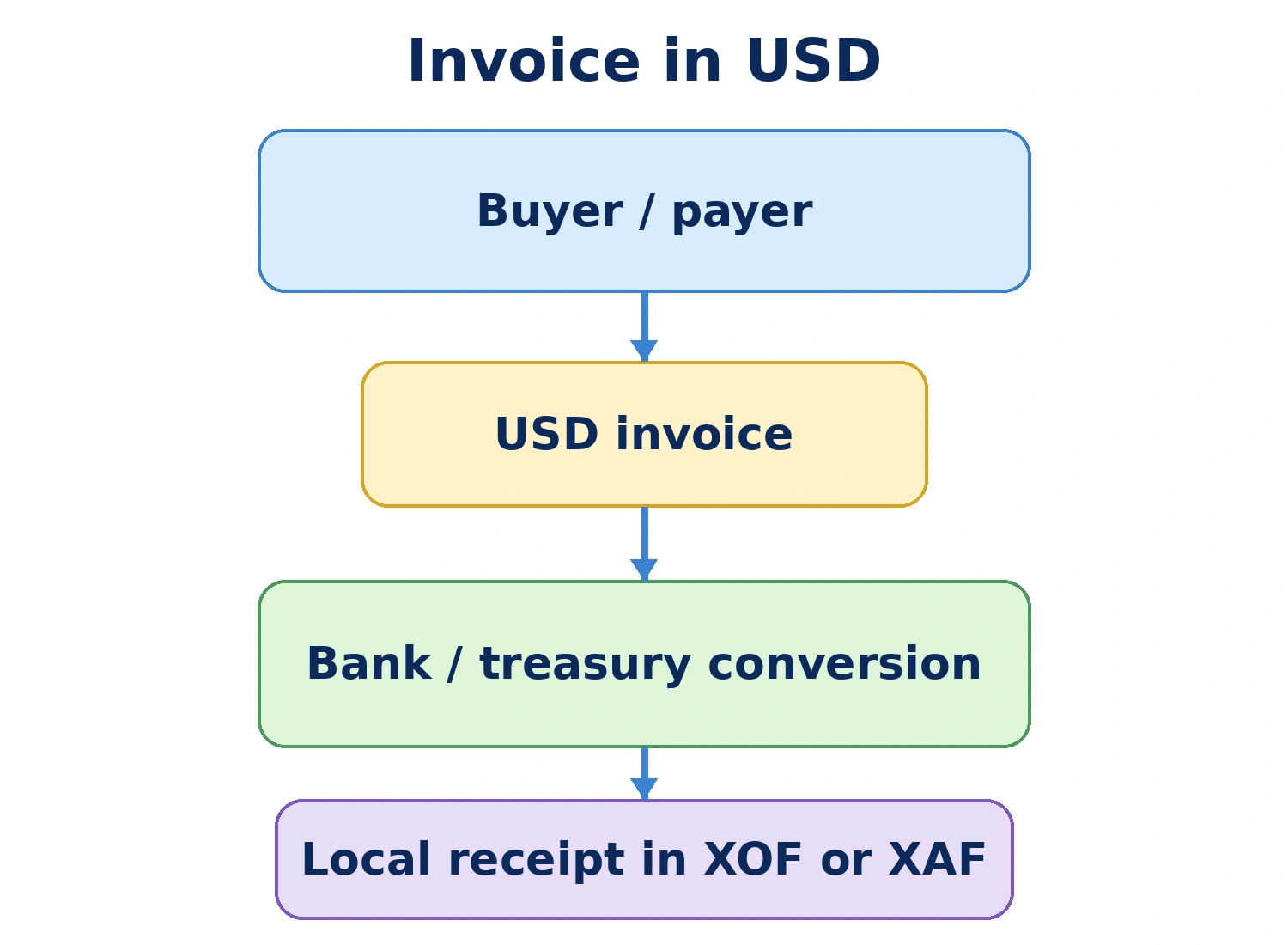
This is common when the underlying goods are globally priced or commodity-linked.
What businesses should clarify
Is the seller in an XOF country or an XAF country?
Is the price fixed in local currency, EUR or USD?
Who bears FX risk?
Which bank account will receive the payment?
Is the account denominated in local currency or foreign currency?
Are charges OUR, SHA or BEN?
Is the payment domestic, regional or international?
Is the business better served by pricing in EUR because of the peg?
XOF / XAF and EUR pricing
A euro-denominated invoice can be easier to manage than a USD-denominated invoice because the EUR/XOF and EUR/XAF rates are fixed.
That gives buyers and sellers predictability.
XOF / XAF and USD pricing
USD pricing remains common in global trade, but it introduces a variable local-currency outcome because EUR/USD moves.
A company may therefore prefer to hedge, reprice frequently, or quote in EUR instead.
Operational checklist
Country confirmed.
Currency zone confirmed: XOF or XAF.
Contract currency confirmed.
Beneficiary account currency confirmed.
Bank charges understood.
FX conversion point understood.
Treasury exposure understood.
Settlement timing understood.
Related pages
Primary and authoritative sources
This content cluster was researched and updated for September 2026. Exchange rates versus currencies other than the euro vary over time. For operations, always confirm the current rate, the sending/receiving bank’s terms, and any country-specific compliance requirements.