
The West African CFA franc, ISO code XOF, is the common currency of the WAEMU/UEMOA monetary union in West Africa.
It is used by eight countries:
Benin
Burkina Faso
Côte d’Ivoire
Guinea-Bissau
Mali
Niger
Senegal
Togo
It is issued by the BCEAO, the Central Bank of West African States, headquartered in Dakar, Senegal.
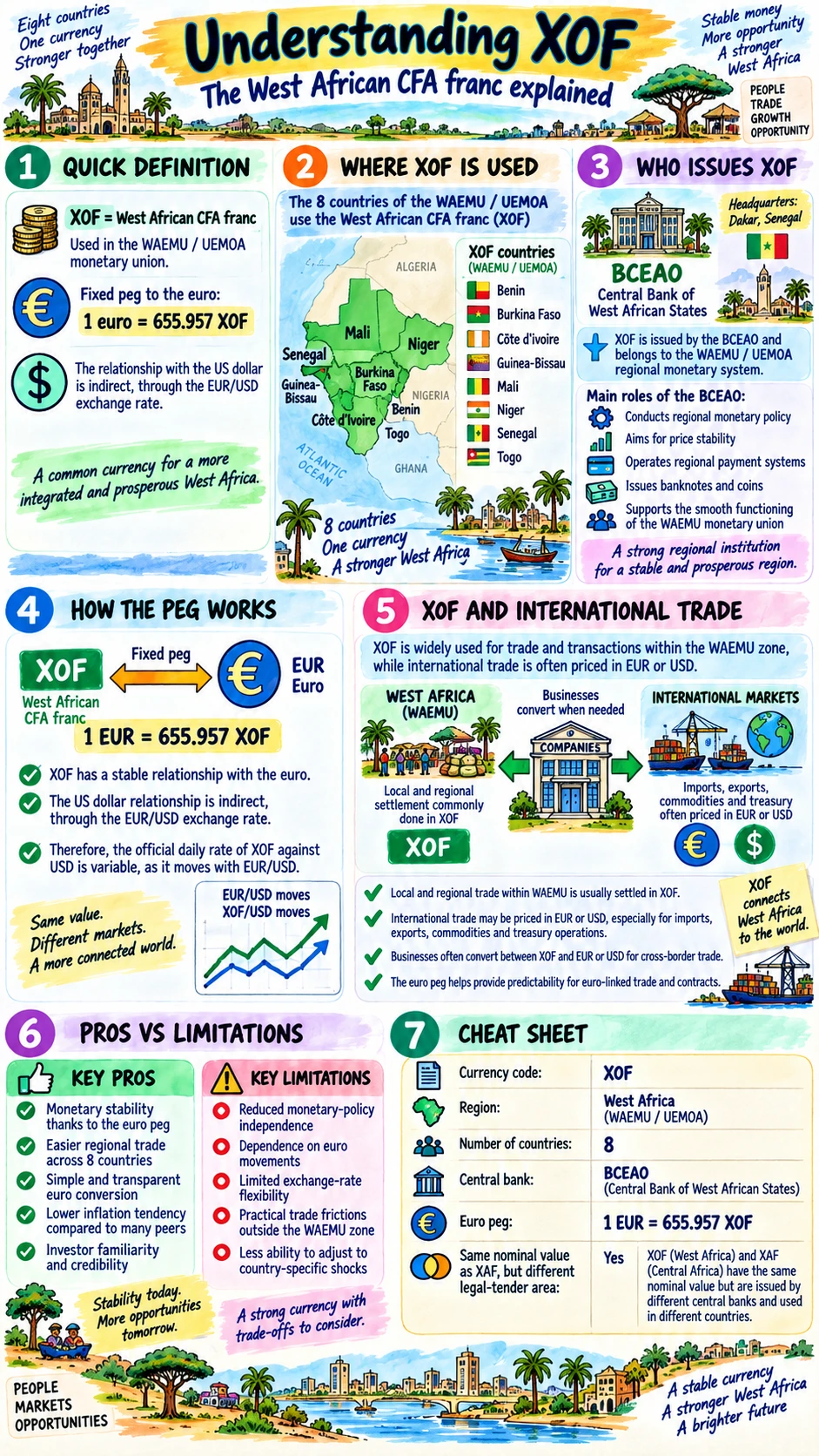
Quick facts
Currency code: XOF
Region: West Africa
Monetary union: WAEMU / UEMOA
Countries: 8
Issuer: BCEAO
Euro peg: 1 EUR = 655.957 XOF
USD relationship: indirect through EUR/USD
What XOF is used for
Inside the WAEMU/UEMOA zone, XOF is the natural operating currency for:
Local commerce,
Payroll,
Pomestic supplier payments,
Taxes and ordinary business activity,
And regional trade within the union.
For cross-border trade beyond the zone, businesses often invoice or price in:
EUR,
USD,
or occasionally local currency depending on the counterparties.
That means XOF frequently acts as the local settlement currency even where the contract economics are influenced by EUR or USD.
Why the euro peg matters
The single most important fact about XOF is that it is pegged to the euro at:
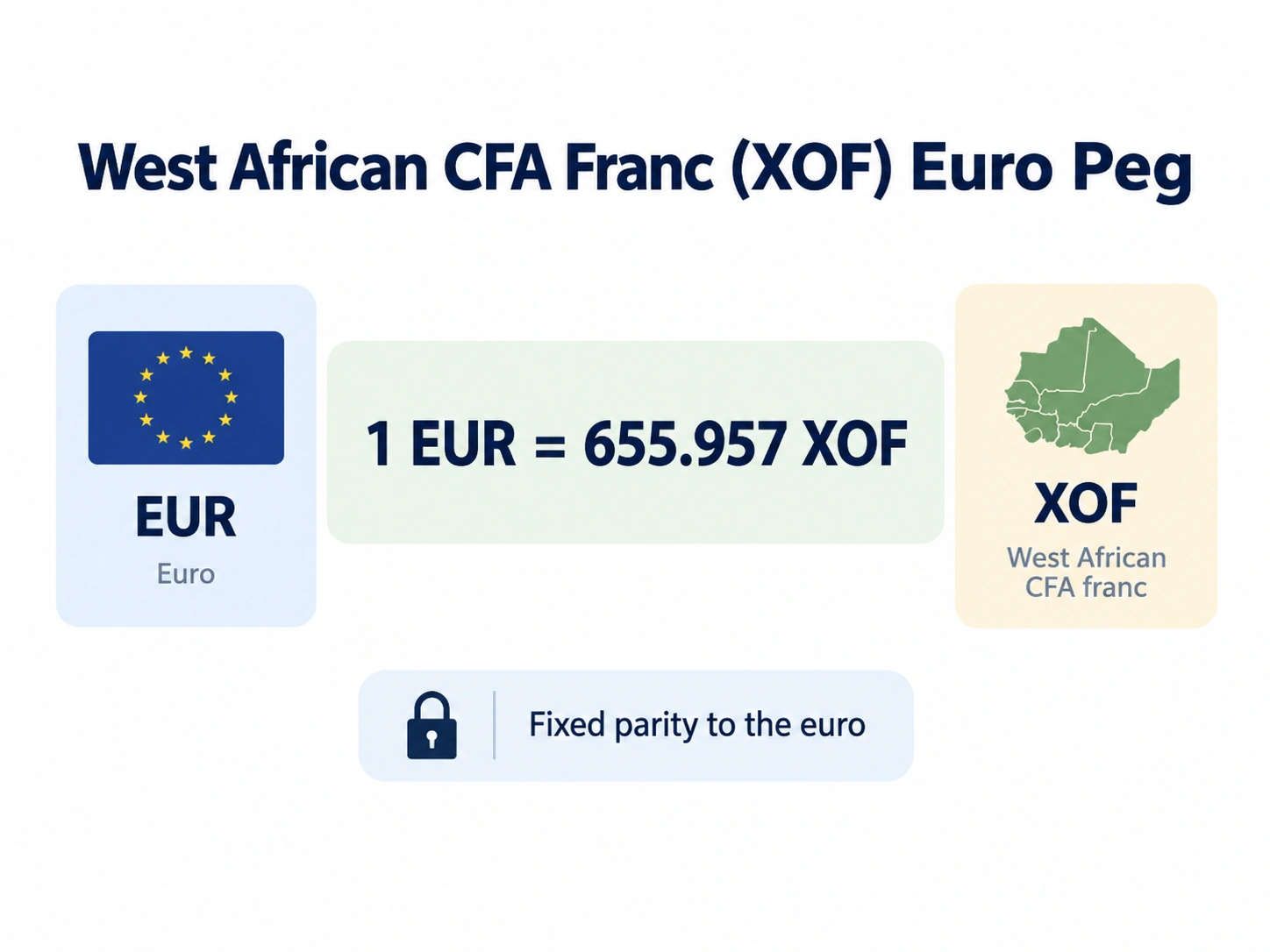
This gives XOF a stable relationship with the euro.
If a West African business is paying an invoice in euros, the local-currency equivalent is easy to model:
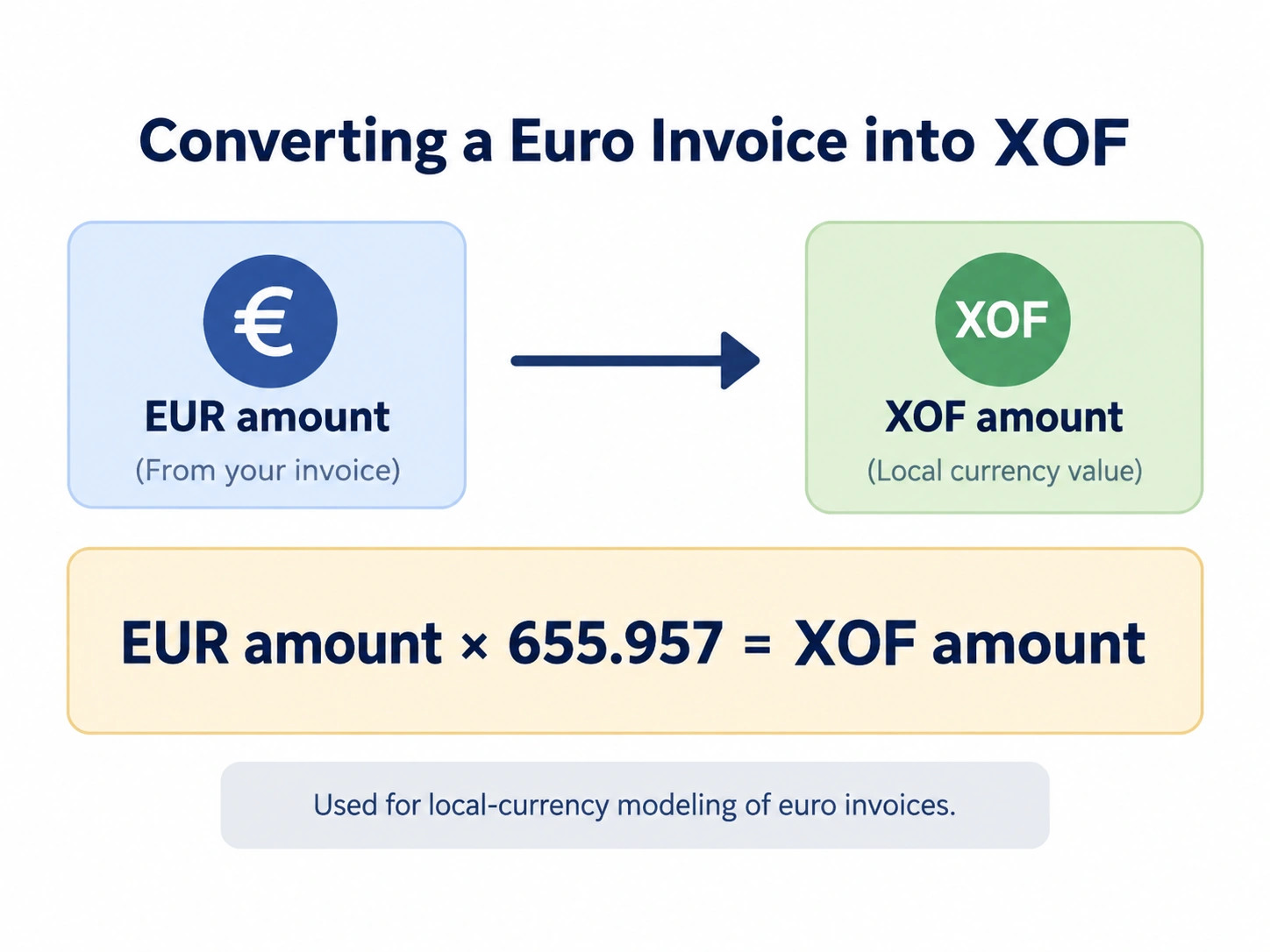
That predictability is commercially useful.
XOF and the U.S. dollar
XOF is not pegged to the U.S. dollar.
Its relationship to USD comes through EUR/USD.
So if EUR strengthens against USD, XOF tends to strengthen against USD as well. If EUR weakens, XOF tends to weaken against USD.
Who creates XOF?
XOF is created and managed by the BCEAO.
Key functions of the BCEAO include:
Issuing banknotes and coins,
Conducting regional monetary policy,
Supporting price stability,
Operating regional payment systems,
And supporting the WAEMU/UEMOA monetary framework.
Strengths of XOF
Monetary stability from the euro anchor.
Simpler euro-linked trade pricing.
Easier regional settlement across 8 countries.
Stronger regional integration than if each country had a separate national currency.
Limitations of XOF
Less country-by-country monetary-policy flexibility.
Dependence on euro movements.
Exchange-rate adjustments are not available as a national policy tool for each member state.
For globally priced imports or commodities, USD exposure still matters.
Is XOF the same as XAF?
Not operationally.
XOF and XAF share the same nominal external value because both are pegged to the euro at the same rate, but they belong to different monetary unions and are used in different territories.
Read:
Primary and authoritative sources
This content cluster was researched and updated for September 2026. Exchange rates versus currencies other than the euro vary over time. For operations, always confirm the current rate, the sending/receiving bank’s terms, and any country-specific compliance requirements.