
The easiest way to understand XOF and XAF is:
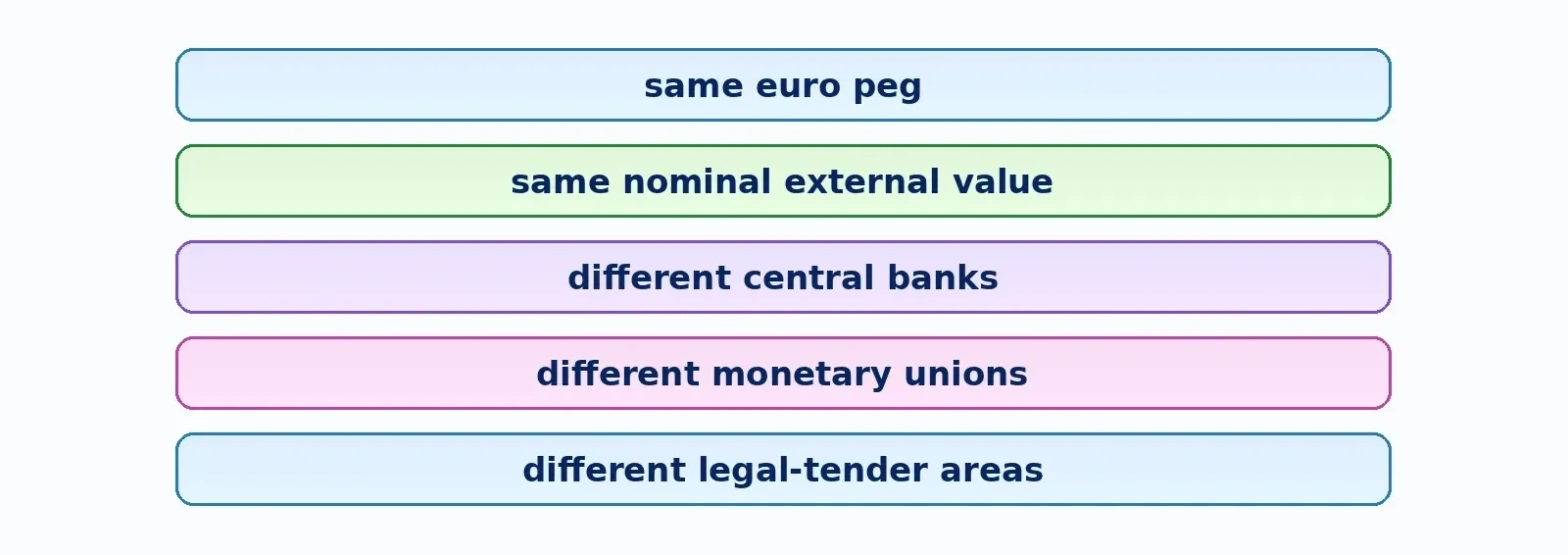
The simple answer
XOF is the West African CFA franc.
XAF is the Central African CFA franc.
Both are pegged to the euro at 655.957 per euro.
Therefore they have the same nominal value.
But they are not the same operational currency system.
Side-by-side comparison
Feature | XOF | XAF |
|---|---|---|
Full name | West African CFA franc | Central African CFA franc |
ISO code | XOF | XAF |
Zone | WAEMU / UEMOA | CEMAC |
Countries | 8 | 6 |
BCEAO | BEAC | |
Euro peg | 1 EUR = 655.957 XOF | 1 EUR = 655.957 XAF |
Relation to USD | indirect through EUR/USD | indirect through EUR/USD |
Same nominal value as the other? | yes | yes |
Same banknotes/coins? | no | no |
Same legal-tender territory? | no | no |
How do they convert with each other?
In nominal value terms:

That follows directly from the identical euro parity.
But this is where many explainers stop too early.
The real operational answer
They are issued by different central banks.
They circulate in different monetary unions.
They are not just casually the same note or coin.
Conversion or settlement between the two zones can involve banking arrangements, location, and practical acceptance considerations.
So if someone asks:
Can I treat them as the same thing?
The correct answer is:
In value, essentially yes. In operational use, not blindly.
Why the same value exists
Because both currencies are tied to the euro at the same official rate.
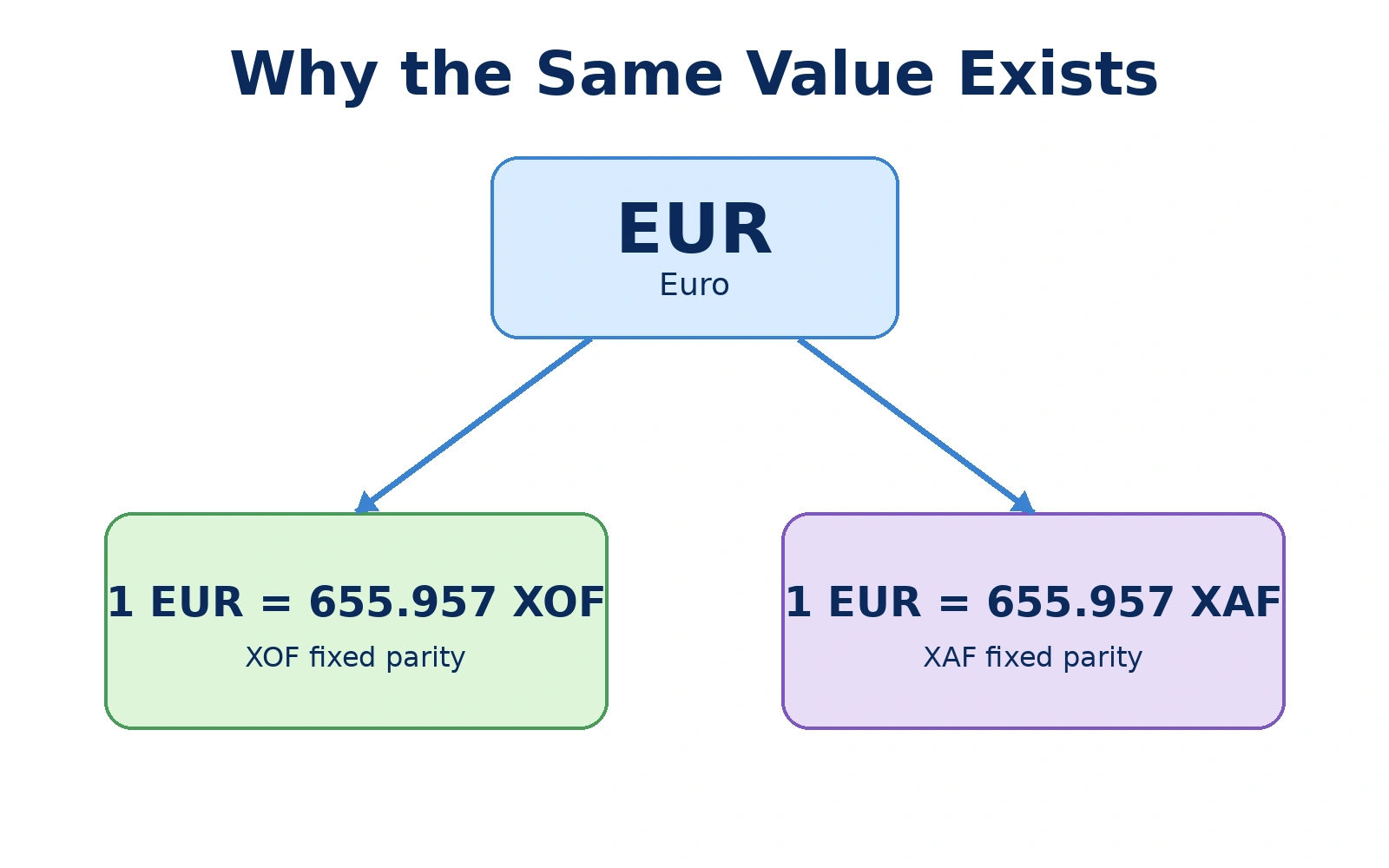
Therefore:

Which implies:
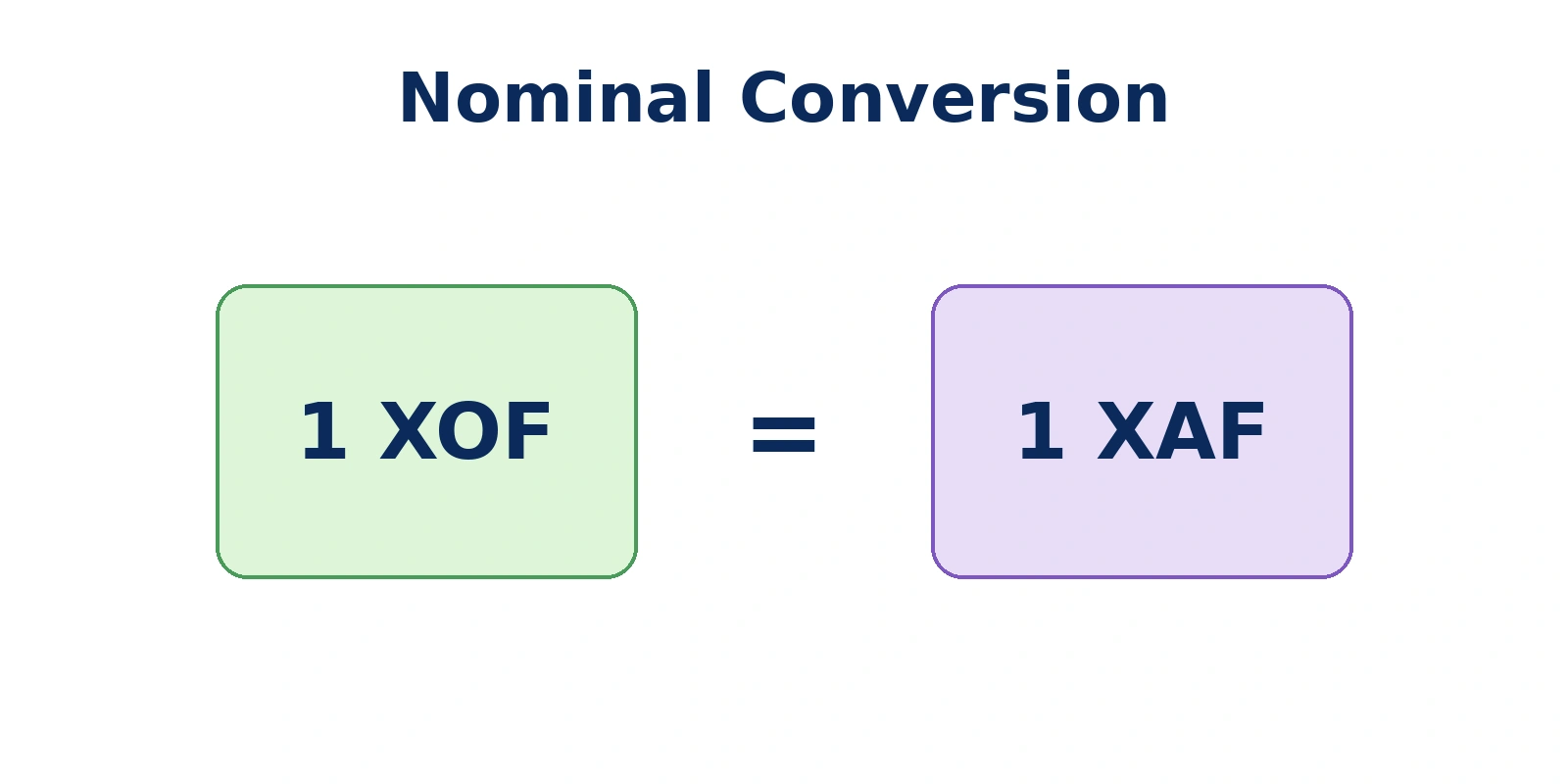
Where the differences matter in business
They matter when you need to know:
Which country the beneficiary is in,
Which bank and currency account are being used,
Which central bank framework applies,
Whether the payment is domestic, regional or extra-regional,
And whether you are dealing with cash, bank transfer, treasury conversion or accounting treatment.
When should you care?
You should care if you are:
Paying suppliers in Senegal and Cameroon,
Quoting goods across West and Central Africa,
Building a regional treasury structure,
Pricing in EUR or USD but settling locally,
Reconciling invoices, FX and bank receipts.
Related pages
Primary and authoritative sources
This content cluster was researched and updated for September 2026. Exchange rates versus currencies other than the euro vary over time. For operations, always confirm the current rate, the sending/receiving bank’s terms, and any country-specific compliance requirements.