
Provider Approval Is a Due-Diligence Project
For a gaming business, an application form is not the underwriting file.
The objective is to answer the provider's core concern:
What exactly is this merchant, what are users paying for, and can we safely and lawfully process it?
A strong file reduces ambiguity before the provider has to ask.
Underwriting Checklist
Corporate
The provider's corporate file should be consistent with normal KYB and enhanced due diligence expectations.
certificate of incorporation;
registered address;
directors;
UBOs;
ownership chart;
operating entities;
group structure;
licenses/registrations/determinations;
bank account evidence.
Product
game name;
URL/app-store links;
screenshots;
demo credentials where appropriate;
game rules;
user journey;
monetization;
prize/reward mechanics;
transferability/redeemability of credits/assets;
geographies served.
Gaming-Regulatory
analysis under the 2025 Act;
OGAI determination if applicable/obtained;
OGAI registration if required;
e-sports recognition/registration support where applicable;
user safety features;
grievance mechanism.
Payments
payment methods requested;
payout types;
average/max ticket;
transactions/day;
monthly value;
refund rate;
prior processor history;
chargeback/fraud data;
settlement currency/account;
Compliance
KYC/KYB approach;
age controls;
sanctions/PEP screening where relevant;
fraud controls;
transaction monitoring;
privacy policy;
terms;
refund policy;
complaints process.
The Flow of Funds Is the Centerpiece
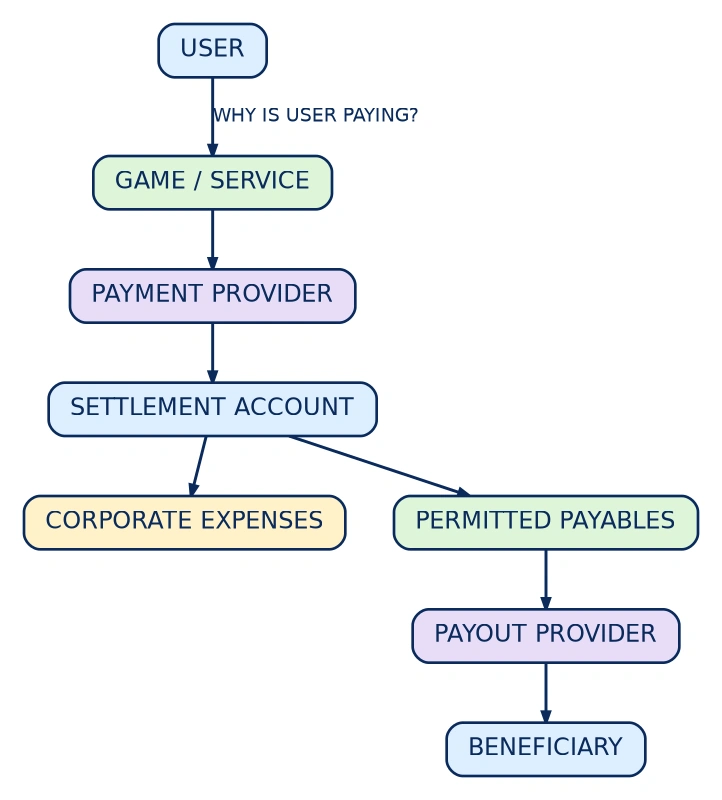
Every arrow should state:
legal owner of funds;
payment purpose;
account holder;
provider;
currency;
expected timing; and
compliance control.
MCC and Merchant Description
The merchant category and business description should reflect reality.
A provider can compare:
website content;
app-store description;
transaction patterns;
descriptors;
user complaints;
social media;
bank activity; and
onboarding statements.
Trying to get a better approval outcome through a misleading merchant category is not a stable strategy.
How We Prepare the File
Our process is:
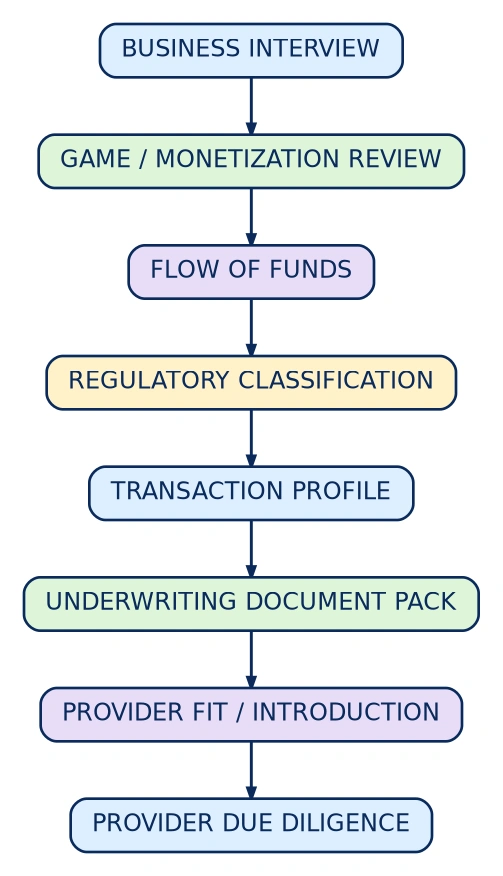
The goal is to eliminate preventable objections before introduction. The file should also align with the business's documented risk assessment rather than presenting a transaction profile that the compliance framework does not address.
Related India Gaming Payment Topics
For provider selection after the underwriting file is ready, use Payment Gateway for Gaming Apps in India. For foreign-entity onboarding questions, use Payments for Foreign Gaming Companies Serving India.
FAQ
What is the single most useful document for payment-provider onboarding?
A precise flow of funds accompanied by a clear description of game mechanics and monetization.
Will a legal opinion guarantee processor approval?
No. Legal analysis can reduce classification uncertainty, but provider risk policy and banking-partner appetite remain independent decisions.
Should we disclose prior processor termination?
If asked, respond accurately and explain the circumstances. Concealing material history can create a larger issue than the original termination.
What if we are pre-launch?
Prepare projected volume, ticket size, user countries, product screenshots/demo, policies and realistic launch assumptions. Lack of history is manageable; lack of clarity is not.
Request an India Gaming Payments Feasibility Assessment
Do not start with, “Who can give me Paytm, PhonePe, Google Pay, UPI or a wallet?”
Start with the transaction.
Send us:
the exact game or product type;
whether a user pays to participate, accesses by subscription, or places any stake;
whether a user can receive cash, transferable value, redeemable credits, tokens, or other winnings;
whether the game has an OGAI determination or registration;
the operating entity and country of incorporation;
whether there is an Indian entity;
required pay-in methods;
required payout methods;
average and maximum ticket size;
expected transactions per day and monthly value;
whether funds belong to the business or to users/third parties;
settlement currency and desired settlement country;
any cross-border treasury or stablecoin requirement; and
a simple flow-of-funds diagram.
We will separate the legal-classification issue from the payments issue, identify the infrastructure that may be supportable, and determine whether there is a credible provider-introduction path.
Regulatory References
Press Information Bureau — A New Era of Online Gaming Governance, 30 April 2026
FIU-IND — Downloads and VDA Service Provider AML/CFT Guidance
Regulatory status note: This page reflects the legal and payment-framework position reviewed on 17 September 2026. Product classification, payment-system rules, and provider policies can change and should be re-checked for a live implementation.