
The Real Problem POBO and COBO Solve
A group with many subsidiaries—or a payment business with many customers—can easily end up with fragmented bank accounts, duplicated liquidity, multiple payment portals, inconsistent reconciliation, and weak visibility over who ultimately paid or received money.
POBO — Payments On Behalf Of means one entity executes a payment for another.
COBO — Collections On Behalf Of means one entity receives or collects money for another. COBO is also commonly described as ROBO — Receivables On Behalf Of.
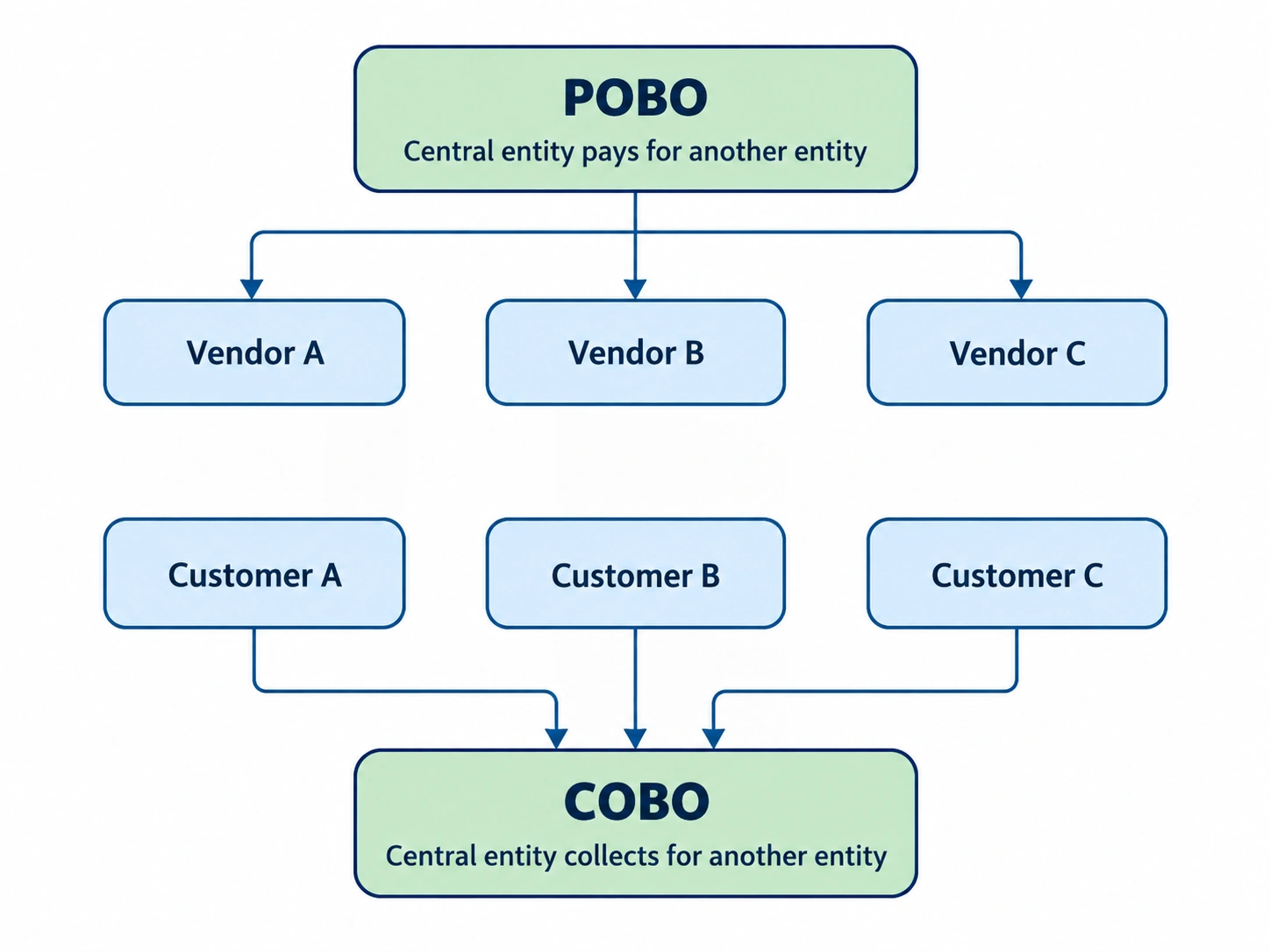
The critical question is who the other entity is.
If the underlying entities are subsidiaries inside the same corporate group, the problem may primarily be treasury, accounting, bank connectivity, liquidity, and intercompany ledgering.
If the underlying parties are unrelated merchants, customers, platform users, or remittance clients, the model can move into regulated payment services, money transmission, safeguarding, FBO/pooled accounts, KYC/KYB, and AML controls.
Start with POBO vs. COBO if you are deciding which model you actually need.
Corporate Treasury POBO / COBO
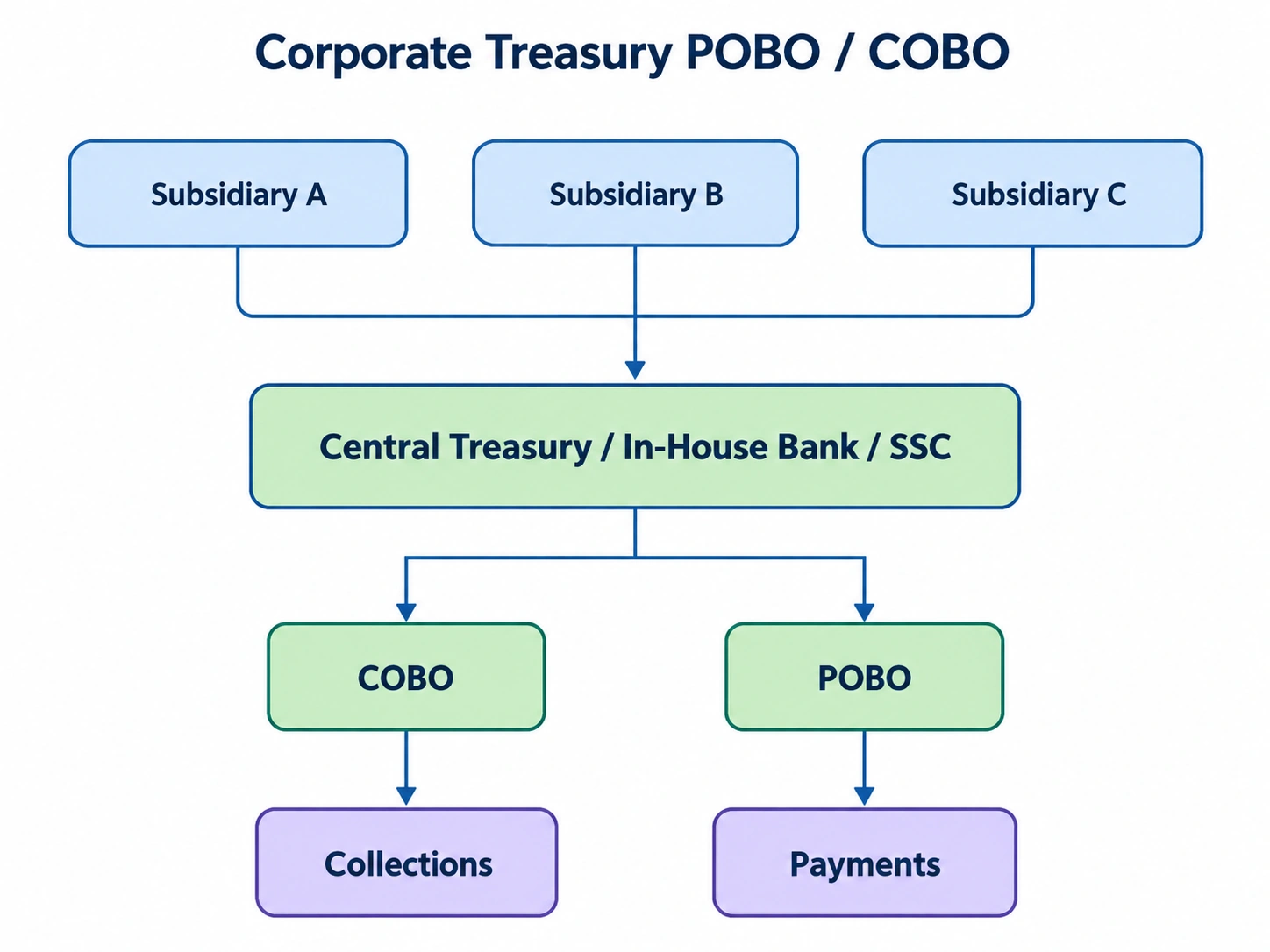
See POBO for Corporate Treasury, COBO for Corporate Treasury, and In-House Banks and Payment Factories.
PSP / MSB / Platform POBO / COBO
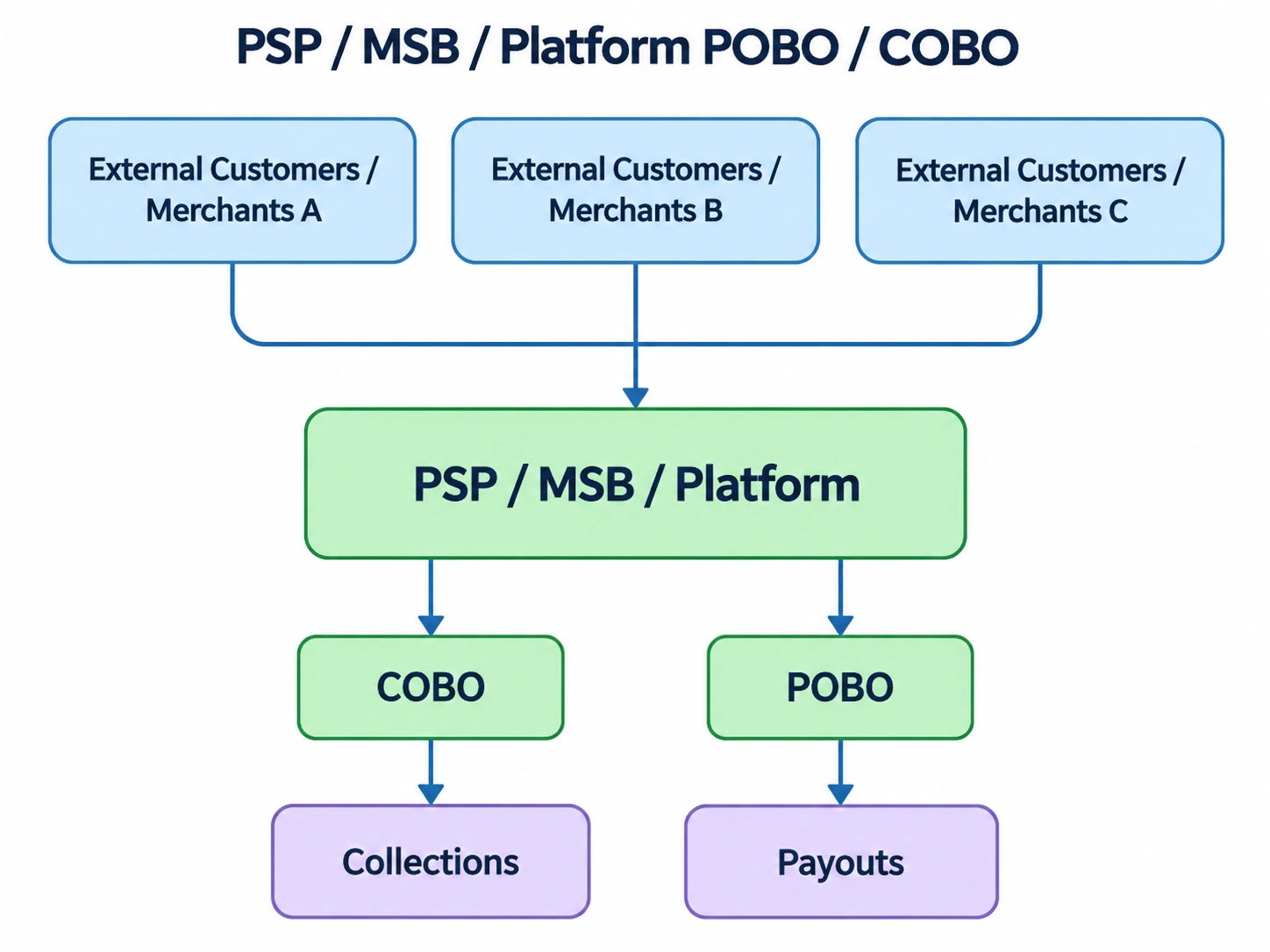
See POBO for PSPs and MSBs, COBO for Payment Platforms, and U.S. Money Transmission Considerations.
Ultimate Debtor and Ultimate Creditor
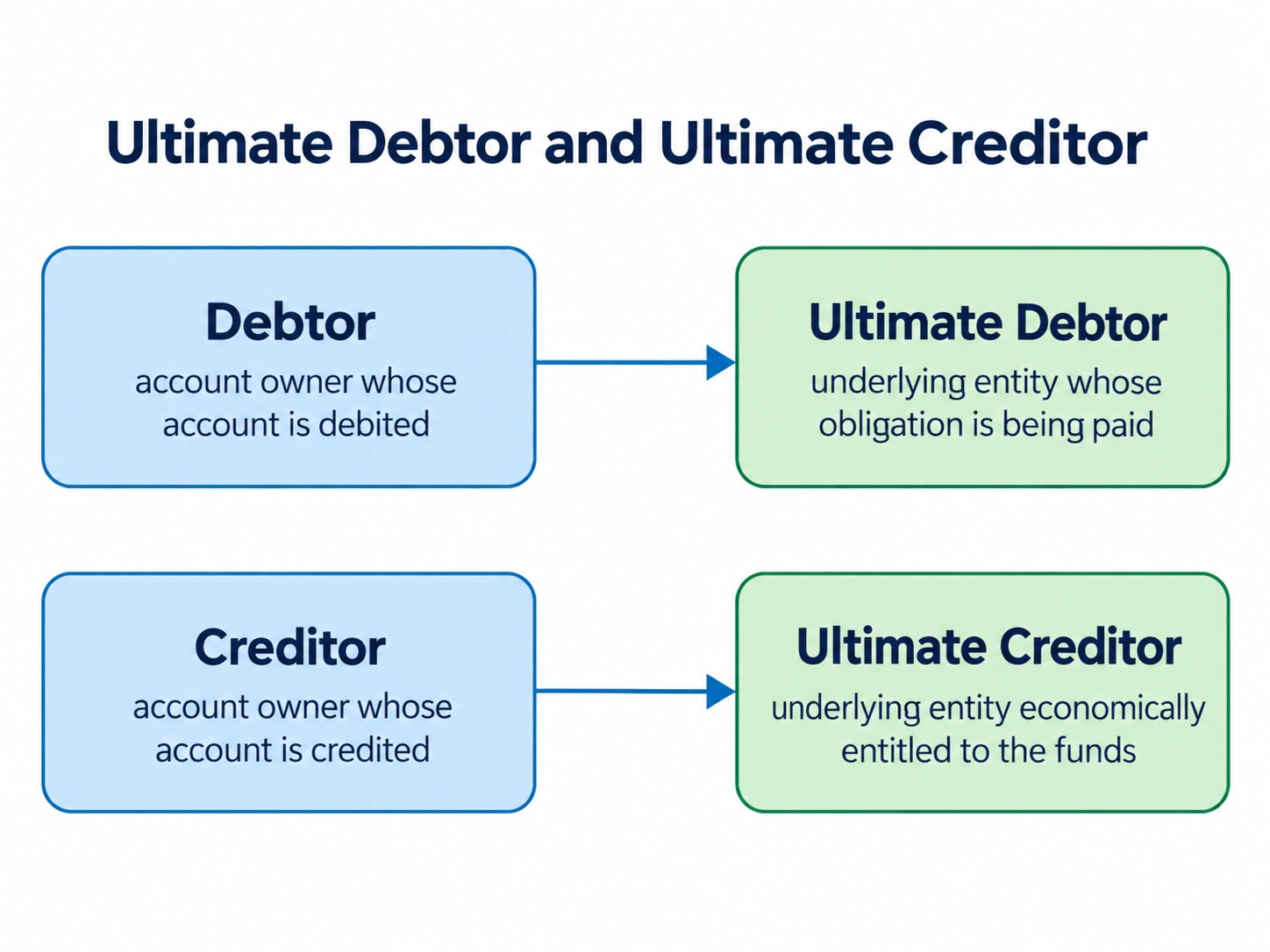
See POBO & COBO Compliance and POBO & COBO With SWIFT and ISO 20022.
Account Structures
| Requirement | Possible Structure |
|---|---|
| Central group payments | Corporate treasury account |
| Central collections | COBO collection account |
| Track subsidiaries separately | Internal ledger |
| Unique incoming references | Virtual accounts |
| External customer funds | FBO / safeguarded / pooled structure |
| Multiple currencies | Central accounts by currency |
| Cross-border payments | SWIFT / correspondent capability |
| EUR payments | SEPA |
| U.S. payments | ACH / Fedwire |
| Regulated payment flows | Licensed PSP/MSB program |
See POBO & COBO Account Structures.
POBO Is Not a Regulatory Exemption
Calling a transaction “POBO” does not make an otherwise regulated payment activity unregulated.
A corporate treasury paying a supplier for a wholly owned subsidiary is fundamentally different from a platform accepting money from unrelated customers and paying third-party beneficiaries.
For U.S. structures, see POBO & COBO U.S. Money Transmission and Licensing Considerations and the existing Money Transmitter Licensing page.
Implementation Roadmap
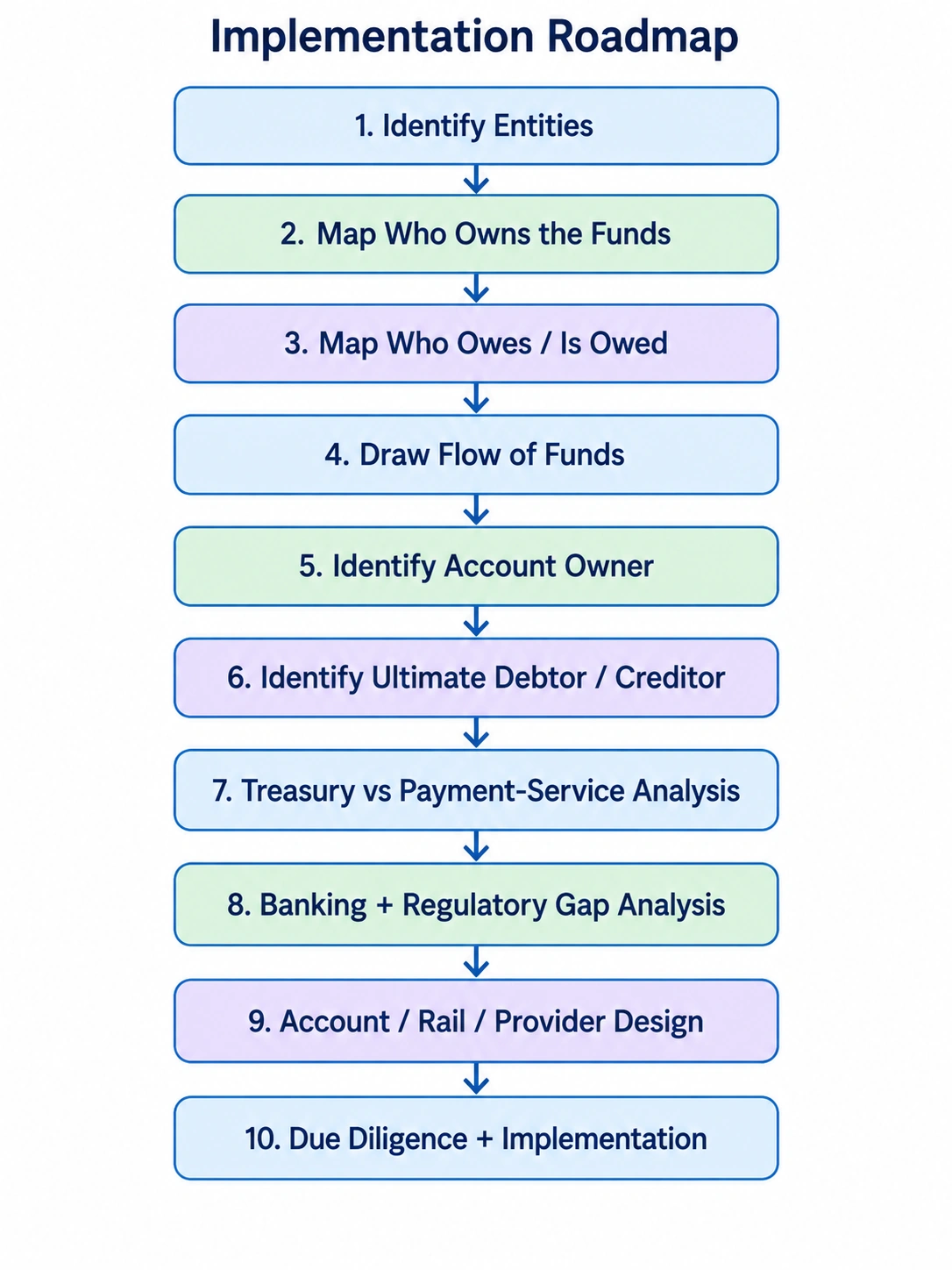
Use the POBO & COBO Implementation Checklist to prepare a project.
Complete POBO / COBO Resource Library
- What Is POBO? Payments On Behalf Of Explained
- What Is COBO / ROBO? Collections On Behalf Of Explained
- POBO vs. COBO: What Is the Difference?
- POBO for Corporate Treasury and Multinational Groups
- COBO for Corporate Treasury and Multinational Groups
- POBO for PSPs, MSBs, and Payment Companies
- COBO for PSPs, Marketplaces, and Payment Platforms
- POBO & COBO Account Structures: Named, Virtual, FBO, and Pooled Accounts
- POBO & COBO Compliance: Ultimate Debtor, Ultimate Creditor, and Payment Transparency
- POBO & COBO With SWIFT and ISO 20022
- POBO, COBO, In-House Banks, and Payment Factories
- POBO & COBO U.S. Money Transmission and Licensing Considerations
- POBO & COBO Implementation Checklist
Related Services
- Named Accounts
- FBO Accounts
- MSB Banking
- Authorized Delegate / Agent Sponsorship
- Money Transmitter Licensing
- Cross-Border Payments
- SWIFT Payments
Design Your POBO or COBO Structure
Send us your flow of funds and identify who owns the money, who owes whom, which entity owns the bank account, whether the underlying parties are group companies or external customers, countries and currencies, rails, volumes, and licensing status.